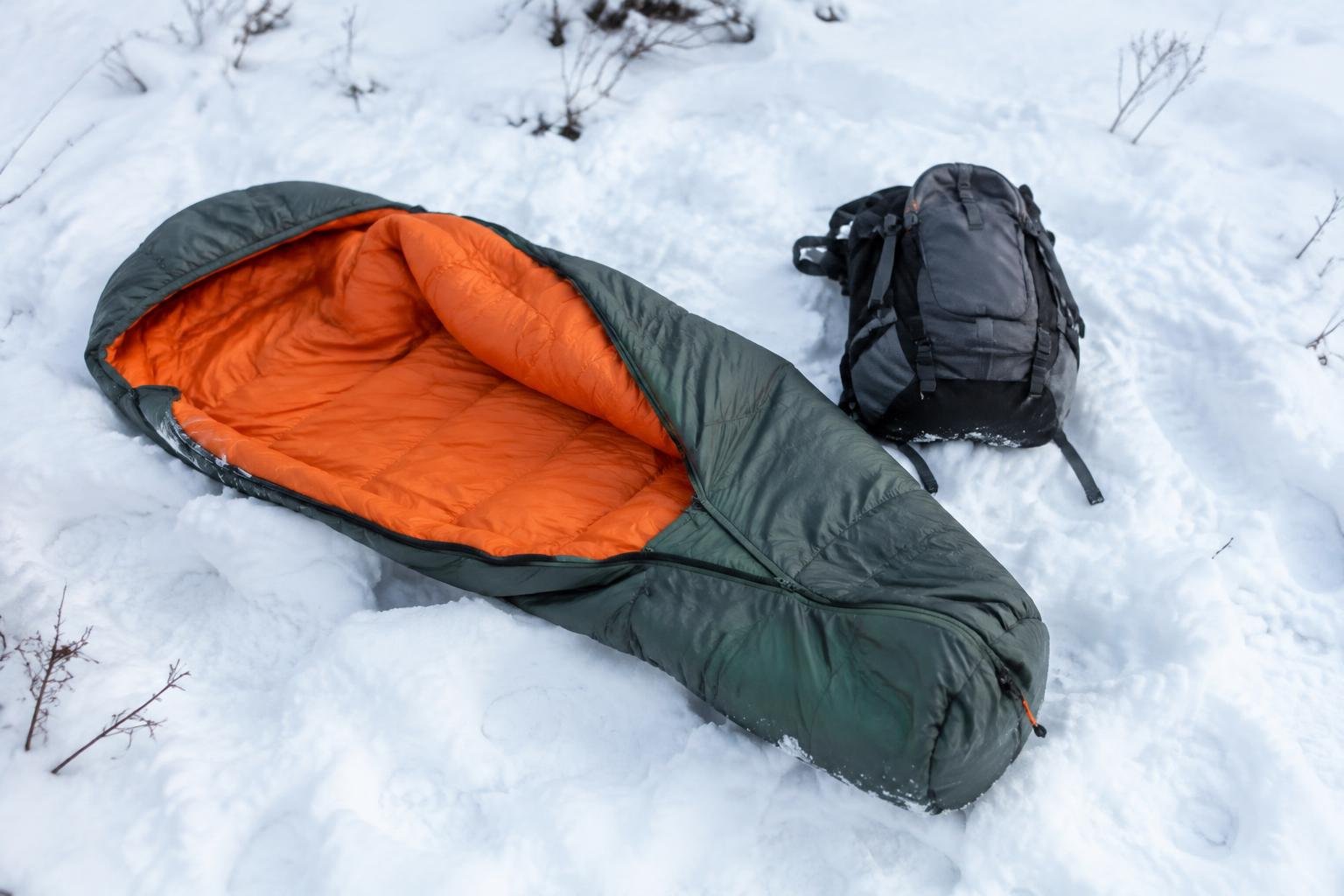
A 0 degree sleeping bag is the right tool for winter backpacking, snow camping, and cold camping trips, but the label alone can mislead you. We checked seven popular bags against brand spec pages and ISO figures from major retailers. Four have an ISO-tested 0 °F lower limit, one is rated 0 °F by its maker, one tests at 6 °F, and one has no independent rating.
Quick Answer: Best Lightweight 0°F Sleeping Bag
The Sea to Summit Spark 0°F is our top pick for weight-conscious winter backpackers. It offers an ISO-tested 0°F lower limit and weighs approximately 2 lb 7 oz. The Therm-a-Rest Parsec 0°F is a strong alternative, with similar weight and temperature ratings. For budget-conscious campers, the TETON LEEF 0°F is an affordable option, but it does not have a verified ISO or EN 0°F rating.
Cold-sleeper tip: Choose based on the ISO comfort rating rather than the advertised 0°F limit. The Spark and Parsec have 14°F comfort ratings, while the Mountain Hardwear Phantom 0°F has the lowest comfort rating in this comparison at 12°F.
Quick Verdict: Best Overall, Best Budget and More
| Award | Pick | Why it wins | Price tier | Link |
|---|---|---|---|---|
| Best Overall | Sea to Summit Spark 0 | Tested 0 °F limit, about 2 lb 7 oz, 850+ fill down | High-end | Check Price on Amazon |
| Best Value Down | Therm-a-Rest Parsec 0 | Same ISO ratings and weight as the Spark, lower list price than the Spark, Phantom, and Kodiak | High-end | Check Price on Amazon |
| Best for Cold Sleepers | Mountain Hardwear Phantom 0 | Lowest tested comfort figure here (12 °F) | Premium | Check Price on Amazon |
| Best Roomy Fit | Western Mountaineering Kodiak MF | Widest cut here, 66 in shoulder girth, 30 oz of down | Premium | Check Price on Amazon |
| Best for Side Sleeping | NEMO Sonic 0 | Stretch knees plus Thermo Gills vents | High-end | Check Price on Amazon |
| Best Adjustable Fit | Big Agnes Torchlight EXP 0 | Side panels add up to 10 in of room | High-end (lowest down price here) | Check Price on Amazon |
| Best Budget | TETON LEEF 0 | Under $100 list price, but not a true 0 °F bag | Budget | Check Price on Amazon |
Price tiers: Budget is under about $150, High-end is about $450 to $700, Premium is above $700. They reflect list prices on brand and REI pages checked November 9, 2026. Amazon prices vary, so always confirm the current price.
Read this first: not every bag sold as “0 degree” tests that way. REI lists the Big Agnes Torchlight EXP at an ISO lower limit of 6 °F. TETON calls the LEEF’s rating a survival rating and lists a comfort range of 25 °F to 30 °F. We kept both because readers search for them, and we score them accordingly. Details are in how 0 °F ratings work.
Comparison Table: Warmth-to-Weight, Insulation and Packed Size
| Sleeping Bag | Best For | ISO Comfort / Lower Limit | Weight (Regular) | Insulation | Compressed Volume | Our Rating | Buy |
|---|---|---|---|---|---|---|---|
| Sea to Summit Spark 0°F | Best Overall | 14°F / 0°F | 2 lb 7.3 oz | 850+ fill goose down | 9.9 L | 8.9/10 | Buy on Amazon |
| Therm-a-Rest Parsec 0°F | Best Value Down | 14°F / 0°F | 2 lb 7 oz | 900-fill hydrophobic down | 10.8 L | 8.8/10 | Buy on Amazon |
| Mountain Hardwear Phantom 0°F | Cold Nights | 12°F / 0°F | 2 lb 10.4 oz | 800-fill goose down | 9.7 L | 8.3/10 | Buy on Amazon |
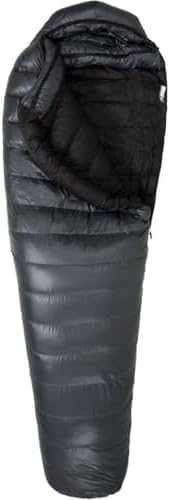
| Western Mountaineering Kodiak MF | Roomy Fit | 13°F / -1°F* | 2 lb 12 oz (6 ft) | 850+ fill goose down | 13.4 L | 8.2/10 | Buy on Amazon |
| NEMO Sonic 0°F | Side Sleeping | 14°F / 0°F | 3 lb 4 oz | 800-fill hydrophobic down | 9.6 L | 7.8/10 | Buy on Amazon |
| Big Agnes Torchlight EXP 0°F | Adjustable Fit | 18°F / 6°F | 3 lb 10 oz | 650-fill DownTek down | 9.3 L | 7.3/10 | Buy on Amazon |
| TETON Sports LEEF 0°F | Budget Pick | No verified ISO rating | 4.2 lb | Synthetic | Not published | 4.8/10 | Buy on Amazon |
Temperature ratings: ISO comfort and lower-limit figures are shown in that order. The TETON LEEF does not have a verified independent ISO or EN rating; its brand-stated comfort range is 25°F to 30°F.
*Western Mountaineering Kodiak MF: The manufacturer rates this bag to 0°F. The 13°F comfort and -1°F lower-limit figures are from a retailer listing, not the manufacturer’s own published rating.
Packed size: Compressed volumes are listed in liters where published. The TETON LEEF’s published pack dimensions are 17 × 10 × 10 inches.
Weight: Figures are brand-claimed regular-size weights where specified. Actual weight can vary by size and excludes stuff sacks.
How We Rate Each Winter Sleeping Bag
This is a research-based guide. We did not sleep in these bags. Our evaluation uses:
- Brand spec pages for weight, fill, shell fabric, and sizes
- ISO comfort and lower limit figures published by REI and other retailers
- Brand statements about how ratings were set
- Recurring themes in retailer reviews, used only to flag issues
Each bag gets a score out of 10 per criterion, and the weighted total is our editorial rating. It is a judgment built on published data, not a lab result.
| Criterion | Weight | What we looked at |
|---|---|---|
| Warmth-to-weight | 25% | ISO lower limit against bag weight and fill weight |
| Rating credibility | 20% | Whether a tested ISO figure exists and matches the 0 degree claim |
| Packability | 15% | Compressed volume |
| Fit and features | 15% | Girth, size options, neck baffle, zippers, extras |
| Value | 15% | List price against specs, plus warranty where verified |
| Moisture resistance and materials | 10% | Shell denier, hydrophobic down, water-repellent finishes |
| Pick | Warmth-to-weight | Credibility | Packability | Fit and features | Value | Materials | Total |
|---|---|---|---|---|---|---|---|
| Spark 0 | 9.5 | 9.5 | 8.5 | 8.5 | 7.5 | 9.0 | 8.9 |
| Parsec 0 | 9.5 | 8.5 | 8.5 | 8.5 | 8.5 | 8.5 | 8.8 |
| Phantom 0 | 8.5 | 9.0 | 8.5 | 8.0 | 7.0 | 8.5 | 8.3 |
| Kodiak MF | 8.5 | 9.0 | 7.0 | 9.5 | 6.0 | 8.5 | 8.2 |
| Sonic 0 | 7.0 | 8.5 | 8.5 | 9.0 | 7.5 | 9.0 | 7.8 |
| Torchlight EXP 0 | 6.5 | 5.5 | 8.5 | 9.5 | 8.5 | 8.0 | 7.3 |
| LEEF 0 | 3.0 | 3.0 | 3.0 | 6.5 | 9.5 | 6.0 | 4.8 |
Why the Parsec earns Best Value Down: it starts at $599.95 at REI, below the Spark ($649), Phantom ($710 direct), and Kodiak MF ($920 direct). It carries the same ISO ratings as the Spark (14 / 0 °F) at nearly the same weight. The Sonic starts at the same price but weighs about 13 oz more. The Torchlight EXP costs less, but its ISO limit is 6 °F. We lowered the Parsec’s credibility score a little because it exists in two spec generations, so you must confirm you are buying the 2026 version.
Exact versions we checked
| Pick | Version covered | Don’t confuse it with |
|---|---|---|
| Sea to Summit Spark | Spark Down Sleeping Bag 0 °F/-18 °C, Regular (Long also exists) | Warmer Spark bags (15, 30, and 45 °F) |
| Therm-a-Rest Parsec | Parsec 0 °F/-18 °C, 2026 update with 900-fill down | The earlier Parsec with 800-fill down |
| Mountain Hardwear Phantom | Phantom 0 °F/-18 °C, 800-fill, Short/Regular/Long | The older 850-fill Phantom and the heavier Phantom GORE-TEX and WINDSTOPPER |
| Western Mountaineering Kodiak MF | Kodiak MF 0 °F, 6 ft / 6 ft 6 in / 7 ft | The Kodiak GWS (Gore Windstopper) |
| NEMO Sonic | Sonic Down Mummy 0 °F/-18 °C, Regular | Sonic -20 and warmer Sonic versions |
| Big Agnes Torchlight EXP | Torchlight EXP 0, Short/Regular/Long | Torchlight UL and the 20 °F Torchlight EXP |
| TETON LEEF | LEEF 0 °F Regular | The LEEF 20 °F and 30 °F bags, which share the product name |
Amazon tip: some Amazon listings group several temperature ratings and sizes under one page. Before you buy, select the 0 °F or -18 °C option and your size.
Why Trust CampingSaga
- We say what we did. This is a research-based roundup. We do not claim hands-on testing, and we do not invent personal stories.
- We show our math. The criteria, weights, and scores are in the tables above.
- We name the downsides. Every pick has real cons, and two are flagged for not matching their 0 degree label.
- We date our checks. Specs and prices were verified November 9, 2026. Brands change fills, fabrics, and prices, so we recheck and update.
- We correct errors. Found a mistake? Email info@campingsaga.com or use the CampingSaga contact page, and we will fix it and note the change in the update log below.
In-Depth Reviews: 7 Lightweight Sleeping Bag Picks for Backcountry Trips
1. Sea to Summit Spark 0: Best Overall
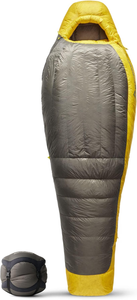
Summary: The Spark 0 has an ISO lower limit of 0 °F and a women’s comfort figure of 14 °F, per Sea to Summit’s spec table. It weighs 2 lb 7.3 oz in Regular and uses 850+ fill goose down in a 10-denier shell. It offers the best balance of low weight and a tested rating in this group.
Best for: Winter backpackers and ski tourers who want the lightest bag with a tested 0 degree rating.
| Spec | Sea to Summit Spark 0 (Regular) |
|---|---|
| ISO lower limit / women’s comfort | 0 °F (-18 °C) / 14 °F (-10 °C) |
| Total weight | 2 lb 7.3 oz (1,113 g); Long 2 lb 10.5 oz (1,204 g) |
| Insulation | 850+ fill RDS-certified goose down, non-PFAS water-resistant treatment |
| Fill weight | 1 lb 13.6 oz (840 g) |
| Shell and liner | 10-denier shell with non-PFAS DWR; 10-denier liner; water-repellent hood and footbox |
| Compressed volume | 9.9 L (Long: 10.6 L) |
| Fits up to | 6 ft 1 in (Long: 6 ft 6 in) |
| Notable features | Draft tube along the zipper, technical hood, anatomical footbox, zips to a compatible women’s Spark |
| List price | $649 to $679 at REI |
Pros
- Tested 0 °F lower limit with a 14 °F comfort figure
- About 30 oz of down at a weight within half an ounce of the Parsec’s
- Ultralight shell with a water-repellent hood and footbox
- Long size and zip-together option
Cons
- High price for a single-purpose bag
- The 10-denier shell needs careful handling around rough ground
- Sea to Summit says the fit is snugger than its comfort-focused bags
- 14 °F comfort figure means a margin is needed on the coldest nights
Who should buy it: backpackers who want the best weight for a tested 0 degree rating and will pay for it.
Who should skip it: broad-shouldered or side-sleeping campers who want room, and anyone on a tight budget.
Editorial rating: 8.9/10

- Nylon
- 0-degree Fahrenheit (-18-degree Celsius) ultralight down sleeping bag for 3-season backpacking, bike packing, and tourin…
- High-loft 850+ fill power down insulation (Responsible Down Standard certified) with a non-PFC Ultra-Dry down treatment …
2. Therm-a-Rest Parsec 0: Best Value Down
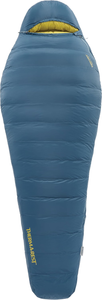
Summary: The 2026 Parsec 0 matches the Spark’s ISO figures (14 / 0 °F) and weighs 2 lb 7 oz in Regular, per REI’s listing. It uses 900-fill hydrophobic down and lists below the Spark, Phantom, and Kodiak MF. It earns Best Value Down on price against weight and tested ratings, not on pack size.
Best for: Backpackers who want Spark-level weight and ratings at a lower list price.
| Spec | Therm-a-Rest Parsec 0 (Regular, 2026) |
|---|---|
| ISO lower limit / comfort | 0 °F (-18 °C) / 14 °F (-10 °C) |
| Total weight | 2 lb 7 oz (1,100 g); Long 2 lb 10 oz (1,194 g) |
| Insulation | 900-fill PFAS-free hydrophobic duck down, RDS-certified |
| Fill weight | 27 oz (762 g); Long 30 oz |
| Shell and lining | Recycled 20-denier ripstop with DWR |
| Compressed volume | 10.8 L (REI); packed dimensions 7.5 x 11 in (19 x 30 cm) per Therm-a-Rest retailer listings; REI stuff sack 7.5 x 21 in (15 L) |
| Fits up to | 6 ft (Long: 6 ft 6 in) |
| Girth | Shoulder 62 in, hip 57 in |
| Notable features | Zoned insulation, draft tubes at zipper and neck, foot warmer pocket, quilt and blanket loops |
| List price | $599.95 to $649.95 at REI |
Pros
- Same tested ratings as the Spark at the same weight
- Lowest starting price among the lightest bags
- Hydrophobic 900-fill down helps in damp tents
- Foot warmer pocket and loops for layering a quilt
Cons
- Less down than the Spark (27 oz versus 29.6 oz)
- Compresses to 10.8 L, a little larger than the Spark’s 9.9 L
- Two spec generations are on sale (800-fill and 900-fill), so confirm the listing
- Not a roomy cut
Who should buy it: weight-conscious backpackers who want a tested 0 degree bag without Premium pricing.
Who should skip it: anyone who wants a wide fit, and buyers who cannot confirm the 2026 version.
Editorial rating: 8.8/10

- 20D 100% recycled nylon ripstop
- Imported
- Engineered with premium materials, updated zoned insulation, and cold-weather features the Parsec 0 degree sleeping bag …
3. Mountain Hardwear Phantom 0: Best for Cold Sleepers
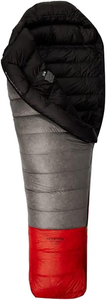
Summary: The Mountain Hardwear Phantom 0 has a tested comfort figure of 12 °F, the lowest of the seven, plus a 0 °F lower limit and a -36 °F extreme figure, per Mountain Hardwear. It weighs about 2 lb 10.4 oz and uses 800-fill goose down. A down-filled face gasket and four-chamber hood target heat retention.
Best for: People who run cold, alpine trips, and ski tours.
| Spec | Mountain Hardwear Phantom 0 (Regular) |
|---|---|
| ISO comfort / lower limit | 12 °F (-11 °C) / 0 °F (-18 °C); extreme -36 °F |
| Total weight | About 2 lb 10.4 oz (1,201 g) |
| Insulation | 800-fill RDS-certified goose down |
| Fill weight | 1 lb 14.5 oz (865 g) |
| Shell and lining | 10-denier recycled shell; 15-denier ripstop lining |
| Compressed volume | 9.7 L (stuffed size 16.5 x 8.25 in) |
| Fits up to | 6 ft (Short and Long available) |
| Girth | Shoulder 58 in, hip 52 in |
| List price | $710 at Mountain Hardwear; $770 to $810 at REI |
Pros
- Lowest tested comfort figure here
- Down-filled face gasket, neck baffle, and four-chamber hood
- Compact for the warmth, at 9.7 L
- Left- and right-zip options
Cons
- Premium price
- The narrowest shoulder girth of the down bags, so it fits snug
- 800-fill is lower than the Spark and Parsec
- Older 850-fill Phantoms are still sold in places, with slightly different specs
Who should buy it: campers who run cold and mountain travelers who want a proven alpine bag.
Who should skip it: broad-shouldered campers and anyone chasing the lowest price.
Editorial rating: 8.3/10

- [face fabric] 10D recycled nylon Ghost ripstop
- Made in the USA or Imported
- Ultralight winter sleeping bag built for cold alpine conditions
4. Western Mountaineering Kodiak MF: Best Roomy Fit
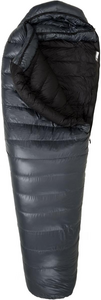
Summary: The Kodiak MF is a wide cold-weather bag with 66 in of shoulder girth, 30 oz of 850+ goose down, and a full down collar, per Western Mountaineering. It weighs 2 lb 12 oz in the 6 ft size. The maker rates it 0 °F, and a retailer lists ISO figures of 13 °F comfort and -1 °F lower limit.
Best for: Larger frames, side sleepers, and anyone who dislikes tight mummy bags.
| Spec | Western Mountaineering Kodiak MF (6 ft) |
|---|---|
| Rating | 0 °F (-18 °C) by Western Mountaineering; ISO 13 / -1 °F per Backcountry’s listing |
| Total weight | 2 lb 12 oz (6 ft 6 in: 2 lb 15 oz; 7 ft: 3 lb 1 oz) |
| Insulation | 850+ fill goose down, 30 oz, about 7 in of loft |
| Shell fabric | 20-denier MicroLite XP, water-resistant and breathable |
| Girth | Shoulder 66 in, hip 57 in, foot 41 in |
| Compressed volume | 13.4 L (REI); stuff size 9 x 18 in |
| Features | Full down collar, insulated draft tube, continuous baffles, full-length #5 YKK zipper |
| List price | $920 to $980 at Western Mountaineering |
Pros
- The roomiest cut here, in three lengths
- Strong warmth-to-weight ratio for a wide bag
- Water-resistant shell
- Western Mountaineering says its ratings are set conservatively against the EN standard
Cons
- The highest list price of the seven
- Heavier than the Spark and Parsec
- The largest compressed volume among the down bags
- Extra room means more air for your body to heat
Who should buy it: side-sleeping and larger campers who will pay for a roomy, premium down bag.
Who should skip it: ounce counters and buyers who prefer a snug fit.
Editorial rating: 8.2/10
- 100% Polyester
- Made in USA
- 5 1/4IN Spacing/Continuous Baffles
5. NEMO Sonic 0: Best for Side Sleeping
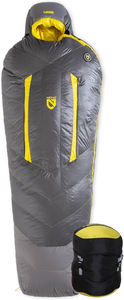
Summary: The Sonic 0 has ISO figures of 14 °F comfort and 0 °F lower limit, with 800-fill hydrophobic down and stretch knees for side sleeping, per REI. Its Thermo Gills vents let heat out on milder nights without letting drafts in. At 3 lb 4 oz it is about 13 oz heavier than the lightest bags here.
Best for: Side sleepers and campers who see a wide range of nighttime temperatures.
| Spec | NEMO Sonic 0 (Regular) |
|---|---|
| ISO comfort / lower limit | 14 °F (-10 °C) / 0 °F (-18 °C) |
| Total weight | 3 lb 4 oz (1.47 kg) |
| Insulation | 800-fill hydrophobic RDS-certified down, PFAS-free |
| Fill weight | 1 lb 12 oz (790 g) |
| Packed size | 13.5 x 9.5 in diameter; about 9.6 L compressed per Backcountry |
| Fits up to | 6 ft (Long: 6 ft 6 in) |
| Girth | Shoulder 63 in, hip 58 in |
| Features | Thermo Gills vents, stretch knees, offset zipper, redesigned neck baffle and draft tubes |
| List price | $599.95 to $649.95 at REI |
Pros
- Vents let you use it from deep cold to milder nights
- Stretch knees help side sleeping
- Hydrophobic down and a moisture-protected footbox and hood
- ISO-tested 0 °F lower limit
Cons
- About 13 oz heavier than the Spark and Parsec
- Larger packed dimensions than the lightest bags
- More zippers and moving parts than a simple tapered bag
- A few owner reviews on retailer sites say it feels less warm than the label, a reminder to plan around the 14 °F comfort figure
Who should buy it: side sleepers and mixed-season campers who value venting over the lowest weight.
Who should skip it: ultralight backpackers.
Editorial rating: 7.8/10

- Synthetic
- Award-winning design updated for even greater warmth retention and adjustability across temperatures.
- Constructed with 100% recycled, bluesign approved shell and liner fabrics.
6. Big Agnes Torchlight EXP 0: Best Adjustable Fit
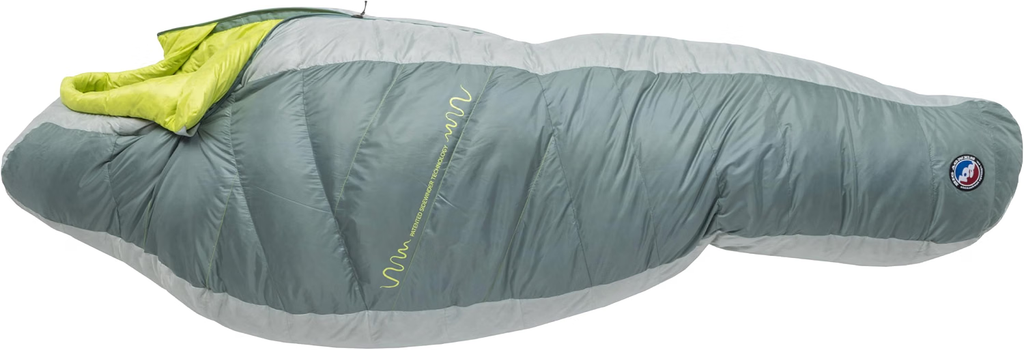
Summary: Big Agnes labels the Torchlight EXP 0 as a 0 °F bag, but REI lists an ISO tested lower limit of 6 °F and a comfort figure of 18 °F. Zippered side panels add up to 10 in of room, which helps when you wear insulation to bed. It uses 650-fill down and weighs 3 lb 10 oz in Regular.
Best for: Campers who wear layers to bed, want room to move, and prioritize price among the down bags.
| Spec | Big Agnes Torchlight EXP 0 (Regular) |
|---|---|
| ISO comfort / lower limit | 18 °F / 6 °F (the brand label says 0 °F) |
| Total weight | 3 lb 10 oz |
| Insulation | 650-fill DownTek water-repellent down, RDS-certified |
| Fill weight | 2 lb 2 oz |
| Shell fabric | Recycled 20-denier ripstop polyester |
| Compressed volume | 9.3 L (stuff sack 10 x 21 in) |
| Fits up to | 6 ft |
| Girth | Shoulder 60 to 70 in with panels |
| Features | Expandable side panels, PadLok pad attachment, pillow barn, insulated zipper and neck baffle |
| List price | $469.95 to $489.95 at REI |
Pros
- Expandable panels add up to 10 in of room
- PadLok system helps keep you on your pad
- The lowest list price among the down bags here
- Hydrophobic down
Cons
- ISO lower limit is 6 °F, so it is not a tested 0 °F bag
- 650-fill makes it heavy for its rating
- No dedicated vents: the panels are a fit feature, so you cool down by unzipping the main zipper
- Some REI reviewers report snag-prone panel zippers and weaker PadLok quality
Who should buy it: campers who want adjustable room at a lower price and will treat it as a roughly 6 °F bag.
Who should skip it: anyone who needs a true tested 0 degree rating, and ultralight backpackers.
Editorial rating: 7.3/10

- Tailored Fit & Lightweight: The regular model fits adventurers up to 72”, weighs only 3lb 7oz, and packs down to 26L 10″…
- Optimized Side-Sleeper Construction: Features a cocoon-style design with a wrap-around zipper and an integrated “Pillow …
- DownTek Water-Repellent Insulation: Utilizes PFC-free, 650 fill power DownTek and FireLine ECO synthetic insulation to m…
7. TETON Sports LEEF 0: Best Budget
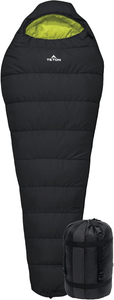
Summary: The LEEF 0 lists for $99.99 on TETON’s site and is the one bag here that does not belong in the true 0 degree class. TETON calls its ratings survival ratings, not comfort ratings, and lists a comfort range of 25 °F to 30 °F. The page does not mention ISO or EN testing. It uses synthetic fill and weighs 4.2 lb.
Best for: Car camping and mild winter nights on a budget.
| Spec | TETON Sports LEEF 0 (Regular) |
|---|---|
| Rating | Brand label 0 °F; TETON’s comfort range 25 to 30 °F; no ISO or EN rating found |
| Total weight | 4.2 lb |
| Insulation | Synthetic (TETON lists ThermiLoft for the Regular 0 °F) |
| Shell and liner | Polyester ripstop shell; brushed polyester liner |
| Girth | Shoulder 62 in, hip 50 in, foot 38.5 in |
| Pack size | 17 x 10 x 10 in (volume not published) |
| Features | Interior pocket, zipper draft tube, 3/4-length two-way zipper, compression sack, lifetime warranty |
| Versions | Also sold as 20 °F and 30 °F bags with the same name |
| List price | $99.99 at TETON |
What TETON says about its rating: the product page states the ratings are survival ratings, meaning the coldest temperature the bag is designed to keep you alive in, with no guarantee of comfort. It recommends adding 20 to 30 degrees to the listed rating for comfort, which matches the 25 to 30 °F comfort range it lists for the 0 °F bag.
Pros
- A fraction of the cost of any down bag here
- Synthetic fill is forgiving when it gets wet
- Roomy cut and a lifetime warranty
- TETON is open about what its rating means
Cons
- Heavy and bulky, so a poor choice for backpacking
- Not independently rated, and the 0 degree label is a survival figure
- Several versions share one product name
- Not a lightweight design
Who should buy it: car campers, shoulder-season trips, and first-time winter campers who want a low-cost bag and will add layers and a warm pad.
Who should skip it: backpackers, and anyone who expects to sleep below about 20 °F.
Editorial rating: 4.8/10

- polyester
- Imported
- ULTRALIGHT SLEEPING BAG FOR ADULTS: Designed for comfort without the bulk, ideal for camping, hiking, and backpacking tr…
Buying Guide: Build a 0 Degree Sleep System
A winter sleeping bag is a key piece of gear, but it works as one part of a sleeping bag system with your pad, layers, and shelter. Our guide on how to choose a sleeping bag covers the basics. The sections below cover what changes at 0 degrees.
How 0 °F ratings work (ISO 23537)
Sleeping bag temperature ratings come from ISO, the International Organization for Standardization, in standard ISO 23537, which replaced the older EN 13537. Labs test a bag on a thermal manikin, then convert the results into ratings for a “standard man” and “standard woman” (Australian Hiker’s explainer and Sea to Summit).
| Rating | Standard person | Posture | What it means in plain terms |
|---|---|---|---|
| Comfort | Woman, 25 years old, 1.60 m, 60 kg | Relaxed | The coldest temperature she can expect to sleep comfortably. REI describes this as the average cold sleeper. |
| Lower limit | Man, 25 years old, 1.73 m, 73 kg | Curled up | The coldest temperature he can sleep eight hours without waking. REI describes this as the average warm sleeper. |
| Extreme | Woman | Survival only | A survival figure with a risk of health damage from hypothermia. Do not plan around it. |
These “standard people” are test conventions, not rules about who should use which number. Your own build, metabolism, clothing, and pad all shift the result. Many brands list the lower limit as the headline for unisex bags and the comfort figure for women’s bags, so check which one a brand is quoting.
Which number should you use?
- If you run cold, or want a margin, plan around the comfort figure.
- If you sleep warm, the lower limit is closer to your real range.
- Add several degrees of safety margin. A bag is rated to keep a standard sleeper going under test conditions with a base layer and an insulated pad, not in a wet bag or on thin foam.
For the seven bags here, the comfort figure runs from 12 °F to 18 °F, even when the label says 0 degrees.
Do you need a 0 °F bag at all?
Not always. If your coldest nights stay above about 15 °F, a 10 °F or 15 °F bag is often lighter and cheaper, and our 3-season sleeping bags guide covers milder options. For a wider range of ratings, see our best sleeping bags for cold weather. Choose a 0 degree bag when forecast lows reach the single digits or teens, or when you want a buffer for winter backpacking and snow camping.
A heater can take the edge off in a large tent. Our tent heater guide covers the options, and our guide to hot tent camping explains the stove setup. Treat both as extras, not as a substitute for a bag rated for the night.
Down vs synthetic insulation
| Insulation | Strengths | Trade-offs |
|---|---|---|
| Down | Most warmth per ounce, lighter and compressible, long lifespan with care | Loses loft when soaked; hydrophobic treatments help but do not make it waterproof |
| Synthetic | Keeps some warmth even when wet, lower price, easy care | Heavier and bulkier for the same warmth |
Six of the seven bags here use down. The LEEF is the only synthetic option, and synthetic sleeping bags like it suit damp trips and tight budgets. Winter campers also fight condensation inside the tent, which can wet a bag over a long trip, so read our guide on how to stop tent condensation.
Fill power and fill weight
Fill power measures how much space one ounce of down fills, so higher numbers mean more loft per ounce. Fill weight is the actual amount of down in the bag, and both matter. The Spark carries 850+ fill power with about 30 oz of down. The Torchlight EXP uses 650-fill and 34 oz of down, and it still tests only to a 6 °F lower limit.
Fit and shape
A snug tapered cut wastes less warmth but feels restrictive. Wide bags like the Kodiak MF and Torchlight EXP give you room to move. Check the fits-up-to height and shoulder girth before you buy, because empty space leaves cold spots your body has to heat. Our tips on the most comfortable way to sleep in a tent cover pillows and positioning, and our camping pillow guide helps if your bag lacks a pillow pocket.
Sleeping pad R-value
Your pad matters as much as your bag. Down under your body is crushed flat and cannot insulate you from frozen ground, so the pad does that work. For winter, an R-value of 5 or higher is a common recommendation, and many campers stack two pads on very cold nights. Our ultralight sleeping pads guide covers pads for backpacking, and our camping air mattress guide covers car camping.
Common buying mistakes
- Trusting the label. Look for an ISO or EN lower limit and comfort figure.
- Buying a 0 degree bag for 30 °F nights. You will be too warm and carry extra pack weight.
- Ignoring the pad. A 0 degree bag on a thin pad is a cold night.
- Skipping fit. The wrong length or girth leaves cold air and heat loss around your shoulders and feet.
- Picking the wrong Amazon variant. Select the 0 °F option and your size every time.
- Storing the bag compressed. Store a down bag loose in a large sack to protect its loft.
For more cold-night tactics beyond gear, see our tips to stay warm while camping.
Alternatives: 0-Degree Sleeping Bag Options by Budget and Need
Budget: the LEEF is the least expensive option here, but treat it as a 25 to 30 °F comfort bag. Our guide to camping on a budget covers other ways to cut costs. The Torchlight EXP is the cheapest down bag in this guide, with a 6 °F lower limit.
Premium waterproof shell: the Feathered Friends Snowbunting ES 0 is a 0 °F bag rated by its maker, with 900+ fill goose down, a waterproof breathable shell, and a regular weight of about 2 lb 13 oz. It lists for $829 at Feathered Friends, so it costs more than any pick here except the Kodiak MF. We did not score it.
Women’s and cold nights: look at the comfort figure first, since it is set for a standard woman. Some brands sell women’s-specific versions, such as a women’s Spark that zips to the men’s version. Among our seven, the Phantom has the lowest comfort figure at 12 °F.
Wide and roomy: the Kodiak MF has the widest cut at 66 in of shoulder girth. The Torchlight EXP adds up to 10 in with its panels.
Car camping: weight and pack size matter less from a car. The LEEF is the budget choice, and any of the down bags will be warmer for the money you spend. Our car camping tent guide and car camping vs tent camping comparison help you plan the rest of the setup. If you sleep on your side, a cot can raise you off cold ground. See our camping cots for side sleepers.
Frequently Asked Questions About Winter Sleeping Bags
Is a 0 degree sleeping bag warm enough for winter?
Usually yes for winter backpacking down to the teens and single digits, with an insulated pad and dry layers. The ISO lower limit is 0 °F for a standard man in a curled position. If your body runs cold, plan around the comfort figure, which is about 12 °F to 14 °F for the down bags here.
What does a 0 degree rating mean?
On most bags it refers to the ISO lower limit: the coldest temperature at which a standard man can sleep for eight hours in a curled position without waking. The comfort figure, for a standard woman in a relaxed position, is warmer, usually 12 °F to 18 °F. The extreme figure is survival-only, not a planning target.
What is the lightest 0 degree sleeping bag here?
The Therm-a-Rest Parsec 0 (2 lb 7 oz, Regular) and Sea to Summit Spark 0 (2 lb 7.3 oz, Regular) are the lightest, separated by under half an ounce on paper. Weights are brand-claimed and exclude sacks. The Phantom and Kodiak MF follow at about 2 lb 10 oz to 2 lb 12 oz.
Should I choose down or synthetic for 0 °F?
Choose down if weight and pack size matter most, since it gives more warmth per ounce and is lighter and compressible. Choose synthetic if you expect damp conditions or want a lower price, and accept more weight and bulk. Hydrophobic down narrows the gap, but no down bag is waterproof, so keep it dry.
Do I need a sleeping bag liner?
A liner keeps the inside of your bag cleaner and can add some warmth, but the gain varies by liner, so treat it as a bonus, not a rating upgrade. For real cold, a better pad, dry layers, and a bag with the right comfort figure add more warmth than a liner does.
What pad do I need with a 0 degree bag?
Use an insulated pad with an R-value of 5 or higher, and consider stacking two pads on frozen ground or snow. Your weight crushes the bag’s insulation under you, so the sleeping pad to go beneath it does that work. A thin summer pad can undo much of what the bag provides.
Are all of these bags truly rated 0 °F?
No. Four of the down bags have an ISO tested lower limit of 0 °F per REI: the Spark, Parsec, Phantom, and Sonic. The Kodiak MF is rated 0 °F by Western Mountaineering, with a retailer-listed ISO limit of -1 °F. The Torchlight EXP tests at 6 °F, and the LEEF has no independent rating.
How do I wash and store a down sleeping bag?
Use a large front-loading machine with a down-specific cleaner on a gentle cycle, rinse twice, and dry on low heat with clean tennis balls to restore loft. Wash only when needed, and store the bag uncompressed in a large breathable sack. See our full guide on how to wash a sleeping bag.
Can a 0 degree sleeping bag be too warm?
Yes. Above about 30 to 40 °F, most 0 degree bags feel hot. The NEMO Sonic’s Thermo Gills are built for venting, and any bag can be unzipped to cool down. The Torchlight EXP has no dedicated vents, so you cool it by opening the zipper. If most trips are mild, a warmer-rated bag is the better buy.
Should I buy the Spark or the Parsec?
They are close. The Spark has more down (about 30 oz versus 27 oz), a lower compressed volume (9.9 L versus 10.8 L), and a lifetime guarantee from Sea to Summit. The Parsec costs less at REI and uses 900-fill down. Choose whichever you can confirm is the 0 °F version in your size at the better price.
Final Recommendation: Best Overall and Best Budget
If you want one bag with the best balance of weight and tested warmth, buy the Sea to Summit Spark 0. If you want nearly the same weight and ratings for less money, buy the Therm-a-Rest Parsec 0. If you run cold, look at the Mountain Hardwear Phantom 0 for its 12 °F comfort figure. Larger and side-sleeping campers should consider the Western Mountaineering Kodiak MF or the NEMO Sonic 0.
On a budget, the TETON LEEF 0 works for car camping and mild winter nights, but it is not a true 0 degree bag. Treat the Big Agnes Torchlight EXP 0 as a 6 °F bag with a very adjustable fit. If this is your first winter trip, run through our camping checklist for beginners, and plan your hot drinks with our best camping stoves and best backpacking stoves guides.
| Category | Pick |
|---|---|
| Our top pick | Sea to Summit Spark 0 |
| Value down | Therm-a-Rest Parsec 0 |
| People who run cold | Mountain Hardwear Phantom 0 |
| Roomy fit | Western Mountaineering Kodiak MF |
| Side sleeping | NEMO Sonic 0 |
| Adjustable fit | https://link.amazon/B03BCCgkL |
| Lowest price | TETON LEEF 0 |
About the Author
Ricky Thorne writes and maintains CampingSaga’s camping and backpacking gear guides. His work on roundups like this one follows a fixed process:
- Pull each spec from the brand’s own page, and cross-check it against REI or another major retailer.
- Record the exact model, size, and version, because brands change fills, fabrics, and prices between seasons.
- Prefer tested ISO figures over marketing labels, and flag any bag whose label does not match its tested rating.
- Score every product against the same weighted criteria and publish the scoring.
- State plainly whether a guide is research-based or hands-on. This one is research-based.
He does not claim to have slept in the bags reviewed here. Questions, corrections, and spec updates are welcome through the CampingSaga contact page or info@campingsaga.com.
Sources and References
We checked specs, ratings, and prices against these pages on November 9, 2026:
- Sea to Summit: Spark Down Sleeping Bag and REI listing
- Therm-a-Rest: REI Parsec 0 listing and retailer listing with brand packed dimensions
- Mountain Hardwear: Phantom 0F/-18C and REI listing
- Western Mountaineering: Kodiak MF, REI listing, and Backcountry listing
- NEMO: REI Sonic 0 listing
- Big Agnes: REI Torchlight EXP 0 listing
- TETON Sports: LEEF Mummy Sleeping Bags
- Feathered Friends: Snowbunting ES 0
- Rating standard: Australian Hiker, ISO 23537 explained