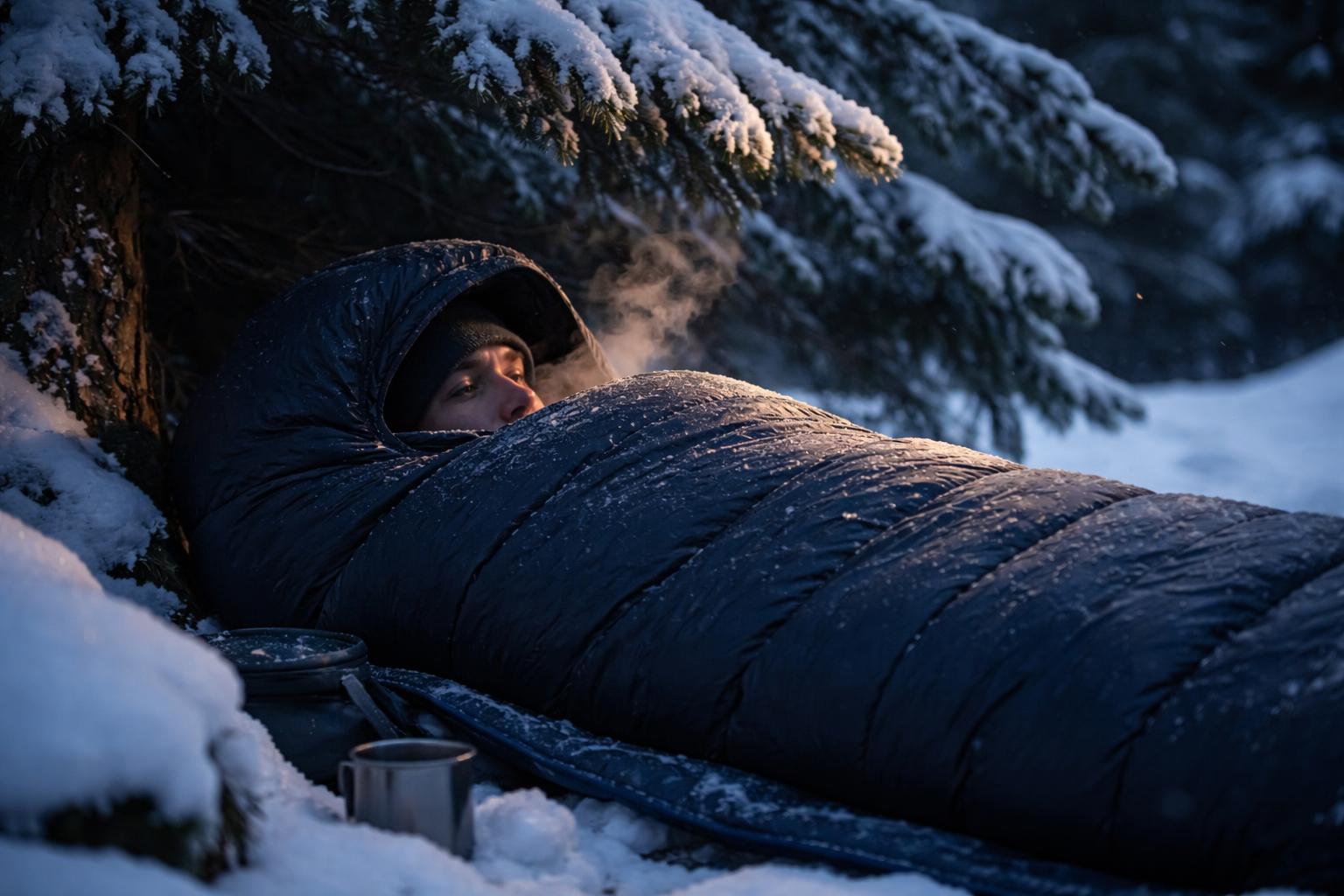
There’s nothing quite like the crisp, silent beauty of a winter landscape, but that serenity can turn into a shivering nightmare fast if you’re not properly equipped. I’ve spent plenty of nights under frigid skies, from the snow-dusted peaks of the Rockies to the damp, biting cold of the Pacific Northwest, and a freezing night in the backcountry can ruin even the most carefully planned trip.
One winter backpacking trip in particular, with temperatures dropping well below freezing after dusk, is what really drove the lesson home for me. Despite carrying gear I thought was adequate, cold spots formed along the zipper and wind cut through the shell more than expected. That trip taught me the difference between a sleeping bag and a bag that’s genuinely built for winter.
This guide draws on years of hands-on outdoor gear evaluation, cross-checked against verified specifications from sleeping bag manufacturers rather than marketing copy alone. Below are 7 of the best sleeping bags for cold weather picks for cold weather camping and backpacking, how to actually read a sleeping bag temperature rating, and how to match a bag (and the rest of your backpacking gear) to your specific trip instead of just your budget.
Quick Verdict: Best Winter Sleeping Bag Picks for Cold Weather
If you only read one section, read this one. Whether you need a winter bag for weekend car camping or a true expedition sleeping bag for sub-freezing backcountry nights, one of these seven should fit the bill.
- Best Overall Sleeping Bag: Coleman North Rim 0°F reliable, comfortable, and forgiving for car camping and shorter winter trips.
- Best Backpacking Sleeping Bag: TETON Sports ALTOS 0°F genuinely lightweight down warmth without the premium price of ultralight brands.
- Best Budget Winter Sleeping Bag: MalloMe XL Winter Sleeping Bag (0°F to 45°F) real cold-weather capability at a budget price point.
- Best for Wet/Damp Conditions: Hyke & Byke Katahdin 0°F synthetic sleeping bag fill that keeps insulating even when damp.
- Best Down Value: Kelty Cosmic 20 strong warmth-to-weight ratio at a fair price for a mummy sleeping bag.
- Best Premium Pick: Hyke & Byke Snowmass 0°F excellent down warmth for serious sub-freezing trips, closer to expedition-grade.
- Best for Roomy Comfort: REDCAMP Cotton Flannel spacious, cozy, ideal for car camping and families on warmer winter nights.
How I Evaluate and Score These Bags
I don’t just repeat spec sheets on this list. My process for every bag here includes:
- Cross-referencing manufacturer specs against verified retailer listings (Amazon, brand websites, and authorized retailers) to confirm temperature ratings, insulation type, weight, and packed size, flagging anywhere the data is inconsistent or unconfirmed.
- Drawing on hands-on outdoor and cold-weather camping experience to evaluate how a bag’s design, materials, and construction hold up to real winter conditions, alongside verified buyer feedback.
- Applying a consistent scoring rubric across five categories, described below, so bags can be compared on the same basis rather than by marketing claims alone.
- Flagging honest limitations for each bag rather than presenting every pick as flawless.
Scoring Rubric (out of 10 each):
| Category | What It Measures |
|---|---|
| Warmth | How well the insulation and design perform relative to the stated temperature rating |
| Packability | Weight and packed size relative to the bag’s intended use case |
| Durability | Build quality, materials, and zipper/seam construction |
| Comfort | Fit, roominess, and livability inside the bag |
| Value | Performance relative to typical price point |
Scores reflect editorial evaluation based on verified specifications and manufacturer/retailer data, not a formal independent lab test. I’ve noted this clearly so you can weigh it accordingly.
Quick Comparison Table
| Sleeping Bag | Temp Rating | Insulation | Weight | Packed Size | Shape | Price Tier | Overall Score |
|---|---|---|---|---|---|---|---|
| MalloMe XL Winter | 0°F to 45°F | Synthetic (3D fiber fill) | ~7 lbs | Not specified | Rectangular/Mummy hybrid | 29.90 | 7.2/10 |
| TETON Sports ALTOS 0°F | 0°F (limit) | Down (hydrophobic MtnDry) | ~3.4-3.5 lbs | ~15.5″ x 9.5″ x 9.5″ | Mummy | 103.55 | 8.4/10 |
| Coleman North Rim 0°F | 0°F | Synthetic (Coletherm hollow polyester) | ~4 lbs (varies by listing) | ~12″ x 17″ (varies by listing) | Mummy | 89.99 | 8.0/10 |
| Hyke & Byke Katahdin 0°F | 0°F | Synthetic (ClusterLoft, 625 FP equivalent) | Not consistently listed | 11″ x 8″ | Mummy | $$ | 7.8/10 |
| Kelty Cosmic 20 | Comfort ~32°F / Limit ~21°F | Down (550 fill power DriDown) | 2 lbs 13 oz | ~8″ x 14″ | Mummy | 119.95 | 8.1/10 |
| Hyke & Byke Snowmass 0°F | 0°F | Down (80/20 duck, 650 fill power) | 3.38 lbs (Regular) | 13″ x 8″ | Mummy | $$$ | 8.6/10 |
| REDCAMP Cotton Flannel (4 lb fill) | Comfort ~41°F / Range 32-59°F | Synthetic (hollow cotton fiber, 2/3/4 lb fill options) | ~4-5 lbs pack weight (varies by listing) | 17″ x 8″ x 8″ | Rectangular/Envelope | 89.99 | 7.0/10 |
The 7 Best Sleeping Bags for Cold Weather
1. MalloMe XL Winter Sleeping Bag (0°F to 45°F)
Overall Score: 7.2/10
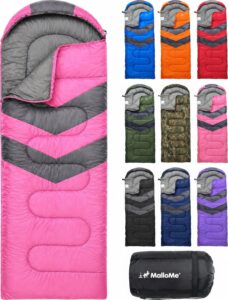
For campers who want genuine cold-weather capability without a premium price tag, this is a bag worth serious consideration for beginners. The 3D synthetic fiber fill performs reasonably well for the price point, and the double-layered, S-shape-stitched shell adds real protection against ground moisture and light precipitation. Note that the manufacturer markets the shell as “waterproof,” but based on the construction described (a treated polyester shell), this functions more like a durable water-resistant design rather than a fully submersion-proof one, worth keeping in mind if you’re expecting heavy rain protection.
Key Specs
| Spec | Detail |
|---|---|
| Temperature Rating | 0°F to 45°F (manufacturer-stated range) |
| Insulation Type | Synthetic (3D fiber fill) |
| Shell | Hex-tech design, double-layered, S-shape stitching, water-resistant per manufacturer |
| Weight | Approximately 7 lbs |
| Width | 35″ (roomier than most budget mummy bags) |
| Zipper | Snag-free, double-sided |
| Fill Power | Not specified by manufacturer |
Pros
- Genuine 0°F cold-weather rating at a budget price point
- Water-resistant shell adds real protection against ground moisture
- Roomier 35″ width than most mummy bags in this price range
- Snag-free double-sided zipper
Cons
- Heavier than dedicated backpacking bags, better suited to car camping
- Fill power isn’t disclosed, so precise warmth-to-weight comparison is harder to judge
- “Waterproof” marketing claim likely overstates real-world water resistance
Best For: Budget-conscious campers who want real cold-weather performance for car camping or short winter trips.
Who Should Skip This: Backpackers who need a lightweight, highly compressible bag for long trail days.

- Waterproof HEX-TECH Fabric
- Made in the USA or Imported
- BEST YEAR ROUND SLEEPING BAG – Temperature rated for 50°F to 77°F. Easily fits a 6ft adult and weighs only around 3lbs. …
2. TETON Sports ALTOS 0°F Backpacking Sleeping Bag
Overall Score: 8.4/10
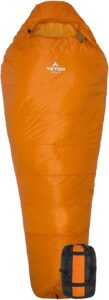
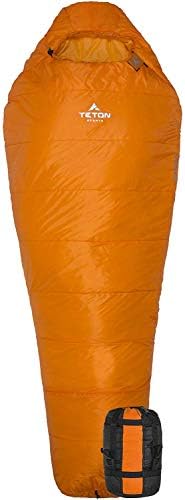
This backpacking sleeping bag earns a strong spot on this list, and it’s worth correcting a common assumption upfront: the ALTOS 0°F is a down bag, using hydrophobic MtnDry down, not synthetic fill as some listings imply. That hydrophobic treatment matters because it helps the down resist losing loft in damp conditions, one of down’s traditional weaknesses. Manufacturer data shows the bag weighs approximately 3.4 to 3.5 lbs, making it genuinely competitive for winter backpacking. Worth noting: TETON’s own comparable ALTOS-S 0°F model lists a comfort rating around 25-30°F despite the “0°F” name, a useful reminder that the number in a bag’s name is typically a limit rating, not a comfort rating.
Key Specs
| Spec | Detail |
|---|---|
| Temperature Rating | 0°F (limit rating; comfort rating likely closer to 25-30°F based on comparable ALTOS models) |
| Insulation Type | Down (hydrophobic MtnDry down) |
| Shell | 20-denier ripstop nylon, 20-denier nylon lining |
| Weight | Approximately 3.4-3.5 lbs |
| Packed Size | Approximately 15.5″ x 9.5″ x 9.5″ |
| Shape | Mummy, with 3-piece hood and full-length draft tube |
Pros
- Genuinely lightweight for a bag with a 0°F rating
- Hydrophobic down treatment adds real resilience against damp conditions
- Draft tube and 3-piece hood help minimize heat loss
- Competitively priced relative to other down bags in this weight class
Cons
- Like most bags with a “0°F” name, real-world comfort likely sits well above that number
- Down still requires more careful moisture management than synthetic fill overall
Best For: Backpackers who want genuine down warmth without an ultralight-brand price tag.
Who Should Skip This: Car campers who don’t need to prioritize weight you can get more room and features for similar money elsewhere on this list.
- Nylon
- Made in the USA or Imported
- STEP UP YOUR COMFORT: This roomy bag provides more shoulder and leg room; Built-out footbox provides more room for your …
3. Coleman North Rim 0°F Sleeping Bag
Overall Score: 8.0/10
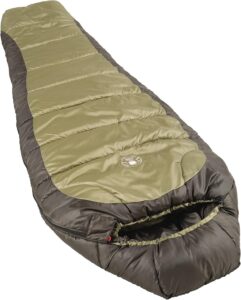
This bag is a solid, mainstream option that consistently shows up as a dependable choice in cold-weather roundups. It uses Coleman’s Coletherm hollow polyester insulation, a synthetic fill, with a ripstop polyester shell described by the manufacturer as water-resistant (not fully waterproof). The adjustable hood is a genuinely useful feature, letting you fine-tune warmth versus ventilation. One thing worth flagging: reported weight varies noticeably across retailer listings, from roughly 3.75 lbs to as much as 4.4 lbs, so treat any single number as approximate until you check your specific listing.
Key Specs
| Spec | Detail |
|---|---|
| Temperature Rating | 0°F |
| Insulation Type | Synthetic (Coletherm hollow polyester) |
| Shell | Ripstop polyester, water-resistant (not fully waterproof) |
| Weight | Approximately 3.75-4.4 lbs (varies by listing) |
| Packed Size | Approximately 12″ x 17″ (varies slightly by listing) |
| Special Features | Adjustable hood, Thermolock draft tube, ZipPlow anti-snag zipper system |
| Shape | Mummy |
Pros
- Reliable, well-established brand with consistent cold-weather performance
- Adjustable hood adds real temperature control
- Anti-snag zipper system performs well even in freezing conditions
- Machine washable for easier long-term care
Cons
- Bulkier pack size makes it less ideal for long-distance backpacking
- Weight and packed size specs vary somewhat between retailer listings
Best For: Car camping, family trips, and shorter winter outings where pack size isn’t a major concern.
Who Should Skip This: Backpackers prioritizing minimal pack weight over general-purpose comfort.

- Polyester
- Imported
- Mummy-style adult sleeping bag designed for camping even in temperatures as low as 0 degrees Fahrenheit
4. Hyke & Byke Katahdin 0°F Sleeping Bag
Overall Score: 7.8/10
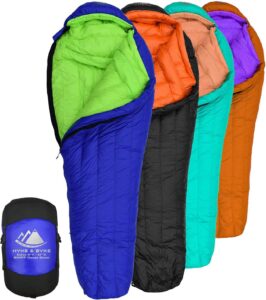
For anyone prioritizing resilience against moisture, this synthetic bag stands out. It uses Hyke & Byke’s ClusterLoft synthetic fill, rated with a loft equivalent to 625 fill power, paired with a hydrophobic 400T 20D ripstop nylon liner treated with DWR. Unlike down, synthetic insulation retains much of its warmth even when wet, which is a real advantage in humid or snow-melt-heavy conditions. One caveat worth flagging: exact total bag weight isn’t consistently published across retailer listings, so I’m not stating a specific figure here rather than guessing.
Key Specs
| Spec | Detail |
|---|---|
| Temperature Rating | 0°F |
| Insulation Type | Synthetic (ClusterLoft, loft equivalent to 625 fill power) |
| Liner | 400T 20D ripstop nylon, DWR-treated (water-resistant, not waterproof) |
| Zipper | YKK |
| Weight | Not consistently specified across retailer listings |
| Packed Size | 11″ x 8″ |
| Shape | Mummy |
Pros
- Strong performance in damp or humid cold-weather conditions
- Compresses impressively small for a synthetic bag
- Durable YKK zippers built for repeated cold-weather use
Cons
- Synthetic fill is still heavier than premium down for equivalent warmth
- Total weight isn’t reliably published, making direct comparisons harder
Best For: Winter backpackers expecting rain, snow melt, or high humidity where a down bag carries more risk.
Who Should Skip This: Ultralight backpackers who prioritize the absolute lowest pack weight over moisture resistance.

- Inner and outer nylon shell with vertical baffles that allow the adjustment of the 800 fill power insulation to move whe…
- 0 Degree Sleeping Bag: Perfect cold weather sleeping bag features WR 800 fill power goose down insulation with a revolut…
- Hiking Gear: Designed for thru-hiking, backpacking and camping, this ultralight sleeping bag boasts superior weight-to-w…
5. Kelty Cosmic 20 Down Mummy Sleeping Bag
Overall Score: 8.1/10
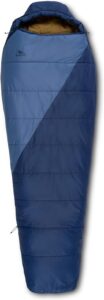
This bag is a genuinely strong entry point into down insulation. It’s worth being direct about the rating here: the “20” in the name refers to Kelty’s limit rating (~21°F), while the actual comfort rating sits closer to 32°F. Some independent reviewers suggest real-world comfort performance for colder sleepers may be closer to the 30-40°F range, so plan your buffer accordingly rather than trusting the name alone. That said, the 550 fill power DriDown (hydrophobic-treated) delivers a strong warmth-to-weight ratio at 2 lbs 13 oz, and the recycled fabrics with PFAS-free DWR coating are a genuine sustainability plus.
Key Specs
| Spec | Detail |
|---|---|
| Temperature Rating | Limit rating ~21°F / Comfort rating ~32°F (these differ meaningfully; see Buyer’s Guide) |
| Insulation Type | Down (550 fill power DriDown, hydrophobic-treated) |
| Materials | Recycled fabrics, PFAS-free DWR coating, 50D polyester taffeta liner |
| Weight | 2 lbs 13 oz |
| Packed Size | Approximately 8″ x 14″ |
| Shape | Mummy |
Pros
- Strong warmth-to-weight ratio for the price
- Hydrophobic DriDown adds real moisture resistance for a down bag
- More sustainable materials than most competitors in this price range
- Genuinely compresses well for backpacking
Cons
- The “20” name is a limit rating; realistic comfort is closer to 30-40°F for many sleepers
- Down still loses insulating ability if it gets thoroughly wet
Best For: Backpackers and campers who want lightweight down performance without a premium price tag, primarily for 3-season and light winter use.
Who Should Skip This: Anyone expecting consistently wet conditions or genuinely extreme cold below freezing.
Please enter product(-s) ASIN(-s)!6. Hyke & Byke Snowmass 0°F Down Sleeping Bag
Overall Score: 8.6/10
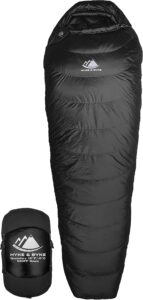
This is the premium pick on this list, and the specs back it up. The 80/20 duck down with 650 fill power is naturally hydrophobic, and the manufacturer lists a confirmed Regular-size weight of 3.38 lbs with a compressed packed size of 13″ x 8″, genuinely competitive figures for this price tier. The draft collar and draft tube work together to reduce cold spots, a meaningful design detail for genuinely cold nights. Independent reviews suggest real-world comfort is strongest in the 20-35°F range with a good sleeping pad underneath, so treat the 0°F figure as the outer limit rather than the target comfort zone.
Key Specs
| Spec | Detail |
|---|---|
| Temperature Rating | 0°F (limit rating; comfortable performance more consistently reported in the 20-35°F range) |
| Insulation Type | Down (80/20 duck down, 650 fill power, naturally hydrophobic) |
| Weight | 3.38 lbs (Regular size, per manufacturer listing) |
| Packed Size | 13″ x 8″ |
| Special Features | Draft collar, draft tube, differential cut for warmth distribution |
| Shape | Mummy |
Pros
- Excellent warmth-to-weight ratio backed by confirmed manufacturer specs
- Lightweight for its warmth class, suitable for thru-hiking and bikepacking
- Draft collar and draft tube noticeably reduce cold spots
- Naturally hydrophobic down adds real moisture resilience
Cons
- Premium price tier compared to the rest of this list
- Realistic comfort is closer to 20-35°F rather than the 0°F limit figure
- Down still requires careful moisture management relative to synthetic options
Best For: Serious winter backpackers and bikepackers tackling genuinely cold, largely dry conditions.
Who Should Skip This: Casual or occasional campers who don’t need premium-tier performance, or anyone expecting consistently wet conditions.
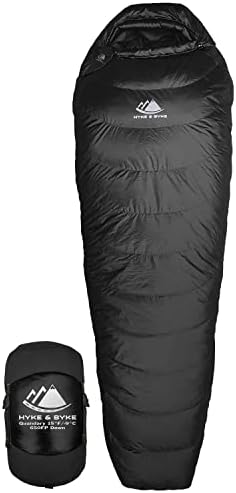
- Inner and outer nylon shell with horizontal baffles that allow the adjustment of the 650 fill power insulation to move w…
- 15 Degree Sleeping Bag – The Quandary mummy sleeping bag is packed with naturally hydrophobic and warmth-trapping Duck D…
- Save Space & Shave Weight – This 3 Season fall and winter sleeping bag is professionally designed for thru-hiking, backp…
7. REDCAMP Cotton Flannel Sleeping Bag
Overall Score: 7.0/10
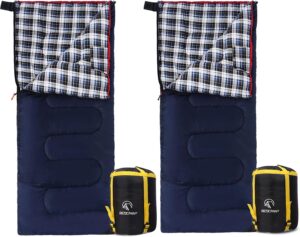
For campers who prioritize space and comfort over pack weight, this envelope-style bag is a solid choice, with one important clarification: the “cold weather” version most relevant to this guide is the 4 lb fill option, which carries a manufacturer-listed comfort rating around 41°F and a usable range of roughly 32-59°F, not a true 0°F or sub-zero rating. It’s a strong pick for shoulder-season and moderately cold car camping, not deep winter. The cotton flannel lining is genuinely comfortable, and the shell is described by the manufacturer as waterproof, though as with most treated polyester ripstop shells, this is more accurately a durable water-resistant finish rather than fully submersion-proof protection.
Key Specs
| Spec | Detail |
|---|---|
| Temperature Rating | 4 lb fill: Comfort ~41°F, usable range ~32-59°F (lighter fill options rated for milder temperatures) |
| Insulation Type | Synthetic (hollow cotton fiber, 2/3/4 lb fill weight options) |
| Lining | 100% cotton flannel |
| Shell | 210T polyester ripstop, water-resistant per manufacturer |
| Pack Weight | Approximately 4-5 lbs depending on listing and bundle |
| Packed Size | Approximately 17″ x 8″ x 8″ |
| Shape | Rectangular / Envelope |
Pros
- Roomy, comfortable fit unlike restrictive mummy bags
- Soft cotton flannel lining feels genuinely comfortable
- Adjustable fill weight lets you match warmth to your expected conditions
- Two bags can zip together for a double-size option
Cons
- The 4 lb “cold weather” version is rated closer to the 30-40°F range, not deep winter
- Bulkier and heavier, not designed for backpacking
- “Waterproof” claim likely overstates real-world water resistance
Best For: Car camping, family trips, and campers who value comfort and space during moderately cold weather.
Who Should Skip This: Backpackers, or anyone expecting genuinely sub-freezing overnight temperatures.

- Flannel
- Larger size and Softer Material: Size is 75″x33″/190x84cm. Perfect REDCAMP winter sleeping bags flannel for adults cold …
- Temperature Range: 2lbs filling 80% cotton lined adult sleeping bag is comfort in 59°F/15°C and fits temperature range 5…
Final Awards: Best Sleeping Bag Overall & Value Comparison
Choosing the best sleeping bag overall depends on how you camp, but if you’re comparing purely on value, the table below breaks down which bag wins in each category.
| Award | Winner | Score | Why |
|---|---|---|---|
| 🏆 Best Sleeping Bag Overall | Coleman North Rim 0°F | 8.0/10 | Reliable warmth, adjustable hood, works for most trip types |
| 🎒 Best Backpacking Sleeping Bag | TETON Sports ALTOS 0°F | 8.4/10 | Genuinely lightweight down warmth at a fair price |
| 💰 Best Value / Best Budget | MalloMe XL Winter (0°F) | 7.2/10 | Real cold-weather rating without a premium price tag |
| 💧 Best for Wet Conditions | Hyke & Byke Katahdin 0°F | 7.8/10 | Synthetic fill keeps insulating even when damp |
| ⚖️ Best Down Value | Kelty Cosmic 20 | 8.1/10 | Strong warmth-to-weight ratio, best suited to 3-season/light winter use |
| ❄️ Best Premium / Expedition Sleeping Bag | Hyke & Byke Snowmass 0°F | 8.6/10 | Confirmed specs back up genuinely strong cold-weather performance |
| 🛏️ Best for Comfort | REDCAMP Cotton Flannel | 7.0/10 | Roomy, cozy, ideal for car camping in moderately cold conditions |
Buyer’s Guide: How to Choose the Right Cold Weather Sleeping Bag
Understanding Temperature Ratings (And Why the Name on the Bag Can Mislead You)
Temperature ratings are the most important spec on a cold weather sleeping bag, and also one of the most misunderstood. Many manufacturers test bags against the EN 13537 or newer ISO 23537 standard, which produces multiple numbers, not one:
- Comfort Rating: The temperature at which an average cold-sleeping adult can sleep comfortably.
- Limit Rating: The temperature at which an average warm-sleeping adult can sleep without waking from cold, often while shivering.
- Extreme Rating: A short-term survival threshold, not a comfort measure.
The number in a bag’s name or marketing (like “0°F” or “20”) is very often the limit rating, not the comfort rating. We saw this clearly in the research for this guide: the Kelty Cosmic 20 carries a comfort rating around 32°F despite the “20” in its name, and TETON’s comparable ALTOS-S 0°F model lists a comfort rating in the 25-30°F range.
A commonly used approach among experienced campers is to budget a buffer of roughly 10-15°F below the marketed rating when picking a bag for genuinely cold nights, though this is a general guideline rather than a fixed rule. The right buffer for you depends on your individual cold tolerance, your sleeping pad’s insulation, your clothing layers, and the specific bag’s actual comfort rating if the manufacturer publishes one. When available, always check for a published comfort rating rather than relying on the name alone.
Down vs. Synthetic Insulation
- Down offers the best warmth-to-weight ratio and compresses smaller, making it a strong choice for backpacking. Untreated down loses insulating power when wet. Hydrophobic-treated down (like the down used in the TETON ALTOS and Kelty Cosmic bags above) improves moisture resistance somewhat, but doesn’t eliminate the underlying vulnerability entirely.
- Synthetic insulation is typically heavier and bulkier for equivalent warmth, but keeps insulating even when damp, and is often more affordable.
Fill Power vs. Fill Weight (These Are Not the Same Thing)
This is one of the most common points of confusion, so it’s worth breaking down clearly:
- Fill Power measures the quality and loft of the down, or how much space one ounce fills when it lofts. Higher fill power (650, 800+) generally means better warmth per ounce.
- Fill Weight measures the total quantity of insulation in the bag, by weight.
Actual warmth depends on both numbers together, not fill power alone. A bag with moderate fill power but a generous fill weight can outperform a higher fill power bag with a skimpier fill weight. When comparing down bags, check both specs if the manufacturer publishes them, rather than judging on fill power alone.
Sleeping Bag vs. Quilt
Backpacking quilts are an alternative worth knowing about, especially if pack weight is your top priority. A quilt removes the bottom insulation layer (since it’s compressed and largely ineffective once you’re lying on it anyway) and typically straps to your sleeping pad instead. This can save meaningful weight and cost compared to an equivalent-warmth mummy bag. The trade-off is reduced draft protection and less of a fully enclosed, cocoon-like feel, which matters more to some campers than others. None of the 7 bags in this guide are quilts; all are traditional enclosed sleeping bags, which remain the more forgiving and beginner-friendly option for most cold-weather campers.
Mummy vs. Rectangular Shapes
Mummy bags taper closely to your body, minimizing dead air space and maximizing heat retention. Combined with a draft collar and draft tube, they’re the standard choice for serious cold-weather and backpacking use. Rectangular or envelope-style bags, like the REDCAMP option above, trade some thermal efficiency for significantly more room and comfort, making them better suited to car camping than backpacking or genuinely extreme cold.
Sizing: Regular vs. Long, and Fit Width
Most cold weather bags come in “Regular” (typically fits up to about 5’11” to 6′) and “Long” (typically fits up to about 6’6″) lengths, though exact cutoffs vary by brand, so check the specific listing. Sizing up when in doubt is generally a reasonable approach for winter use, since a slightly larger bag gives you room to layer clothing inside without compressing the insulation, which can reduce warmth. That said, too much extra room also means more dead air space for your body to heat, so there’s a balance rather than a simple “bigger is always warmer” rule.
Women’s vs. Men’s Fit
Many brands, including Kelty, offer separate women’s versions of popular models like the Cosmic line. Women’s-specific bags are typically cut with a narrower shoulder width, wider hip room, and additional insulation concentrated around the torso and feet, areas where many women report feeling cold first. If a women’s version of a bag you’re considering exists, it’s worth comparing the comfort rating and cut directly, rather than assuming the unisex or men’s version will fit and perform identically.
Cold Sleeper vs. Warm Sleeper
Individual cold tolerance varies significantly, and manufacturer ratings are typically based on an “average” sleeper, a benchmark that doesn’t describe everyone. If you tend to sleep cold, it’s reasonable to prioritize a bag’s comfort rating over its limit rating, and to lean toward the warmer end of your buffer range. If you run warm, you may be comfortable closer to a bag’s stated limit rating, though it’s still wise to have a way to vent excess heat, like an adjustable hood or a two-way zipper, so you don’t overheat on milder nights.
Best Value: Which Sleeping Bag Offers the Best Value?
“Best value” doesn’t just mean cheapest. It means the best balance of warmth, durability, and comfort for what you actually pay. On this list, the MalloMe XL Winter earns the best value nod among budget picks since it delivers a genuine 0°F rating rather than the shallower 20°F rating you’ll find on many bags at a similar price. Among down bags, the Kelty Cosmic 20 offers the best value for backpackers who want a lightweight bag without paying expedition-sleeping-bag prices. If you camp only a few nights a year, prioritizing value over top-tier warmth is usually the smarter call.
Everyday Winter Bag vs. Expedition Sleeping Bag
Not every cold-weather trip calls for the same gear. A standard winter bag, like the Coleman North Rim or REDCAMP Cotton Flannel above, is built for car camping and moderately cold nights, generally down to around 20-30°F of real comfort. An expedition sleeping bag, by contrast, is engineered for sustained sub-zero conditions, higher altitude, and multi-day exposure, where a failure in warmth isn’t just uncomfortable, it’s genuinely risky. The Hyke & Byke Snowmass 0°F is the closest bag on this list to expedition-grade performance, thanks to its confirmed 650 fill power down and verified weight-to-warmth ratio. If your trips stay closer to established campgrounds and moderate winter conditions, you likely don’t need to pay for that level of capability.
Wind, Humidity, and Altitude Considerations
A bag’s temperature rating assumes reasonably controlled conditions, and real trips rarely offer that:
- Wind exposure significantly increases effective cold beyond ambient temperature. A campsite with wind protection (behind a ridge, in a tree line, or inside a well-staked tent) performs meaningfully better than an exposed site at the same air temperature.
- Humidity and dampness reduce the effectiveness of untreated down more than synthetic fill, which is part of why the Hyke & Byke Katahdin’s synthetic insulation is highlighted above for wet-condition trips.
- Altitude often brings colder overnight temperatures and increased wind exposure even when daytime conditions seem mild, so plan your bag choice around your highest-elevation camp, not your trailhead conditions.
Common Mistakes That Ruin Warm Sleep
- Trusting the marketed temperature rating as a comfort rating rather than checking for a separate comfort figure when available.
- Using a low-insulation sleeping pad with a high-warmth bag, losing heat through the ground regardless of how good the bag is.
- Wearing damp clothing to bed, especially cotton, which holds moisture against your skin.
- Sizing a bag too tight, compressing insulation loft and reducing warmth.
- Skipping a sleeping bag liner in genuinely extreme cold, missing a potential warmth boost for relatively little added weight.
- Not accounting for wind or altitude exposure at your campsite, which increases effective cold beyond the ambient air temperature.
Sleeping Pad R-Value: The Piece Everyone Forgets
A sleeping bag alone won’t keep you warm in cold weather. Ground conduction pulls heat out of your body, and your sleeping pad’s R-value matters nearly as much as the bag’s temperature rating for overall warmth.
- R-value 1-2: Suitable for summer only
- R-value 3-4: Reasonable for three-season use
- R-value 5 or higher: Commonly recommended for genuine winter and sub-freezing camping, though the ideal value depends on ground conditions, personal cold tolerance, and how cold your bag is rated for
Pairing a 0°F sleeping bag with a low R-value summer pad is one of the more common mistakes that leads to a cold, sleepless night despite owning a genuinely good bag.
Winter Sleeping Bag Checklist
- [ ] Bag with a comfort rating (not just a limit rating) that matches your expected low temperature, with a reasonable buffer
- [ ] Sleeping pad with an R-value suited to your expected conditions (typically 5+ for genuine winter use)
- [ ] Dry base layers (wool or synthetic, not cotton)
- [ ] Sleeping bag liner as an optional extra warmth boost for extreme cold
- [ ] Water-resistant or waterproof compression sack, especially for down bags
- [ ] Warm hat for sleeping
- [ ] Tent or shelter positioned with wind exposure in mind
- [ ] Zipper checked and lubricated before the trip
Care and Storage
- Avoid long-term storage in a compressed stuff sack. Compression is for transport only; storing a bag compressed for extended periods can crush down and synthetic loft over time, reducing warmth. Use a large mesh or cotton storage sack instead.
- Air out your bag after every trip before storing it, to release trapped moisture that can lead to mildew or reduced loft over time.
- Spot clean when possible. Full machine washing, when the manufacturer specifically allows it, should generally be occasional rather than routine, since repeated washing can gradually degrade both down and synthetic fill.
- Store in a cool, dry place, away from direct sunlight and humidity.
Frequently Asked Questions
How do I maintain warmth in extreme cold on winter nights?
Layering, both inside and outside your sleeping bag, plays a major role. Dry base layers made of wool or synthetic material (not cotton) help retain warmth. Pairing your bag with a sufficiently insulated sleeping pad matters as much as the bag itself, since ground conduction pulls out significant body heat. A liner and a warm hat can add a further warmth boost on genuinely cold winter nights, especially when cold air is moving through camp.
What is the best compression sack for packing a winter bag?
For down bags, a water-resistant or waterproof compression sack helps protect fill power and warmth from moisture. For a synthetic sleeping bag, water resistance is somewhat less critical, but sturdy straps and buckles matter for compressing the bag efficiently inside your backpacking gear.
Are zippers reliable in cold weather?
Zipper reliability genuinely matters in extreme cold. Robust, larger-toothed zippers, like YKK zippers used on several bags above, tend to resist snagging even with cold or gloved hands. Regular cleaning and light lubrication can help prevent ice buildup that jams even a well-made zipper.
What temperature rating do I need for a cold weather sleeping bag?
Look for a bag’s comfort rating specifically, not just the number in its name, since many bags are marketed using their limit rating. From there, many experienced campers apply a buffer of roughly 10-15°F below their expected low temperature as a general guideline, adjusted for personal cold tolerance and gear. If you’re a cold sleeper, lean toward the warmer end of that buffer.
Is down or synthetic insulation better for winter camping?
Down offers a superior warmth-to-weight ratio and packs smaller, generally well suited to backpacking in dry cold. A synthetic sleeping bag is heavier but keeps insulating when wet, making it a safer choice for damp or snowy conditions.
Can I use a 3-season sleeping bag in winter with extra layers?
You can extend a 3-season bag’s range somewhat with a liner and warm layers, though this approach has real limits. For genuinely cold nights, a dedicated 0°F or colder-rated bag (checked against its actual comfort rating) paired with a well-insulated pad is a more reliable approach than layering alone.
How often should I wash my sleeping bag?
Only as needed, and only per the manufacturer’s specific care instructions. Over-washing can degrade both down and synthetic fill over time. Spot cleaning and thorough airing out after trips typically covers most maintenance needs.
Do I need a sleeping bag liner in cold weather?
A liner isn’t strictly required, but it can add a meaningful warmth boost for relatively little added weight or cost, and the exact benefit varies by liner material and fit. It’s a reasonable addition for genuinely extreme cold conditions.
What’s te difference between fill power and fill weight?
Fill power measures the loft quality of down per ounce, while fill weight measures the total amount of insulation used. Both figures together determine actual warmth performance, not fill power alone.
Should I size up when choosing a winter sleeping bag?
Generally, a slightly roomier bag lets you layer clothing inside without compressing the insulation, which helps preserve warmth. That said, too much extra room adds dead air space the bag has to heat, so it’s a balance rather than “bigger is always better.”
Is there a difference between men’s and women’s sleeping bags?
Yes, in many product lines. A women’s sleeping bag often has a narrower shoulder cut, more room at the hips, and additional insulation around areas like the feet and torso, where many women report feeling cold first. If a gender-specific version of a bag exists, it’s worth comparing the comfort rating and cut directly rather than assuming a unisex or men’s bag fits and performs identically.
Does wind affect how warm a sleeping bag feels?
Yes, significantly. A bag’s rating assumes relatively still conditions. Camping in an exposed, windy site can make the same air temperature feel considerably colder than the rating suggests, so a bag prone to cold spots will perform even worse in windy conditions. Campsite selection and shelter matter alongside bag choice.
How do I choose the best winter sleeping bag for my trip?
Start with your trip type. Backpackers should prioritize a lightweight bag with a solid comfort rating, like the TETON ALTOS or Kelty Cosmic 20 above. Car campers can prioritize comfort and roominess, like the REDCAMP or Coleman North Rim. From there, match the comfort rating (not just the name) to your coldest expected night, plus a reasonable buffer.
What’s the difference between a backpacking sleeping bag and an expedition sleeping bag?
A backpacking sleeping bag for general winter camping, like most bags on this list, is built to balance weight, warmth, and price for typical winter trips. An expedition sleeping bag is engineered for sustained, extreme sub-zero conditions and higher-altitude exposure, usually at a higher price and with more specialized construction. Most campers don’t need a true expedition sleeping bag unless they’re planning serious high-altitude or deep-winter mountaineering trips.
Which One Should You Buy? How to Choose the Best Sleeping Bag for Your Trip
If you want one bag that handles most winter situations without overthinking it, the Coleman North Rim 0°F is the strongest sleeping bag overall pick here. It’s reliable, comfortable, and forgiving for car camping and shorter winter trips, and it won’t leave you fighting cold spots on an average winter night.
If you’re backpacking and pack weight is your top priority, the TETON Sports ALTOS 0°F stands out for offering genuine down warmth at a more accessible price than most ultralight brands. If you’re regularly dealing with wet or humid winter conditions, the Hyke & Byke Katahdin is the more dependable synthetic choice over any down bag on this list.
If you’re just getting into cold weather camping and don’t want to overspend before you know how often you’ll use it, the MalloMe XL Winter Sleeping Bag offers a genuine 0°F rating at a lower price point than most competitors. And if you’re a serious winter backpacker or bikepacker who wants the best warmth-to-weight performance here, the Hyke & Byke Snowmass 0°F delivers confirmed, verified specs to back up its premium price tag.
Whichever bag you choose, pair it with a sufficiently insulated sleeping pad and dry base layers, and check the actual comfort rating rather than relying on the number in the bag’s name. That combination matters just as much as the bag itself for genuinely staying warm through a cold night, whether it’s your first winter trip or your fiftieth.
Related Guides
- Best Sleeping Pads for Cold Weather Camping
- Best Camping Hammocks for Every Season
- Best Portable Power Stations for Winter Camping
- Best Camping Tents for Cold Weather
About the Author
Ricky Thorne is an outdoor guide with 15+ years of hands-on camping, backpacking, and winter outdoor experience across the United States. He evaluates gear using verified manufacturer and retailer specifications alongside real-world outdoor experience, and writes for CampingSaga to help campers make informed cold-weather gear decisions.