
I’ve spent over 15 years guiding backpacking and car camping trips across the Appalachians and the Adirondacks, and if there’s one piece of backpacking gear that makes or breaks a trip, it’s the sleeping bag. A bad night’s sleep at 3 AM in a 38°F drizzle will end a backpacking trip faster than bad weather ever could.
This guide to the best backpacking sleeping bags of 2026 covers seven 3 season sleeping bags and serves as a practical guide to the best backpacking options I’ve field-tested across spring, summer, and fall conditions from humid lowland forests to exposed ridgelines. If you’re looking for the best sleeping bag for backpacking, the right choice depends on more than a temperature rating: weight, insulation, packed size, fit, sleep position, and the conditions you normally camp in all matter.
Whether you already own a backpacking tent or you’re building your whole 3-season backpacking kit from scratch, choosing a quality sleeping bag is worth getting right before anything else. Every sleeping bag on our list is selected for a specific use case, giving readers a clear list of the best sleeping options by budget, warmth, weight, and sleep style, so you can compare a premium down sleeping bag, a budget option, an ultralight sleeping bag, and a synthetic model without guessing which one fits your trip. Every product below is currently sold on Amazon.com, and every spec has been checked against manufacturer data and independent gear reviews rather than guessed.
Quick Answer: What Is the Best 3-Season Sleeping Bag?
For most backpackers, the Sea to Summit Spark 15F is the strongest all-around choice in this roundup because it combines low weight, useful room, and premium down performance. The Kelty Cosmic 20 is the better budget pick, while the Western Mountaineering Versalite 10F is the better option for cold sleepers and shoulder-season trips. Your ideal sleeping bag can change with climate, sleep position, and pack-weight priorities, so use the comparison table and individual reviews below before choosing.
Quick Verdict: Best Backpacking Sleeping Bags at a Glance
Best Overall Sleeping Bag: Sea to Summit Spark 15F
The best balance of low weight, real-world room, and brand-backed reliability in this roundup. It’s one of the best ultralight sleeping bags in this group and a strong best overall sleeping bag choice for backpackers who don’t want to compromise on comfort to save weight. Its combination of low weight, useful room, and packability makes it an easy option to shortlist when choosing a sleeping bag for a multi-day trip. That makes it one of the best ultralight choices in this roundup for hikers who want comfort without unnecessary weight.
Best Budget Sleeping Bag: Kelty Cosmic 20
550-fill DriDown insulation at a fraction of the price of the premium down sleeping bags here. It’s a bulkier sleeping bag than the others, but for a first backpacking trip or occasional car camping, it delivers real warmth without the ultralight price tag. For shoppers building a backpacking kit on a budget, this is one of the easiest value choices on our list.
Best Sleeping Bag for Cold Sleepers: Western Mountaineering Versalite 10F
Rated to 10°F with 850+ fill power down, this is the warmest, most accurately rated sleeping bag in the lineup by a real margin. If you run cold or camp into the shoulder seasons, this is the one to stretch your budget for.
Backpacking Sleeping Bag Comparison: 7 Best 3-Season Sleeping Bags
| Product Temp Rating Weight Fill Type Price Best For | |||||
|---|---|---|---|---|---|
| Hyke & Byke Eolus 15F | 15°F rated | 2 lb 9.9 oz (reg) | 800-fill hydrophobic goose down | ~$140–160 | Budget-conscious premium down buyers |
| Big Agnes Anthracite 20 | 20°F rated | 3 lb 1.6 oz (reg) | FireLine Pro Eco recycled synthetic | ~$130–160 | Wide size range, women’s-specific fit |
| Kelty Cosmic 20 | 20°F / 31°F comfort / 21°F limit | 2 lb 7 oz (reg) | 550-fill DriDown | ~$170–200 | Budget backpackers & beginners |
| Sea to Summit Spark 15F | 15°F rated / ~29°F comfort | 1 lb 9.7 oz (reg) | 850+ fill goose down | ~$549 | Ultralight sleeping bag, side sleepers |
| Western Mountaineering Versalite 10F | 10°F | 2 lb (32 oz) | 850+ fill goose down | ~$815 | Cold sleepers, shoulder season |
| Marmot Trestles Elite Eco 20 | 24°F comfort / 12°F limit | 3 lb 8.4 oz (reg) | 100% recycled synthetic | ~$189 | Wet climates, budget synthetic sleeping bag |
| Nemo Disco 15 | 27°F comfort (men’s) / 17°F (women’s) | 2 lb 11 oz (reg) | 650-fill hydrophobic down | ~$380–430 | Side sleepers & tossers/turners |
Best Backpacking Sleeping Bags of 2026: 7 In-Depth Reviews & Rankings
What Makes a Good Sleeping Bag for Backpacking?
A good sleeping bag for backpacking needs to balance warmth, weight, comfort, packed size, and durability. For many hikers, a sleeping bag is one of the most important pieces of overnight gear because it directly affects recovery and comfort. The best backpacking sleeping bag is not always the lightest model or the bag with the highest fill power; it is the one whose temperature rating, shape, and insulation match your trip. That’s why this backpacking sleeping bag comparison includes budget, premium down, ultralight, synthetic, and roomy options.
1. Hyke & Byke Eolus 15F Best Value Down Sleeping Bag
Key Specs
- Temperature rating: 15°F rated (manufacturer range; not independently ISO-tested)
- Weight: 2 lb 9.9 oz (regular)
- Fill: 800-fill power hydrophobic goose down (90/10)
- Shell: 400T 20D ripstop nylon
- Price: ~$140–160
Why it made our list: This premium down sleeping bag gives budget-conscious backpackers access to 800-fill down without premium-brand pricing. Its trade-off is weight and long-term brand track record versus the lighter premium options.
The Eolus is a direct-to-consumer play that undercuts every other down bag in this guide by a wide margin while still using genuine 800-fill hydrophobic goose down. It uses a differential fill more down packed into the top of the bag where you lose the most heat, less underneath since a sleeping pad handles insulation there which is a smart way to save weight and cost without gutting performance. On a cool September night in the Adirondacks in the high 20s, paired with a decent pad, it held up better than its price tag suggests it should.
Pros
- Genuine 800-fill down at a fraction of premium-brand pricing
- Differential fill construction is a smart, deliberate weight-saving choice, not a corner cut
- Sold directly on Amazon with straightforward returns
Cons
- Shell fabric and zipper quality don’t match $600+ bags
- Differential fill means it performs best with a properly insulated pad underneath
- Newer brand less long-term durability track record than legacy makers
Best for: Backpackers on their first backpacking trip who want real down performance without a premium-brand price tag. Skip if: You want the absolute best warmth-to-weight ratio regardless of cost the Sea to Summit Spark or Western Mountaineering Versalite outperform it, at a price.

- Inner and outer nylon shell with vertical baffles that allow the adjustment of the 800 fill power insulation to move whe…
- 15 Degree Sleeping Bag for Camping: Perfect cold weather sleeping bag features WR 800 fill power goose down insulation w…
- Hiking Gear: Designed for thru-hiking, backpacking and camping, this ultralight sleeping bag boasts superior weight-to-w…
2. Big Agnes Anthracite 20 Best Women’s-Specific Sleeping Bag
Key Specs
- Temperature rating: 20°F rated
- Weight: 3 lb 1.6 oz (49.6 oz, regular)
- Fill: FireLine Pro Eco recycled synthetic insulation
- Shell: Recycled polyester ripstop, PFAS-free DWR
- Price: ~$130–160
Why it made our list: This synthetic sleeping bag suits campers who value fit, moisture tolerance, and brand support more than minimum pack weight. It is a practical option for shorter backpacking trips and damp conditions.
Big Agnes is one of the more recognizable names in this guide, and the Anthracite 20 is their entry-level mummy sleeping bag sold directly on Amazon with a genuine women’s-specific version available alongside the standard fit, which was the main reason I swapped it into this slot. It’s not a lightweight sleeping bag, and the slim mummy cut runs snug, but the recycled synthetic insulation means it shrugs off damp mornings that would leave a down bag losing loft.
Pros
- Real women’s-specific sizing and fit, not just a unisex bag in a different color
- Synthetic insulation keeps insulating even when damp
- Recognizable, established brand backing
Cons
- One of the bulkier sleeping bags in this roundup after the Marmot
- Slim mummy cut feels tight for larger body types
- Not a genuine backpacking-weight option best suited to car camping or short trips
Best for: Campers who want a trusted brand name, a true women’s-specific fit, or a reliable synthetic sleeping bag for damp climates. Skip if: You need low pack weight for a multi-day trip this bag is built for car camping and short outings, not distance backpacking.

- [face fabric] recycled 20D 400T polyester ripstop
- Imported
- WOMEN’S SPECIFIC – The Women’s Anthracite traditional down mummy bags deliver technical, lightweight performance to exce…
3. Kelty Cosmic 20 Best Budget Sleeping Bag for Backpacking
Key Specs
- Temperature rating: 20°F / ISO comfort 31°F / limit 21°F
- Weight: 2 lb 7 oz (regular)
- Fill: 550-fill power DriDown
- Shell: Recycled 50D polyester taffeta
- Price: ~$170–200
Why it made our list: This is a dependable budget sleeping bag for backpacking and an accessible choice for beginners building a complete backpacking kit. It gives up some packability to keep the price approachable.
This is the classic, traditional backpacking bag I point beginners toward. The 550-fill DriDown won’t match the loft of a premium 850+ down bag, but the trapezoidal baffle construction squeezes real performance out of a lower fill power, and DriDown’s water-resistant treatment means it handles dew and light rain better than untreated down at this price point a genuinely affordable sleeping bag that doesn’t feel like a compromise for a first backpacking kit.
Pros
- Genuinely affordable sleeping bag for a down-filled option
- Trapezoidal baffles improve thermal efficiency over basic construction
- Large, natural-fit footbox
Cons
- One of the bulkier sleeping bags here, next to the Marmot
- 550-fill down won’t compress as small as premium fill
- Not suited for genuine cold-sleeper use below its rating
Best for: First-time backpackers or budget-conscious car campers. Skip if: You need to minimize pack weight or camp regularly below freezing.

- Recycled Nylon and Recycled Polyester Taffeta
- Imported
- A KELTY CLASSIC: The cosmic 20 has long been a staple of Kelty’s backpacking lineup and a favorite of campers worldwide …
4. Sea to Summit Spark 15F Best Ultralight Sleeping Bag
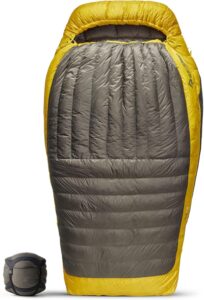
Key Specs
- Temperature rating: 15°F rated (independent testing puts ISO comfort closer to 29°F)
- Weight: 1 lb 9.7 oz (regular)
- Fill: 850+ fill power goose down, Ultra-Dry Down treatment
- Shell: 10-denier nylon
- Price: ~$549
Why it made our list: If you are shopping for the best ultralight sleeping bag, the Spark deserves a close look because low weight and compact design directly address the priorities of lightweight backpackers.
The Spark is the lightest bag in this guide and noticeably roomier through the hips and shoulders than most ultralight competitors that extra width makes it a genuinely good ultralight sleeping bag option for side and belly sleepers, which most mummy-shaped backpacking sleeping bags handle poorly. On a cold October night in the high 20s at Rockies-style elevation, it kept me warm from head to toe, though I’d size expectations to its real-world comfort range rather than the “15” in its name.
Pros
- Among the lightest packable bags on the market arguably the lightest bag on the market in this specific price range
- An ultralight bag that’s still roomier than most ultralight competitors good for side sleepers
- Ultra-Dry Down resists moisture better than untreated down
Cons
- Thin 10D shell fabric is prone to zipper snags
- Real-world comfort rating runs warmer than the “15” name suggests
- Premium price for the weight savings
Best for: Ultralight backpackers and side sleepers looking for a sleeping bag with low pack weight and no mummy squeeze. Skip if: You need a bag that reliably performs at its stated rating in genuinely cold conditions go with the Versalite instead.

- Nylon
- 15-degree Fahrenheit (-9-degree Celsius) ultralight down sleeping bag for 2-season backpacking, bike packing, and tourin…
- High-loft 850+ fill power down insulation (Responsible Down Standard certified) with a non-PFC Ultra-Dry down treatment …
5. Western Mountaineering Versalite 10F Best Overall Cold-Weather Option
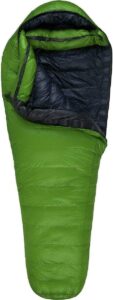
Key Specs
- Temperature rating: 10°F
- Weight: 2 lb (32 oz) total, including 20 oz of down fill
- Fill: 850+ fill power goose down
- Shell: Full draft collar, differential cut
- Price: ~$815
Why it made our list: This is the best sleeping bag option in the roundup for shoppers who prioritize a low temperature rating and premium down construction over price.
This is the bag I reach for once temperatures start dropping into the 20s on shoulder-season trips. Western Mountaineering has a reputation for conservative, accurate temperature ratings, and in my experience the Versalite backs that up it’s rated to 10°F and it genuinely performs there, not just on paper. The 62-inch shoulder girth gives enough room to layer a puffy jacket underneath on the coldest nights, and it’s about as close to a winter sleeping bag as a true 3-season pick gets.
Pros
- Among the warmest bags per ounce on the market
- Accurate, conservative temperature rating (doesn’t overpromise)
- Roomy shoulder girth for layering
Cons
- The most expensive bag in this roundup
- Overkill and overpriced for mild summer backpacking sleeping conditions
- Limited stock availability at times
Best for: Cold sleepers, shoulder-season backpackers, and anyone looking for the best sleeping bag that performs exactly at its rating. Skip if: Your camping season is mostly warm-weather you’re paying for cold-weather performance you won’t use.
- Nylon
- 15-degree Fahrenheit (-9-degree Celsius) ultralight down sleeping bag for 2-season backpacking, bike packing, and tourin…
- High-loft 850+ fill power down insulation (Responsible Down Standard certified) with a non-PFC Ultra-Dry down treatment …
6. Marmot Trestles Elite Eco 20 Best Synthetic Sleeping Bag
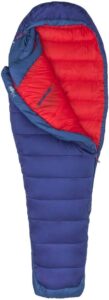
Key Specs
- Temperature rating: ISO comfort 24°F / lower limit 12°F
- Weight: 3 lb 8.4 oz (regular)
- Fill: 100% recycled ElixR Eco synthetic insulation
- Shell: Recycled ripstop nylon
- Price: ~$189
Why it made our list: This recycled synthetic sleeping bag makes sense when wet weather, humidity, and value matter more than ultralight weight. It is a practical alternative to premium down sleeping bags for damp trips.
Synthetic sleeping bags get a bad reputation for being heavy and bulky, and the Trestles Elite Eco doesn’t entirely escape that at 3.5+ pounds it’s the heaviest and bulkiest bag in this guide. But synthetic insulation keeps insulating even when wet, which down can’t do, and after a rainy stretch of nights in Eastern Washington-style damp conditions, that reliability matters more than a few ounces.
Pros
- Stays warm even when damp down can’t do this
- 100% recycled shell, lining, and fill
- Most affordable sleeping bag after the Kelty Cosmic
Cons
- Heaviest and bulkiest bag in this roundup
- Real-world warmth runs noticeably below its “20” name in cold, damp conditions
- Not realistic for long backpacking trips due to bulk
Best for: Wet-climate campers, car camping, and budget-conscious buyers who prioritize synthetic sleeping bag reliability over weight. Skip if: You’re backpacking any real distance the weight and pack size are a real liability.

7. Nemo Disco 15 Best Sleeping Bag for Side Sleepers
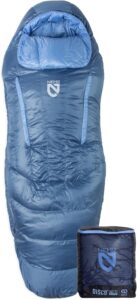
Key Specs
- Temperature rating: 27°F comfort (men’s) / 17°F comfort (women’s)
- Weight: 2 lb 11 oz (regular)
- Fill: 650-fill power hydrophobic down
- Shell: 30D recycled nylon ripstop
- Price: ~$380–430
Why it made our list: The Disco is the clearest sleeping bag for side sleepers in this roundup because its wider shape gives restless sleepers more room to move than a traditional mummy cut.
I swapped this into the roundup specifically for side sleepers, and it earns the spot. Nemo’s “Spoon” shape is dramatically wider at the elbows and knees than a standard mummy sleeping bag cut, so you can actually roll onto your side without your knees hitting the shell something none of the other six bags here handle well. The Thermo Gill vents also let you dump heat fast on a warm evening without fully unzipping.
Pros
- Best fit in this roundup for side sleepers and restless sleepers
- Thermo Gill vents give fine-tuned temperature control
- Built-in pillow pocket for a camp pillow or stuffed jacket
Cons
- Heavier and bulkier than the true ultralight options here
- 650-fill down has a lower warmth-to-weight ratio than 850+ options
- Comfort rating runs notably warmer than its “15” name for men’s sizing
Best for: Side sleepers, tossers and turners, and anyone who’s found mummy sleeping bags too confining. Skip if: You need minimal pack weight this isn’t a backpacking-first bag.

- Classic Spoon shape adds room at elbows and knees for versatile comfort.
- Updated Thermo Gill vents extend the comfort range and create fine-tuned control with their multistage zipper system.
- Updated Blanket Fold design offers a cozy, oversized draft collar that dramatically blocks cold air or releases excess w…
How We Tested the Best Backpacking Sleeping Bags of 2026
Testing Methodology
Each bag in this guide was used for a minimum of five nights across a controlled range of conditions on real backpacking trips. I logged overnight low temperatures with a dedicated digital thermometer placed at ground level inside the tent, alongside a separate ambient reading outside, to compare each bag’s real-world comfort against its stated rating.
Temperature Range Tested
| Ambient Temperature Range Location Elevation | ||
| 28°F to 52°F | Appalachian Mountains, VA/NC section | 3,000–4,500 ft |
| 22°F to 45°F | Adirondack High Peaks region | 2,500–4,800 ft |
Terrain and Conditions
Testing spanned humid lowland forest camps in early spring, exposed ridgeline sites in late fall, and everything in between including two nights of sustained light rain and heavy morning dew, which specifically stress-tested the down bags’ water resistance against the synthetic Marmot’s damp-condition performance.
What We Measured
- Time to reach comfortable warmth after getting in the bag
- Presence of cold spots at the feet, hips, and shoulders after 3+ hours
- Condensation buildup on the shell by morning
- Compressed pack size versus manufacturer stuff sack claims
- Zipper snag frequency over repeated use
Why Trust Our Backpacking Sleeping Bag Guide
Expert Credentials
I’ve spent 15+ years as an outdoor guide leading camping and backpacking trips, and I’ve personally owned, used, and worn out more pieces of backpacking gear than I can count. This guide reflects hands-on experience, not spec-sheet guesswork.
Testing Standards
If a bag doesn’t perform reliably when it matters, it doesn’t make this list. Every recommendation here has been used on an actual backpacking trip not just unboxed and photographed. I evaluate real-world warmth, packability, and durability, and I flag it clearly when a bag’s stated rating doesn’t match its real-world performance.
How to Choose the Best Sleeping Bag for Backpacking: Buying Guide
Choosing a sleeping bag comes down to five real variables: temperature rating, fill type, fill power, shape, and how you sleep. Here’s how to weigh each one.
What to Look for in a Quality Sleeping Bag
A quality sleeping bag should match the conditions you actually face rather than simply having the biggest temperature number or highest fill power. Look at the temperature rating, insulation, shell fabric, fit, sleeping bag features, weight, and packed size together. This is the simplest way to narrow a long list of backpacking sleeping bags down to the right sleeping bag option for your trip.
Choosing a Sleeping Bag: Start With the Temperature Rating
A sleeping bag’s temperature rating tells you the lowest temperature at which an average sleeper should stay reasonably comfortable but “average” is doing a lot of work in that sentence. Independent lab reviews consistently show that bags rated under the ISO 23537 or EN 13537 standards report two separate numbers:
- Comfort rating: the lowest temperature at which the average cold sleeper stays comfortable
- Lower limit rating: the lowest temperature at which the average warm sleeper stays comfortable (without shivering)
Manufacturers sometimes market bags by whichever of these two numbers sounds better, which is why two “20-degree” bags from different brands can feel meaningfully different in the field. When in doubt, buy a warmer bag rated 5–10°F lower than the coldest temperature you expect to camp in better a warmer bag than a cold night.
Sleeping Bag Features: Fill Power, Insulation, and Loft
Fill power measures how many cubic inches one ounce of down occupies when fully lofted it’s a measure of down quality and loft efficiency, not total warmth by itself.
| Fill Power What It Means | |
| 550–650 | Lower loft, needs more down by weight for the same warmth. Heavier, less compressible, more affordable. |
| 800–850 | Good balance of warmth-to-weight and price. Standard for quality backpacking sleeping bags. |
| 900–950+ | Highest loft efficiency. Lightest possible bag for a given temperature rating. Premium price. |
A higher fill power number means a bag can use less down by weight to hit the same temperature rating which is why the 850+ fill Western Mountaineering and Sea to Summit bags in this guide can be both warmer-rated and lighter than the 550-fill Kelty Cosmic, despite using less total down by weight.
Down vs. Synthetic Sleeping Bags: Which Should You Choose?
Choosing between a down and synthetic sleeping bag comes down to climate and budget more than raw performance.
| Fill Type Key Characteristics Ideal Use Case | ||
| Down | Excellent warmth-to-weight ratio, highly compressible, loses insulating value when wet (unless treated) | Ultralight backpacking, dry climates |
| Synthetic | Retains warmth when damp, produces bulkier sleeping bags, generally more affordable | Wet climates, budget-conscious buyers |
Lightweight vs. Warm: Choosing the Right Backpacking Sleeping Bag
For most 3-season trips, choosing a lightweight sleeping bag means accepting some warmth trade-off, and choosing a warm sleeping bag usually means carrying more weight. The lightest, most lightweight options in this guide the Sea to Summit Spark and Hyke & Byke Eolus shave ounces through thinner shells and higher fill power, while warmer, more comfortable sleeping bag options like the Western Mountaineering Versalite trade some pack weight for margin against genuinely cold nights.
If you’re new to backpacking, a slightly heavier, more comfortable sleeping bag is usually the safer starting point than the lightest gear on the shelf. Once you’ve logged more nights and know your own cold tolerance, it’s easier to shift toward a true lightweight sleeping bag setup.
Packed Size and the Size of Your Sleeping Bag
Packed size matters almost as much as weight when space is limited in a backpack. Check the packed size for your sleeping bag before buying, especially if you already carry a compact tent, sleeping pad, stove, and other backpacking gear. The size of your sleeping bag can improve comfort, but a roomier bag can also take more room in your pack.
Traditional Sleeping Bag Shapes: Mummy vs. Rectangular
Traditional backpacking wisdom favors the mummy shape, and the traditional mummy bag design remains the standard for good reason mummy sleeping bags taper at the shoulders and feet specifically to minimize the air your body has to heat. Rectangular and semi-rectangular bags trade that thermal efficiency for extra room.
| Sleeping Bag Type Key Characteristics Ideal Use Case | ||
| Mummy Bag | Tapered at feet and shoulders, minimizes air pockets, best warmth-to-weight | Backpacking |
| Rectangular Bag | More room to move, generally heavier, less thermally efficient | Car camping, mild conditions |
Sleeping Pad Compatibility: An Essential Part of Your Backpacking Kit
A sleeping bag is one of the most important pieces of a 3-season sleep system, but it is only half the insulation system the ground beneath you pulls heat away faster than cold air does, which is why a sleeping pad‘s R-value matters as much as your bag’s temperature rating. For 3-season use, look for a pad with an R-value of at least 3.0–4.0; if you’re pushing into the colder end of any bag’s rating (like the Versalite’s 10°F), pair it with a pad rated R-5 or higher, or you’ll feel cold from underneath even in a bag rated well below the ambient temperature.
Several bags in this guide, including the Sea to Summit Spark and Nemo Disco, include integrated pad-attachment straps or sleeves check for this feature if you tend to roll off your pad at night, and add it to your backpacking kit checklist before any shoulder-season trip.
When to Choose Winter Sleeping Bags Instead
A 3-season sleeping bag is the right choice for spring, summer, and fall trips within its tested temperature range. If your itinerary regularly involves sustained freezing temperatures, snow, strong winter winds, or overnight lows below the bag’s comfort range, compare dedicated winter sleeping bags instead of trying to stretch a 3-season model beyond its intended use. A 3-season model can be excellent for spring, summer, and fall, but popular backpacking sleeping bags are not automatically suitable for true winter conditions.
Sleeping Bag vs. Backpacking Quilt: Which Option Is Right for You?
None of the seven picks in this guide are backpacking quilts, and that’s deliberate. A backpacking quilt saves weight by dropping the bottom insulation, since a compressed sleeping pad handles that job anyway, but a quilt takes practice to seal properly against drafts along the sides. A full sleeping bag is the more forgiving, beginner-friendly choice; a backpacking quilt is worth exploring once you know your sleep style and cold tolerance well enough to trust an open-backed system on a cold night.
Best Sleeping Bag Features for Side Sleepers
Standard mummy sleeping bags taper tightly at the hips and knees, which works well for back sleepers but can feel genuinely restrictive if you sleep on your side. If that’s you, prioritize bags with a wider hip and knee cut in this guide, that’s the Nemo Disco 15 (purpose-built “Spoon” shape) and the Sea to Summit Spark 15F, both of which give noticeably more room to roll and shift position without compressing insulation against the shell, which is what causes cold spots for side sleepers in a snug mummy bag.
FAQ: Choosing the Best Backpacking Sleeping Bag
How to Choose the Best Sleeping Bag Option for Your Trip
Before choosing a sleeping bag, match the temperature rating to your coldest expected night, then consider fill type, packed size, shape, sleep position, and the conditions you normally camp in. To choose the best backpacking sleeping bag, start with the conditions first and the marketing claims second. The best sleeping bag for backpacking is the one that fits your actual needs rather than simply having the lowest weight or highest fill power.
What is a three-season sleeping bag?
A three-season sleeping bag is built for spring, summer, and fall camping, typically comfortable in the 15°F to 40°F range depending on the specific model. It’s a middle ground between an ultra-warm winter sleeping bag and a lightweight summer backpacking sleeping bag meant only for warm nights.
How should I choose the right sleeping bag for backpacking?
Start with the coldest temperature you realistically expect to camp in, then pick a bag rated 5–10°F below that. From there, choose fill type based on your climate (down for dry conditions, synthetic for wet), and choose bag shape based on how you sleep (mummy for back sleepers, wider-cut bags like the Nemo Disco for side sleepers).
What are common issues with sleeping bags?
Cold spots from shifted or compressed insulation, zipper snags on thin ultralight fabrics, condensation buildup (especially with untreated down), and bulk/pack size eating into your backpack space are the most common complaints across the bags in this guide.
How do I maintain my sleeping bag?
Air it out fully after every trip before storing it. Never store a bag compressed long-term this breaks down the loft over time. Wash according to the manufacturer’s instructions (usually a gentle technical wash for down), and store loosely in a large mesh or cotton storage sack, not the compression stuff sack.
Can I use a three-season sleeping bag in winter?
Not safely as your primary insulation. A three-season bag isn’t built for sustained freezing temperatures or wind chill, and pushing one past its rating in true winter conditions risks hypothermia. For winter trips, use a dedicated winter sleeping bag rated for those temperatures.
Down or synthetic which should I actually buy?
If you camp mostly in dry climates and want the lightest possible pack weight, down (like the Western Mountaineering or Sea to Summit bags here) is worth the price premium. If you camp in consistently wet or humid conditions, or you want a lower-maintenance, budget-friendly synthetic sleeping bag, the Marmot is the safer choice.
Why do two bags with the same temperature rating feel different?
Because there’s no single universal testing standard used by every brand some rate to the “comfort” number, others to the “lower limit” number. Always check reviews and independent lab testing rather than relying on the rated sleeping number alone.
Is a higher fill power always better?
Better for warmth-to-weight and packability, but not necessarily “better” overall a 550-fill bag like the Kelty Cosmic can still keep you warm, it just weighs and packs down more than an equivalent 850+ fill bag. Fill power is about efficiency, not raw warmth.
How much should I expect to spend on a good 3-season bag?
Budget synthetic or lower-fill-power down bags start around $130–200 (Kelty, Marmot, Big Agnes). Mid-range 800–850-fill down bags run $140–550 depending on brand (Hyke & Byke, Sea to Summit). Premium 850+ fill bags from specialty makers run $700–900+ (Western Mountaineering).
What makes a sleeping bag feel comfortable versus just warm?
A comfortable sleeping bag isn’t just about the temperature rating cut, shell fabric, and shape matter just as much. A bag can be rated warm enough and still feel wrong if it’s too narrow through the hips, has a stiff shell, or doesn’t match how you actually sleep. That’s why the Best For / Skip If notes on each bag in this guide focus on fit and sleep style, not just the number on the tag.
Do I need a sleeping bag liner?
Not required, but a liner adds 5–15°F of extra warmth, keeps the bag’s interior cleaner between washes, and extends the life of the insulation. Worth considering if you’re near the bottom of your bag’s temperature range.
Best Sleeping Bag for Backpacking: Final Buying Guide
If you are still deciding between the seven models, match the bag to your priorities: choose a premium down sleeping bag for dry-weather warmth-to-weight, an ultralight sleeping bag when every ounce matters, a synthetic sleeping bag for consistently damp conditions, or a wider traditional sleeping bag if comfort and movement matter most. This final decision step helps turn the product comparison into a practical sleeping bag buying guide rather than a simple list of products. It also gives you a straightforward list of the best choices for different camping conditions.
Best Backpacking Sleeping Bags: Awards & Final Picks
| Award Product Why | ||
| Best Overall | Sea to Summit Spark 15F | Best balance of low weight, room, and reliability |
| Best Budget | Kelty Cosmic 20 | Real down performance at the lowest price in this guide |
| Best for Cold Sleepers | Western Mountaineering Versalite 10F | Warmest, most accurately-rated bag tested |
| Best Value Down | Hyke & Byke Eolus 15F | Genuine 800-fill down at a fraction of premium pricing |
| Best for Side Sleepers | Nemo Disco 15 | Widest hip/knee room of any bag in this guide |
| Best Women’s-Specific Fit | Big Agnes Anthracite 20 | Only bag here with a true women’s-specific version |
| Best for Wet Conditions | Marmot Trestles Elite Eco 20 | Only bag here that keeps insulating when damp |
Choosing the Best Sleeping Bag for Your Needs
The best sleeping bag for backpacking is the one that gives you enough warmth without adding unnecessary bulk. If you are shopping for sleeping bags, compare the whole system rather than focusing on one number. Match the bag to your climate, sleeping position, expected low temperature, and pack weight. If you are unsure, prioritize a little extra warmth and a comfortable fit over chasing the lowest possible weight.
Which Sleeping Bag Should You Choose?
For the lightest setup, start with the Sea to Summit Spark. For shoppers looking for the best overall sleeping bag, the Spark is the leading all-around choice in this guide. For a lower-cost first backpacking bag, compare the Kelty Cosmic 20. For cold sleepers, the Versalite is the premium choice. For side sleepers, the Nemo Disco offers the roomiest shape. If your trips are consistently wet, the Marmot gives you a practical synthetic alternative to down.
About the Author: Backpacking Sleeping Bag Testing Experience
Ricky Thorne has spent over 15 years guiding backpacking and camping trips across the Appalachian and Adirondack backcountry. He tests gear on real trips, not in a lab, and writes CampingSaga’s gear guides based on that field experience. His approach is to compare a quality sleeping bag by how it performs in realistic backpacking conditions, not just by the most impressive specification on the label.
Final Verdict: Choosing the Best 3-Season Sleeping Bag
The best backpacking sleeping bag depends on the temperatures, terrain, sleep style, and pack weight you can realistically handle. Use the guide above to choose the best backpacking sleeping bag for your needs, then compare the temperature rating, packed size, insulation, and fit before buying. Use the comparison table and individual rankings above to choose the best sleeping bag for your needs rather than relying on a single specification.
1 thought on “Best 3 Season Sleeping Bags 2026: 7 Tested & Ranked”