Nothing ruins a camping trip faster than crawling into a tent that feels like a furnace after a long day outdoors. Many campers spend hundreds of dollars on gear, only to discover that their tent becomes unbearably hot the moment the summer sun starts beating down. A sweltering tent can lead to poor sleep, dehydration, exhaustion, and an overall miserable camping experience.
The good news? You don’t have to suffer through hot, sleepless nights.
After years of summer camping in temperatures exceeding 90°F (32°C), I’ve tested dozens of tent-cooling methods from simple campsite setup tricks to portable cooling gear and DIY hacks. Some made little difference, while others dramatically reduced heat buildup and made sleeping far more comfortable, even during heat waves.
If you’re planning a summer camping trip, it’s important to learn these strategies before you head out. Once your tent has absorbed hours of direct sunlight, cooling it down becomes much harder. A few smart decisions before and during your trip can mean the difference between a restful night and hours of tossing and turning in the heat.
In this guide, you’ll discover 13 practical and field-tested ways to keep a tent cool in summer heat, including campsite placement secrets, ventilation tricks, cooling hacks, and gear recommendations that can help you stay comfortable even on the hottest camping days.
How Do You Keep a Tent Cool in Summer Heat?
The best ways to keep a tent cool in summer are pitching your tent in the shady maximizing ventilation, using a light-colored tent, positioning your campsite to catch natural airflow, and using cooling accessories like portable fans or reflective tarps. Opening mesh windows, reducing direct sun exposure, and staying hydrated can also significantly improve comfort and help prevent heat buildup inside your tent.
Quick Tips to Keep a Tent Cool
- Pitch your tent in natural shade whenever possible.
- Choose a tent with large mesh panels and roof vents.
- Use a light-colored tent that reflects sunlight.
- Face tent doors and windows toward the breeze.
- Place a reflective tarp above or beneath your tent.
- Use a battery-powered camping fan for airflow.
- Keep tent doors and vents open during cooler hours.
- Cool your sleeping gear before bedtime.
- Stay hydrated throughout the day.
- Use ice packs strategically inside the tent.
My Experience Keeping a Tent Cool During Summer Camping
Over the years, I’ve camped in temperatures ranging from mild summer weekends to heat waves where daytime temperatures exceeded 90°F (32°C). One of the biggest lessons I learned early on was that not all cooling tips work equally well.
On one particularly hot summer trip, my tent was pitched in direct sunlight for most of the day. By late afternoon, the inside felt significantly hotter than the outside air, making it nearly impossible to relax or sleep comfortably. Since then, I’ve experimented with different tent setups, ventilation techniques, reflective tarps, portable fans, and campsite positioning strategies to reduce heat buildup.
Through trial and error, I found that simple changes such as choosing shaded campsites, maximizing airflow, and using reflective barriers can make a noticeable difference in tent comfort. The tips below are based on methods that consistently helped me stay cooler during real camping trips and reduced the discomfort caused by extreme summer heat.
Why Do Tents Get So Hot in Summer?
If you’ve ever stepped into your tent on a hot afternoon and felt like you were entering an oven, you’re not imagining it. Tents can become significantly hotter than the outside temperature, especially when exposed to direct sunlight for several hours.
The main reason is solar heat absorption. Tent fabric absorbs sunlight throughout the day, causing the material to heat up and radiate warmth into the interior. Dark-colored tents absorb even more heat, which can quickly raise the temperature inside the tent.
Poor ventilation is another major factor. When warm air becomes trapped inside a tent without enough mesh panels, windows, or roof vents, heat continues to build up. This creates a greenhouse-like effect where hot air remains trapped, making the interior feel stuffy and uncomfortable.
The ground beneath your tent also contributes to heat buildup. Throughout the day, soil, sand, and rock surfaces absorb solar energy and release that heat back into the air during the evening. Without proper insulation or reflective barriers, some of that heat can transfer into your tent.
Understanding why tents get hot is the first step toward preventing it. By reducing direct sun exposure, improving airflow, and using cooling strategies like reflective tarps and portable fans, you can significantly reduce heat buildup and create a much more comfortable camping environment.
Pre-Trip Planning: Choosing the Right Tent
Opt for a Tent with Proper Ventilation
Selecting a tent with proper ventilation is paramount for keeping your tent cool in the summer months, especially during hot summer days. A well-designed camping tent will feature multiple mesh windows, large mesh panels, and often a mesh ceiling to facilitate maximum airflow. This allows for cross-ventilation, a crucial way to beat the heat by ensuring that warm, stagnant air inside your tent can escape and be replaced by cooler air from outside.
Without adequate ventilation, a tent can quickly trap heat, transforming into an uncomfortable oven and making it incredibly difficult to stay cool while camping. Prioritizing this feature during your pre-trip planning is one of the most effective tips for staying cool and ensuring a comfortable and cool sleeping environment.
Select a Light-Colored Tent
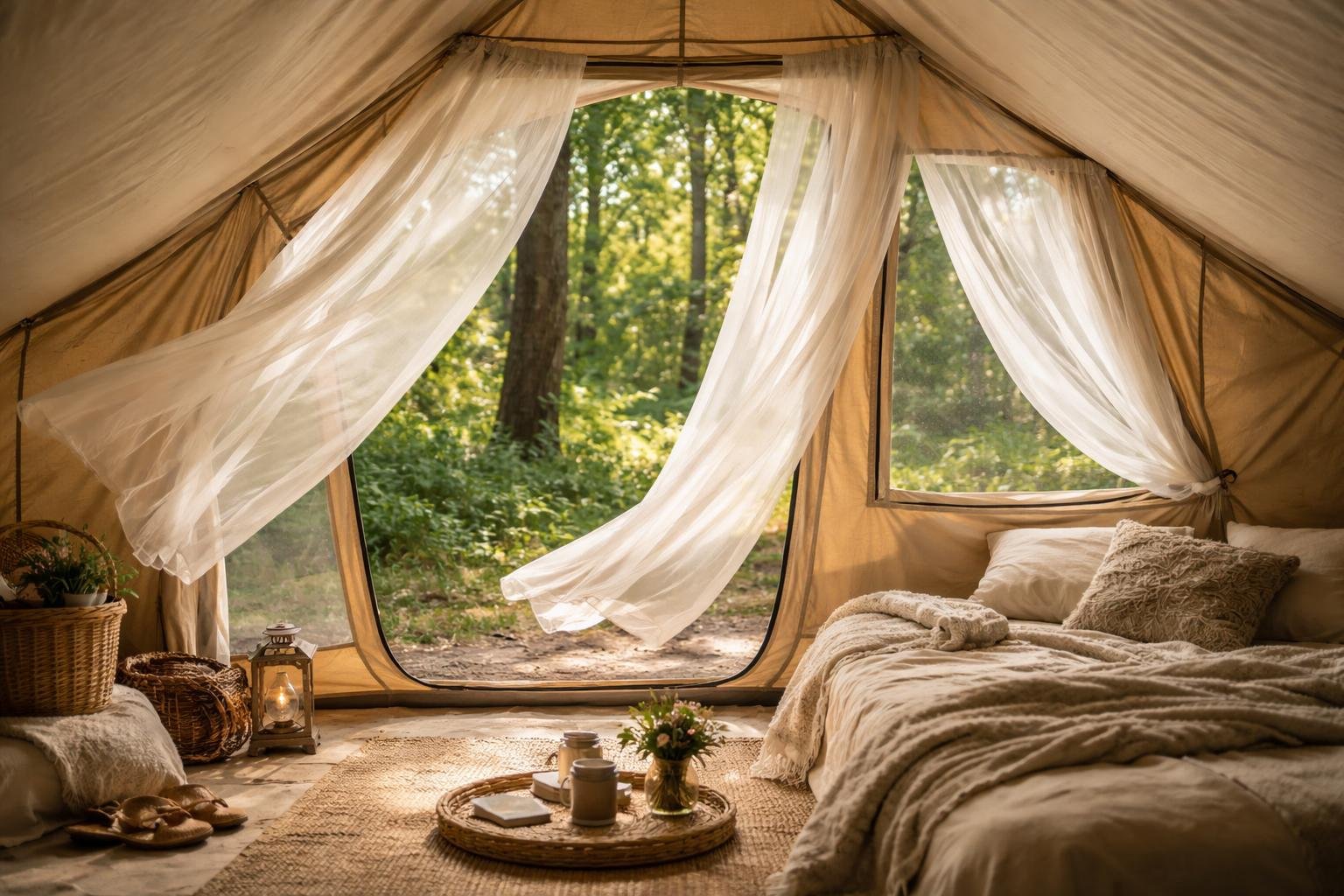
When planning your summer camping trip, the color of your tent plays a significant role in how well it will keep cool in the summer heat. Lighter-colored tents, such as white, beige, or light grey, are far more effective at reflecting sunlight than darker hues. Dark colors, conversely, absorb solar radiation, which causes the fabric to heat up significantly and radiate that heat directly inside the tent, contributing to a substantial increase in temperature, making it harder to keep you cool.
This accumulation of heat makes it incredibly challenging to stay cool when camping. Therefore, choosing a light-colored tent is a straightforward yet highly effective way to stay cool and ensure your tent stays cool in the summer, preventing it from becoming an unbearable sauna on a hot day.
Consider a Tent with a Rainfly
While a rainfly’s primary purpose is to offer protection from precipitation, a strategically designed rainfly can also be instrumental in keeping your tent cool during summer camping. Many modern camping tents feature a rainfly that can be pitched in a way that creates a significant air gap between the fly and the main tent body, helping to keep the tent cool.
This air gap acts as an insulating layer, preventing direct solar radiation from reaching the inner tent and allowing hot air to rise and escape through the top of the tent. Furthermore, some rainflies incorporate vents that can be opened, enhancing airflow and creating a chimney effect to draw warm air out, making it easier to keep a tent cool and ensuring you stay cool while camping, even on the warmest summer days.
Campsite Setup: Creating the Ideal Environment
Pitch Your Tent in the Shade
Once you arrive at your camping destination, make sure to set up your tent to maximize airflow and keep you cooler. one of the most effective strategies for keeping your tent cool is to deliberately pitch your tent in the shade. Direct sunlight is the primary culprit behind a scorching hot tent, as it relentlessly radiates heat onto the tent fabric, quickly turning the inside of your tent into an unbearable sauna.
Seek out natural shade provided by large trees or even the lee side of a hill, particularly during the hottest parts of the day. This simple act of placing your tent in an area protected from direct solar exposure can significantly reduce the amount of heat absorbed, making a monumental difference in how well you stay cool while camping and ensuring your tent stays cool in the summer, rather than trapping heat.
Field-Tested Tip: During a midsummer camping trip, I noticed that a tent pitched under tree cover remained noticeably cooler in the evening than a nearby tent exposed to direct sunlight all day.
Position for Optimal Wind Flow
Beyond seeking shade, intelligently positioning your camping tent to maximize natural wind flow is a critical way to beat the heat during your summer camping trip and keep the tent cool. Before you pitch your tent, take a moment to observe the prevailing wind direction. Orient your tent door and any large mesh windows to face the direction from which the breeze is coming to help keep you cooler.
This allows for optimal cross-ventilation, ensuring that cool air can freely flow through the inside of your tent, expelling warm, stagnant air. This constant exchange of air is paramount for keeping your tent cool and preventing heat accumulation, providing a natural and energy-efficient way to stay cool when camping, making your experience far more comfortable, even on a hot day.
Use Ground Tarps to Reflect Heat
While often overlooked, employing a light-colored ground tarp can be an ingenious hack for keeping your tent cool, especially during summer camping. The ground itself can absorb a significant amount of solar radiation throughout the day, radiating that heat upwards and contributing to a warmer inside the tent. By laying a reflective, light-colored tarp underneath your tent while tent camping, you create a barrier that helps to reflect this ground heat away.
This simple addition can prevent heat transfer from the earth into your camping tent, working in conjunction with other methods to beat the heat. It’s a subtle yet effective way to ensure your tent stays cool in the summer, adding another layer of defense against the relentless summer heat.
Active Cooling Hacks: Staying Comfortable Inside
DIY Cooling Hacks: Create a Portable Fan
Even with optimal campsite setup, the interior of your tent can still become uncomfortably warm, making active cooling hacks essential for a comfortable summer camping trip. One highly effective DIY solution for keeping your tent cool is to create a portable fan system. While commercial battery-operated fans are available, a simple hack involves using a small USB-powered fan connected to a power bank, or even a car battery adapter if accessible.
Position this fan strategically inside your tent, aiming it towards your sleeping area or pointed at an open mesh window to encourage airflow. This active movement of air will significantly help to beat the heat, providing a much-needed breeze that can make a substantial difference in how cool you feel, ensuring you stay cool when camping even on a hot day.
My Experience: A small USB camping fan powered by a power bank provided enough airflow to make sleeping significantly more comfortable on warm nights.
Utilize Wet Cloths for Personal Cooling
When the summer heat is intense and you’re struggling to stay cool inside your tent, utilizing wet cloths can provide immediate personal relief and contribute to keeping your tent cool. Dampen towels, bandanas, or even spare t-shirts with cool water, and then place them on pulse points like your neck, wrists, or forehead. As the water evaporates, it draws body heat away from your body, creating a noticeable cooling sensation that helps keep you cool at night.
For an enhanced effect, you can hang these wet cloths near an open tent door or window. The evaporating moisture can slightly humidify and cool the immediate air within your sleeping area, offering a passive way to beat the heat and making your camping trip far more tolerable, helping you to stay cool while camping.
Keep Your Tent Down During the Day
One of the most counterintuitive yet highly effective tips for keeping your tent cool in the summer during a camping trip is to keep your tent down during the hottest parts of the day.. Instead of leaving your tent pitched and exposed to direct sunlight, especially if you anticipate being away from your campsite for an extended period, consider taking it down.
A collapsed tent, particularly if stored in the shade or a cooler spot, will not trap heat in the same way an erected tent does. When you return in the late afternoon or evening to re-pitch your tent, it will be significantly cooler than if it had been baking in the sun all day, providing a more comfortable and cool environment for the night and helping you stay cool when camping.
Employ a Tent with Mesh Panels for Airflow
For anyone looking to keep a tent cool during summer camping, Employing a tent with extensive mesh panels is an absolute game-changer for keeping you cool while camping in the heat.. These large mesh sections, often found on windows, doors, and even the top of the tent, are specifically designed to maximize airflow and create superior cross-ventilation.
This allows for a constant exchange of air, expelling the hot, stagnant air that tends to accumulate inside your tent and drawing in cooler air from outside. The ability to open up multiple mesh panels transforms your camping tent from a heat-trapping box into a breathable shelter, making it significantly easier to stay cool while camping, especially during the sweltering summer months. This is a fundamental way to beat the heat.
Use Reflective Blankets to Block Sunlight
When faced with relentless summer heat while camping in the heat, reflective blankets, often referred to as emergency or Mylar blankets, can be an ingenious hack for keeping your tent cool. These highly reflective materials are excellent at blocking direct sunlight and radiating heat away from your camping tent.
Strategically drape a reflective blanket over the top of the tent, particularly where the sun hits it most directly, ensuring it creates an air gap between the blanket and the tent fabric. This acts as an additional barrier against solar radiation, preventing heat from penetrating inside the tent and significantly reducing the internal temperature. This method provides a direct way to beat the heat and helps you stay cool while camping, especially on a hot day.
What Worked for Me: Using a reflective emergency blanket above my tent noticeably reduced afternoon heat buildup compared to a nearby tent without one.
Cool Down Your Sleeping Bag Before Use
A crucial, often overlooked, aspect of staying cool when camping is to prepare your sleeping bag before use, especially during a hot day. Even a lightweight sleeping bag can feel stifling if it’s already warm from being stored in a hot tent all day. A simple yet effective tip for staying cool while camping in the heat is to air out your sleeping bag in the shade or in a breezy spot for at least an hour before bedtime.
For an extra cooling boost, consider placing a chilled ice pack (wrapped in a cloth to prevent condensation) inside your sleeping bag a short while before you plan to get in. This will pre-cool the interior of your sleeping bag, providing a refreshing initial entry and helping you stay cool at night while camping in the summer heat.
Stay Hydrated and Use Ice Packs Strategically
When you go camping in a tent during the summer, staying adequately hydrated is paramount not just for your health, but also as a foundational strategy to beat the heat and help you stay cool when camping. Consistently sipping on cool water helps regulate your internal body temperature, making you feel cooler from the inside out. Complement this with the strategic use of ice packs.
Beyond just cooling your sleeping bag, place ice packs (again, wrapped to prevent moisture) in key areas around your tent, particularly near your head or feet, to create localized cool zones. You can also press them against pulse points for immediate relief. These combined efforts are essential tips to stay cool and comfortable inside your tent during a summer camping trip.
My Experience: Placing a frozen water bottle near my sleeping area helped make hot summer nights more comfortable without creating condensation issues.
How We Evaluated These Tent Cooling Methods
To identify the most effective ways to keep a tent cool in summer, we focused on practical camping strategies that can be implemented by most campers without specialized equipment. Each method was evaluated based on four key factors:
- Effectiveness at reducing heat buildup inside the tent
- Ease of implementation at a campsite
- Cost and accessibility of the solution
- Impact on overall sleeping comfort during warm weather
We also considered real-world camping experiences, common challenges faced during summer camping trips, and recommendations widely used by experienced campers. The goal was to highlight methods that provide meaningful improvements in comfort rather than relying on complicated or expensive solutions.
FAQs About Keeping a Tent Cool in Summer
1. How much hotter can a tent get than the outside temperature?
A tent exposed to direct sunlight can become significantly hotter than the surrounding air. On sunny days, temperatures inside a tent may rise 10–20°F (5–11°C) higher than the outside temperature, depending on tent color, ventilation, and sun exposure.
2. What is the best way to keep a tent cool in summer?
The most effective way to keep a tent cool is to pitch it in natural shade, maximize airflow through mesh windows and vents, and use reflective materials to block direct sunlight. Combining multiple cooling methods usually provides the best results.
3. Do camping fans actually work inside a tent?
Yes. Battery-powered or USB camping fans can significantly improve comfort by increasing airflow and reducing the feeling of trapped heat. While they don’t lower the actual temperature, they help campers feel cooler and sleep more comfortably.
4. Should I leave my tent rainfly on during hot weather?
It depends on the conditions. If rain is not expected, partially removing or adjusting the tent fly can improve ventilation and airflow. However, keeping the rainfly on with proper venting may still provide shade and reduce direct solar heat.
5. What color tent stays the coolest?
Light-colored tents such as white, beige, silver, or light gray generally stay cooler because they reflect more sunlight. Dark-colored tents absorb more solar radiation, which can increase heat buildup inside the tent.
6. How can I cool a tent without electricity?
You can cool a tent without electricity by camping in the shade, creating cross-ventilation, using reflective tarps, hanging wet towels near openings, opening mesh panels, and choosing a well-ventilated tent design.
7. Is it safe to sleep in a hot tent?
Sleeping in a warm tent is generally safe, but excessive heat can increase the risk of dehydration, heat exhaustion, and poor sleep quality. Staying hydrated, improving airflow, and reducing heat buildup can help maintain a safer sleeping environment.
8. Do reflective tarps really help keep tents cooler?
Yes. Reflective tarps help block and reflect sunlight before it reaches the tent fabric. When properly installed with an air gap above the tent, they can noticeably reduce heat absorption during the day.
9. Can opening tent windows during the day keep it cooler?
Opening mesh windows and vents can improve airflow and help reduce heat accumulation. However, ventilation works best when combined with shade and proper tent positioning to catch natural breezes.
10. What gear helps keep a tent cool at night?
Useful cooling gear includes portable camping fans, cooling towels, reflective tarps, lightweight sleeping bags, breathable sleeping pads, ice packs, and tents designed with large mesh panels and excellent ventilation.
Conclusion: Stay Cool While Camping
Keeping a tent cool in summer doesn’t require expensive gear or complicated setups. In most cases, a combination of smart campsite selection, proper ventilation, shade, and a few simple cooling hacks can dramatically improve your comfort and sleep quality.
The biggest mistake many campers make is waiting until their tent is already overheating before taking action. By choosing the right campsite, maximizing airflow, using reflective barriers, and preparing your sleeping area properly, you can prevent heat buildup before it becomes a problem.
From pitching your tent in the shade and positioning it for natural breezes to using portable fans and reflective tarps, the strategies in this guide can help you stay comfortable even during the hottest camping trips. Small adjustments often make the biggest difference.
If you’re planning a summer camping adventure, start by implementing a few of these tent-cooling techniques on your next trip. You’ll enjoy cooler nights, better sleep, and a far more enjoyable outdoor experience.
Have a favorite tent-cooling hack that works for you? Share it in the comments and help fellow campers beat the summer heat.