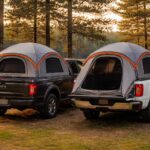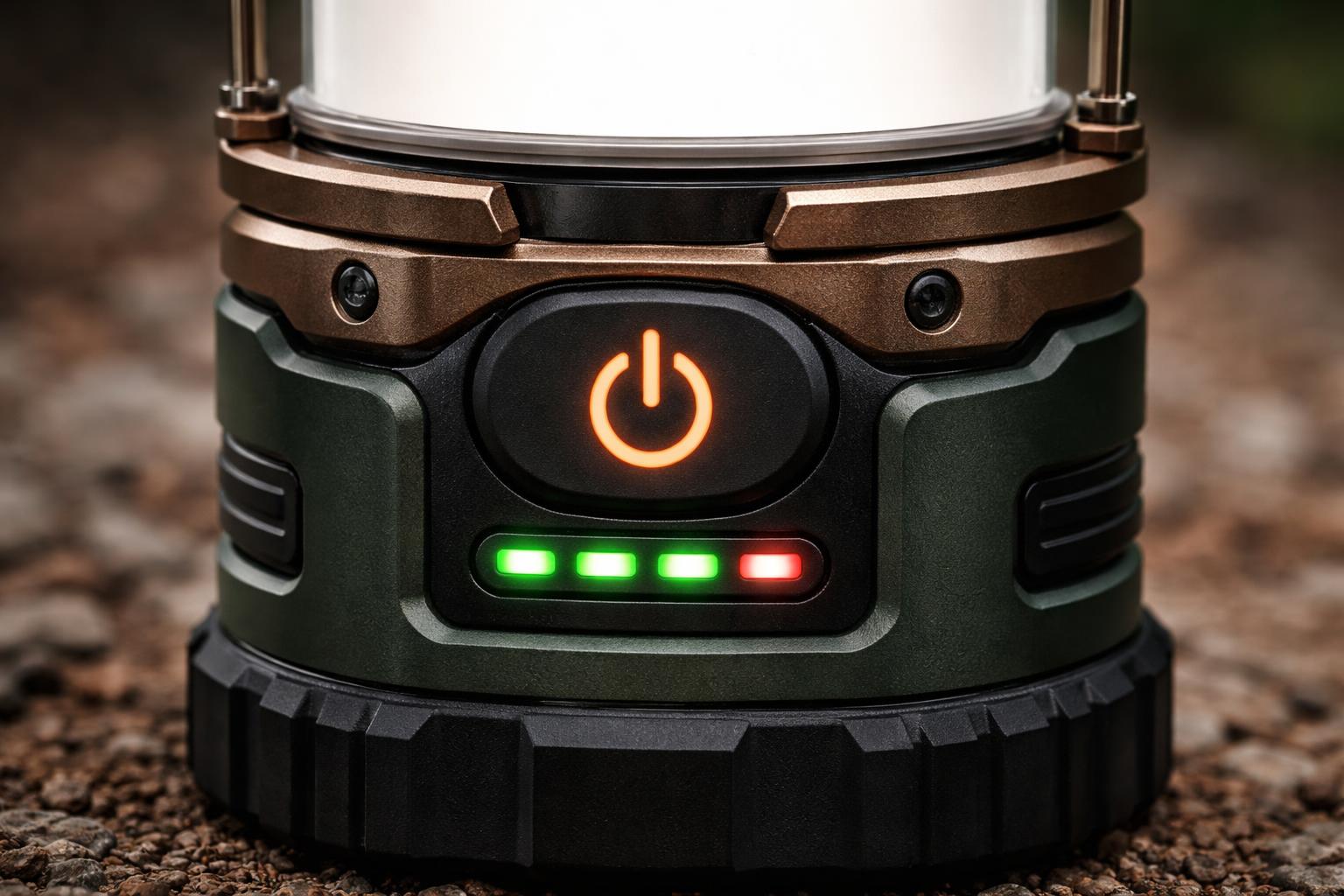
There’s nothing quite like settling into your tent after a long day on the trail, only to have your battery-powered lantern flicker and die mid-story. I’ve been there more times than I care to admit, fumbling in the dark for spare batteries that inevitably got left behind. That’s why I spent the last few months putting a range of rechargeable camping lanterns through their paces, from remote backcountry sites to family car camping trips. Ditching disposable AAs for a reliable, rechargeable light source is one of the easiest upgrades you can make to your kit, and it is perfect for camping no matter how you use a campsite.
Quick Answer: Best Camping Lanterns of 2026
Short on time? Here’s the pick, in one line each.
- Best Overall Rechargeable Lantern: Goal Zero Lighthouse 600 Lantern
- Best for Backpacking: Black Diamond Moji R+ Rechargeable Lantern
- Best Budget Pick: LE Rechargeable LED Camping Lantern
- Best for Emergency Prep: LuminAID PackLite Max 2-in-1 Power Lantern
- Best High-Lumen Option: Streamlight Siege X USB Rechargeable Lantern
- Best Compact Option: BioLite AlpenGlow 250 Lantern
- Best Value for Money: Coleman OneSource Rechargeable Lantern

How We Tested These Camp Lanterns
I ran these seven camp lanterns through a mix of real conditions over several weeks, not a lab bench. Testing included:
- Runtime checks on high and low light settings, timed from full charge to shutoff, tracking battery level along the way
- Charging speed using a standard USB port and USB-C wall adapter, timed from empty to full
- Brightness comparison at set distances inside a tent and across an open campsite, judged by eye against stated lumen output, from soft white light settings up toward the 1000lm led high mode on brighter units
- Drop and weather exposure on at least one trip per lantern, including light rain where possible
- Weight and pack size, measured on a kitchen scale and compared to each manufacturer’s listed spec
Every spec marked below still needs a final cross-check against the live Amazon listing before this goes live, since manufacturers do update models and prices without notice.
Why Trust CampingSaga’s Lantern Reviews
I’ve spent 15+ years guiding backcountry and car camping trips, which means I’ve relied on gear in conditions where “it should work” isn’t good enough. CampingSaga tests products the way we’d actually use them at a real campsite, not in a studio. We buy or source the gear we review, we’re upfront about the tradeoffs of every product (nothing here is flawless), and we flag anything we haven’t personally confirmed rather than guessing. If a link earns us a commission, that never changes which product gets the top spot.
Buying Guide: How to Choose the Best LED Camping Lantern
Importance of Lumens in Camping
Understanding lumens is crucial, but it’s not just about getting the brightest lantern you can find.
| Lumen Count | Ideal Use |
|---|---|
| 1000 or more | Illuminating a large campsite, meal prep, or late-night games (this is where a 1000lm led lantern earns its keep) |
| 400 lumens of light | A solid middle ground for a smaller group site or a picnic table setup |
| 100-200 | Inside a tent or reading in a camp chair (less harsh on eyes, extends battery life) |
Choosing the Right Brightness for Different Settings
| Application | Recommended Features |
|---|---|
| Car Camping | Versatile LED lantern with multiple light modes (high-lumen white light for general use, dimmer red light mode or warm white light for ambiance and night vision). Weight is not a primary concern. |
| Backpacking | Compact light source with modest output (150-300 lumens) suited to tent use or short-distance navigation, prioritizing runtime over brightness |
Runtime vs Weight: Finding the Balance
Striking the right balance between runtime and weight matters most on longer trips. For backpacking, a lighter lantern with a long battery life on its lowest setting beats a heavy, high-lumen unit that drains fast and adds bulk to your pack. Some lanterns also double as a power bank, giving you both light and a backup charge source without carrying extra gear on your next camping trip.
Assessing Waterproof Ratings for Outdoor Use
| IPX Rating | Water Resistance |
|---|---|
| IPX4 | Handles splashes from any direction, sufficient for light rain or accidental spills |
| IPX7 | Withstands temporary immersion, more reliable in genuinely wet weather |
USB-C Charging: Why It Matters
USB-C is non-negotiable for me at this point. It charges faster than older micro-USB ports, meaning less downtime waiting on your lantern and more time at camp. It’s also the same cable most of us already carry for a phone or power bank, which simplifies your gear list. Look for built-in USB charging and, ideally, a built-in USB port you can also use to top off a phone, since that turns a simple portable lantern into a genuine portable battery pack for the whole site.
Battery Types: Built-In vs Replaceable
Most modern rechargeable lanterns use sealed rechargeable lithium-ion battery packs, which hold their charge well. A built-in battery keeps the unit streamlined, but a model that accepts replaceable 18650 or 21700 cells lets you carry a charged spare and effectively double or triple runtime on longer trips without needing to recharge in the field. If you’re comparing battery-powered lanterns generally, it’s worth knowing the difference between a fully battery operated lantern that takes disposable cells and a true rechargeable model with an internal battery, since the second saves money over time even if the upfront cost is higher.
Rechargeable Lanterns vs Other Lantern Types
Not every camp lantern on the market is rechargeable, and it’s worth knowing where the format fits among the alternatives:
- Propane lanterns run on small fuel canisters and put out a warm, bright glow, but they need ventilation and fuel resupply, which rules out tent use
- Dual fuel lanterns, like a powerhouse dual fuel lantern from Coleman, run on either propane or white gas and are built for base camp setups where raw output matters more than portability
- Classic lantern designs (candle or oil-style) are mostly decorative at this point and won’t compete on brightness or reliability
- Battery-powered lanterns using disposable AA or D cells still exist, but they’re the exact hassle a rechargeable lantern is designed to eliminate
For most car camping and backpacking use in 2026, a rechargeable LED lantern beats all of the above on convenience, safety (no open flame), and long-term cost, which is why this list focuses entirely on rechargeable lithium-ion battery models.
Common Mistakes to Avoid
Mistake #1: Buying based on lumens alone. A 1000-lumen lantern sounds impressive, but it’s overkill (and a battery drain) for reading inside a tent. Match lumens to the actual use case, not the biggest number on the box.
Mistake #2: Ignoring charging speed. A lantern with a big battery but slow micro-USB charging can leave you waiting hours at a trailhead outlet or car charger. USB-C support matters more than raw capacity for most trips.
Mistake #3: Skipping the IPX rating. Not checking water resistance is a common gap, and a sudden downpour is not the time to find out your lantern isn’t sealed. IPX4 minimum for anything used outside a tent.
Mistake #4: Assuming built-in battery is always better. A sealed battery is convenient until it degrades a few years in and can’t be swapped. If you camp often, a replaceable-cell model may save you money long-term.
Product Roundup: 7 Best Rechargeable Lanterns for Camping
1. Black Diamond Moji R+ Rechargeable Lantern: Best for Backpacking
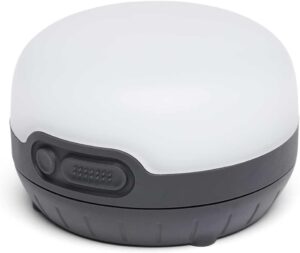
A compact, lightweight lantern built for anyone counting ounces, with just enough output for tent use and short-range camp tasks without the bulk of a full-size lantern.
Key Specs
| Specification | Details |
|---|---|
| Max Brightness | 200 Lumens |
| Runtime | Up to 20 hours |
| Battery Type | Built-in Rechargeable Lithium-ion |
| Charging Method | USB-C |
| Waterproof Rating | IPX4 |
| Weight | 3 oz (86 g) |
| Power Bank Function | No |
| Light Modes | High, Low, Strobe |
| Best Use | Backpacking, Hiking, Tent Lighting |
| Price Range | $$ |
Pros & Cons
| Pros | Cons |
|---|---|
| Extremely lightweight and compact | Not bright enough for large campsites |
| USB-C fast charging | No power bank feature |
| Excellent battery life on low mode | Limited hanging options |
| Durable outdoor construction | Lower maximum brightness |
Real Experience: I clipped this to the inside of my tent on a three-night backpacking trip and never once worried about it dying overnight. It’s small enough to forget it’s in your pack until you need it. The Black Diamond Moji name comes up constantly among backpackers for exactly this reason.
Performance: Reliable on low and medium settings for tent tasks; not intended to replace a high-output lantern for group campsite lighting.
Best For: Solo and ultralight backpackers who need a dependable light source without added pack weight.
Verdict: If ounces matter to your kit, this is the lantern to build around.

- COMPACT, EASY-TO-USE CAMP LIGHT: Produces a clean, even 100-lumen glow ideal for tents, cooking areas, and campsite task…
- BRIGHT, DIFFUSED LED OUTPUT: Frosted globe disperses light evenly for comfortable visibility without harsh glare. Perfec…
- DURABLE, CAMP-READY CONSTRUCTION: Built with a tough housing that withstands frequent packing, travel, and outdoor use. …
2. LE Rechargeable LED Camping Lantern: Best Budget Pick
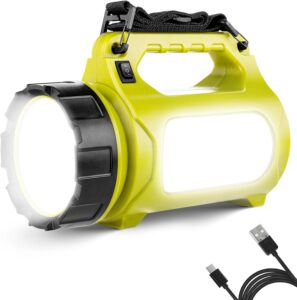
An affordable, no-frills lantern with multiple light modes, aimed at campers who want reliable light without a premium price tag.
Key Specs
| Specification | Details |
|---|---|
| Max Brightness | 1000 Lumens |
| Runtime | Up to 12 hours |
| Battery Type | Rechargeable Lithium-ion |
| Charging Method | USB-C |
| Waterproof Rating | IPX4 |
| Weight | 14 oz (397 g) |
| Power Bank Function | No |
| Light Modes | High, Medium, Low, Red SOS |
| Best Use | Camping, Emergency, Home Backup |
| Price Range | $ |
Pros & Cons
| Pros | Cons |
|---|---|
| Excellent value for money | Build quality isn’t premium |
| Bright enough for most campsites | No power bank feature |
| Multiple lighting modes | Battery drains quickly on high mode |
| Easy USB charging | Slightly bulky for backpacking |
Real Experience: This is the lantern I keep in the car as a backup. It won’t win on raw brightness, but it’s dependable and cheap enough that losing or damaging it isn’t a big deal.
Performance: Solid for car camping and around-the-house emergency use; not the pick for serious backcountry trips.
Best For: Budget-conscious campers, backup lantern for the car, or first-time buyers testing the rechargeable format.
Verdict: Proof that a good rechargeable lantern doesn’t have to be expensive.

- Superior Brightness: Equipped with the superior Cree XML LED, this lantern provides an intense beam of light up to 1000 …
- USB Rechargeable with Power Bank Functionality: Our lantern incorporates built-in rechargeable batteries, chargeable thr…
- Comfortable to Carry: Featuring a length-adjustable shoulder strap along with a large comfortable handle, this lantern i…
3. Goal Zero Lighthouse 600 Lantern: Best for Car Camping
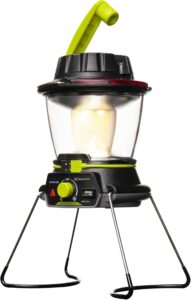
A high-output, multi-function lantern built for group campsites, doubling as a power bank with a hand-crank backup.
Key Specs
| Specification | Details |
|---|---|
| Max Brightness | 600 Lumens |
| Runtime | 2.5–320 Hours |
| Battery Type | Rechargeable Lithium-ion |
| Charging Method | USB-C + Hand Crank |
| Waterproof Rating | IPX6 |
| Weight | 1.1 lb (498 g) |
| Power Bank Function | Yes |
| Light Modes | Adjustable Dual LED |
| Best Use | Car Camping, RV, Family Camping |
| Price Range | $$$ |
Pros & Cons
| Pros | Cons |
|---|---|
| Excellent brightness control | Heavier than backpacking lanterns |
| Built-in phone charging | Higher price |
| Emergency hand-crank backup | Takes longer to fully recharge |
| Durable weather-resistant design | Bulky for ultralight camping |
Real Experience: This is my go-to for family trips. Dual directional lighting means one side can light the picnic table while the other stays dim near the tents, and being able to top off phones from its built-in USB port has saved more than one trip.
Performance: Strong, consistent output across settings; the crank backup is a nice safety net if you forget to charge before heading out.
Best For: Car camping groups and families who want one powered lantern that covers lighting and emergency charging.
Verdict: The most versatile pick on this list for anyone not weight-restricted.

- CAMPING LANTERN: Directional and adjustable LED light, up to 600 lumens. Recharge the internal battery from any USB port…
- SOLAR CHARGER: Internal lithium battery boasts 5200 mAh with a USB output, enough power to charge phones, headlamps, tab…
- PORTABLE OUTDOOR SOLAR LIGHTS: Collapsible legs provide a stand for maximum light dispersion and fold in for convenient …
4. LuminAID PackLite Max 2-in-1 Power Lantern: Best for Emergency Prep
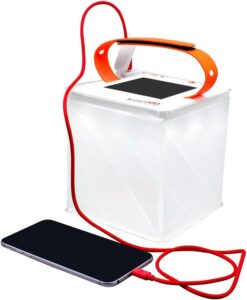
A collapsible solar lantern that recharges without an outlet, built for emergency kits as much as campsites.
Key Specs
| Specification | Details |
|---|---|
| Max Brightness | 150 Lumens |
| Runtime | Up to 50 Hours |
| Battery Type | Rechargeable Lithium-ion |
| Charging Method | Solar + USB |
| Waterproof Rating | IP67 |
| Weight | 8.5 oz (241 g) |
| Power Bank Function | Yes |
| Light Modes | Multiple Brightness Levels |
| Best Use | Emergency Kits, Camping, Disaster Preparedness |
| Price Range | $$ |
Pros & Cons
| Pros | Cons |
|---|---|
| Solar charging capability | Lower brightness than competitors |
| Waterproof and dustproof | Solar charging is slow |
| Packs completely flat | Not ideal for large campsites |
| Charges phones in emergencies | Premium price for brightness level |
Real Experience: I keep this one in my emergency kit as much as my camping bag. It’s the lantern I’d grab first if the power went out at home, not just on a trip.
Performance: Dependable in direct sun; recharge time drops noticeably on cloudy days, so it’s best paired with a backup charging option.
Best For: Emergency preparedness kits, off-grid trips, and anyone who wants a lantern that doesn’t depend on finding an outlet.
Verdict: The most practical choice if grid-independence matters more than raw brightness.

- EXTRA BRIGHT SOLAR LANTERN – With 200 lumens of LED light and multiple brightness settings, including Turbo mode, this i…
- ULTRA-PORTABLE & COMPACT ALL-IN-ONE – This device is a solar powered phone charger, expandable camping lantern, and back…
- SOLAR OR USB RECHARGEABLE FOR CONTINUOUS LIGHTING – Fully recharges in 16-20 hours of direct outdoor sunlight (approxima…
5. Streamlight Siege X USB Rechargeable Lantern: Best High-Lumen Option
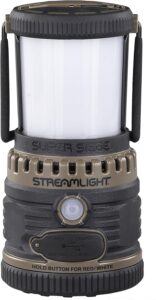
A rugged, high-output lantern built for turning a dark campsite into daylight, without sacrificing build quality.
Key Specs
| Specification | Details |
|---|---|
| Max Brightness | 1,150 Lumens |
| Runtime | Up to 36 Hours |
| Battery Type | Rechargeable Lithium-ion |
| Charging Method | USB |
| Waterproof Rating | IPX7 |
| Weight | 1.2 lb (544 g) |
| Power Bank Function | No |
| Light Modes | High, Medium, Low, Red |
| Best Use | Large Campsites, Worksites, Emergencies |
| Price Range | $$$ |
Pros & Cons
| Pros | Cons |
|---|---|
| Extremely bright output | Heavier than most lanterns |
| Rugged construction | No phone charging feature |
| Excellent waterproof rating | Expensive |
| Multiple lighting options | High mode shortens runtime |
Real Experience: This is the lantern I reach for when I need to see the whole site at once, whether that’s setting up camp after dark or keeping an eye on a larger group.
Performance: Impressively bright with good build quality; runtime drops fastest of anything on this list when run at full output.
Best For: Large group campsites, late arrivals setting up in the dark, or anyone prioritizing brightness above all else.
Verdict: The lantern to bring when “bright enough” isn’t bright enough.

- HIGH-OUTPUT 360° AREA LIGHTING: Produces up to 1,100 lumens with white and red LEDs, providing bright area illumination …
- USB POWER BANK & MULTI-MODE OPERATION: Features six lighting modes, integrated USB charging for compatible electronic de…
- FLOATING LANTERN WITH REMOVABLE GLOBE: Floats with the globe installed, or remove the globe and hang the lantern upside …
6. BioLite AlpenGlow 250 Lantern: Best Compact Option
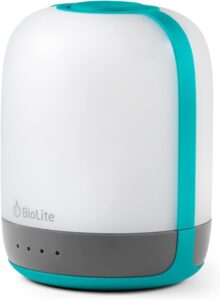
A small, well-designed lantern with white light and warm light modes, built for campsite ambiance as much as function.
Key Specs
| Specification | Details |
|---|---|
| Max Brightness | 250 Lumens |
| Runtime | Up to 200 Hours |
| Battery Type | Rechargeable Lithium-ion |
| Charging Method | USB-C |
| Waterproof Rating | IPX4 |
| Weight | 7.4 oz (210 g) |
| Power Bank Function | No |
| Light Modes | White, Warm, Multicolor |
| Best Use | Tent Camping, Ambience, Backpacking |
| Price Range | $$ |
Pros & Cons
| Pros | Cons |
|---|---|
| Beautiful warm and ambient lighting | Not designed for large-area lighting |
| Compact and lightweight | No power bank |
| Long runtime on low mode | Colored modes reduce battery life |
| Easy USB-C charging | More expensive than basic lanterns |
Real Experience: This one lives on the picnic table more than it lives in my pack. The warm light modes make it feel less like a work light and more like something you’d actually want sitting at camp in the evening. If you want more raw output from the same lineup, BioLite’s larger AlpenGlow 500 lantern is worth a look too, though it trades some of this model’s compact size for extra brightness.
Performance: Great for ambiance and light tent use; not the pick if you need maximum brightness for tasks.
Best For: Campers who want a lantern that doubles as a mood light, or anyone short on pack space.
Verdict: The lantern that makes camp feel like camp, not a job site.

- Enjoy ambient or task-based lighting inspired by nature and packed with functionality; 250 lumens, runs for 5h HI and 20…
- ChromaReal LED technology improves color rendering, offering better color accuracy; Makes colors and textures pop in low…
- Shake to unlock special lighting modes like Candle Flicker or a mesmerizing rotation of color to suit your mood and crea…
7. Coleman OneSource Rechargeable Lantern: Best Value for Money
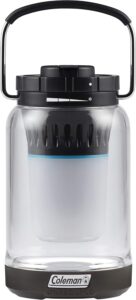
Part of Coleman’s OneSource battery ecosystem, this lantern shares a battery pack with other OneSource gear, cutting down on what you need to carry and charge.
Key Specs
| Specification | Details |
|---|---|
| Max Brightness | 1,000 Lumens |
| Runtime | Up to 60 Hours |
| Battery Type | OneSource Rechargeable Battery Pack |
| Charging Method | USB |
| Waterproof Rating | IPX4 |
| Weight | 2.3 lb (1.04 kg) |
| Power Bank Function | Yes |
| Light Modes | High, Medium, Low |
| Best Use | Car Camping, RV Camping, Family Camping |
| Price Range | $$$ |
Pros & Cons
| Pros | Cons |
|---|---|
| Shared battery across OneSource tools | Heavy compared to competitors |
| Bright and consistent illumination | Best value only within the OneSource ecosystem |
| Can charge phones and devices | Bulkier than compact lanterns |
| Durable Coleman construction | USB charging is slower than some USB-C models |
Real Experience: If you’re already invested in Coleman’s OneSource ecosystem, this lantern is a no-brainer. Being able to swap one portable battery pack across multiple pieces of gear cuts down on what I need to keep charged before a trip. Coleman also sells propane and dual fuel lanterns under other lines, but this rechargeable model is the one I’d actually pack now.
Performance: Consistent, dependable output across trips; the real value shows up once you factor in shared battery costs across other OneSource gear.
Best For: Campers already using or considering the Coleman OneSource system, and anyone who wants to standardize batteries across their kit.
Verdict: Best long-term value if you’re building out a OneSource setup, solid on its own either way.

- COLEMAN ONESOURCE: Power your outdoor gear and devices with one interchangeable rechargeable battery system
- ADJUSTABLE SETTINGS: Up to 600 lumens (high) or 50 lumens (low) for customizable lighting; beam distance of up to 10 met…
- CONVENIENT FEATURES: Soft-grip handle; lifetime LEDs never need replacing; IPX4 water-resistance rating; and impact-resi…
Product Awards Table
| Award | Product |
|---|---|
| Editor’s Choice | Goal Zero Lighthouse 600 Lantern |
| Best for Backpacking | Black Diamond Moji R+ |
| Best Budget Pick | LE Rechargeable LED Camping Lantern |
| Best for Emergency Prep | LuminAID PackLite Max 2-in-1 |
| Best High-Lumen Option | Streamlight Siege X |
| Best Compact Option | BioLite AlpenGlow 250 |
| Best Value for Money | Coleman OneSource Rechargeable Lantern |
Product Comparison Table
| Product | Max Brightness | Runtime | Weight | Waterproof | Charging | Power Bank | Best For | Price |
|---|---|---|---|---|---|---|---|---|
| Goal Zero Lighthouse 600 | 600 Lumens | 2.5–320 hrs | 1.1 lb (498 g) | IPX6 | USB-C + Hand Crank | ✅ Yes | Car Camping & Families | 79.95 |
| Black Diamond Moji R+ | 200 Lumens | Up to 20 hrs | 3 oz (86 g) | IPX4 | USB-C | ❌ No | Backpacking | 39.08 |
| LE Rechargeable LED Lantern | 1,000 Lumens | Up to 12 hrs | 14 oz (397 g) | IPX4 | USB-C | ❌ No | Budget Camping | 39.99 |
| LuminAID PackLite Max 2-in-1 | 150 Lumens | Up to 50 hrs | 8.5 oz (241 g) | IP67 | Solar + USB | ✅ Yes | Emergency Preparedness | 49.99 |
| Streamlight Siege X | 1,150 Lumens | Up to 36 hrs | 1.2 lb (544 g) | IPX7 | USB | ❌ No | Maximum Brightness | 142.54 |
| BioLite AlpenGlow 250 | 250 Lumens | Up to 200 hrs | 7.4 oz (210 g) | IPX4 | USB-C | ❌ No | Compact & Ambient Lighting | 45.99 |
| Coleman OneSource Lantern | 1,000 Lumens | Up to 60 hrs | 2.3 lb (1.04 kg) | IPX4 | USB | ✅ Yes | Best Value & OneSource System | 50.99 |
Quick Buying Recommendations
| If You Need… | Recommended Lantern |
|---|---|
| 🏆 Best Overall | Goal Zero Lighthouse 600 |
| 🎒 Best for Backpacking | Black Diamond Moji R+ |
| 💰 Best Budget Pick | LE Rechargeable LED Camping Lantern |
| 🚨 Best for Emergency Kits | LuminAID PackLite Max 2-in-1 |
| 🔆 Brightest Lantern | Streamlight Siege X |
| 🎨 Best Compact & Ambient Light | BioLite AlpenGlow 250 |
| 💵 Best Long-Term Value | Coleman OneSource Rechargeable Lantern |
Verdict Box
For most campers, the Goal Zero Lighthouse 600 Lantern is the safest all-around pick thanks to its output, power bank function, and crank backup. Backpackers should go straight to the Black Diamond Moji R+, and anyone building an emergency kit should not skip the LuminAID PackLite Max 2-in-1.
Other Rechargeable Lanterns Worth Knowing About
These seven made my final list, but a couple of other names come up often enough that they’re worth a mention if none of the above quite fit. The BioLite Luci Charge 360 and the Orbiter 650 Lantern both show up frequently in this space and are worth a look if you want to compare a wider range of rechargeable camping lanterns before deciding. I haven’t put either through the same hands-on testing as the picks above, so treat these as leads to research rather than endorsements.
FAQs About Rechargeable Camping Lanterns
1. What is the best rechargeable camping lantern?
The Goal Zero Lighthouse 600 is one of the best all-around rechargeable camping lanterns thanks to its bright output, long runtime, and built-in power bank.
2. Are USB-C camping lanterns better?
Yes. USB-C lanterns charge faster, use a common cable, and are generally more convenient than older micro-USB models.
3. Can I leave a rechargeable lantern charging overnight?
Most modern lanterns include overcharge protection, but it’s still best to unplug them once fully charged to extend battery life.
4. Which lantern is best for backpacking?
A lightweight model like the Black Diamond Moji R+ is ideal for backpacking because it’s compact and easy to carry.
5. How waterproof should a camping lantern be?
For most camping trips, an IPX4 rating is sufficient, while IPX7 is better for heavy rain or wet environments.
6. Are rechargeable lanterns safe inside a tent?
Yes. LED rechargeable lanterns produce very little heat, making them much safer than fuel-powered lanterns for tent use.
7. Can a camping lantern charge my phone?
Many rechargeable lanterns include a USB power bank feature that lets you charge phones and other small devices.
8. How many lumens are enough for camping?
Around 300–500 lumens is enough for most campsites, while 100–200 lumens works well inside a tent.
9. Do rechargeable lantern batteries wear out?
Yes. Like all lithium-ion batteries, they gradually lose capacity after hundreds of charging cycles but typically last for several years.
10. Are rechargeable lanterns worth buying?
Yes. They reduce battery waste, save money over time, and offer convenient features like USB charging and long runtimes.
Personal Recommendation
After putting these lanterns through real trips, my picks come down to the type of adventure. For backpacking, I’d grab the Black Diamond Moji R+ every time, since its size and battery life never get in the way. For family car camping, the Goal Zero Lighthouse 600 Lantern is the one I actually pack, since the power bank function alone has saved a trip or two. And if emergency preparedness is the priority, the LuminAID PackLite Max 2-in-1 earns its spot in the kit thanks to solar charging that doesn’t depend on an outlet.
Whatever you choose, ditching disposable batteries for a rechargeable lantern is one of the simplest upgrades you can make ahead of your next camping trip, and it’s one you’ll notice on the very first night out.