As an experienced camper who has pitched more tents than I can count, I understand your skepticism about the durability of various types of inflatable tents. You’ve seen the glossy ads, the “quick setup” videos, and the promises of ultimate convenience. But what’s the real story? Are inflatable tents truly the game-changer they claim to be, or just another overpriced gimmick? Having put these air-filled shelters through their paces in everything from torrential rain and blustery winds to sweltering summer heat and boisterous family trips, I’m here to give you the honest truth, devoid of any sales pitch.
Quick Answer: Are Inflatable Tents Worth It?
Yes for most family campers, car campers, and festival-goers, inflatable tents are absolutely worth the investment. Their biggest advantage is fast, stress-free setup, often taking just a fraction of the time required for traditional pole tents. They also offer excellent wind resistance, spacious interiors, and eliminate the frustration of assembling tent poles.
However, inflatable tents aren’t perfect. They typically cost more, pack down larger, and rely on a pump for setup. For backpackers and ultralight hikers, traditional pole tents usually remain the better choice due to their lower weight and smaller packed size.
Who Should Buy an Inflatable Tent?
✅ Family campers
✅ Car campers
✅ Festival-goers
✅ Beginner campers
✅ Campers who value quick setup
Who Should Skip an Inflatable Tent?
❌ Backpackers
❌ Ultralight hikers
❌ Campers with limited storage space
❌ Budget-focused buyers
Inflatable Tent vs Traditional Tent: Quick Comparison
| Feature | Inflatable Tent | Traditional Pole Tent |
|---|---|---|
| Setup Time | 5–15 minutes | 15–30 minutes is the average setup time for many types of inflatable tents. |
| Ease of Setup | Very Easy | Moderate |
| Wind Resistance | Excellent (flexes under pressure) | Good (poles can bend or snap) |
| Weight | Heavier | Lighter |
| Packed Size | Bulkier | More Compact |
| Repair Method | Patch air beam | Replace or repair pole |
| Durability | Excellent with proper care | Excellent with proper care |
| Family Camping | Excellent | Good |
| Backpacking | Poor | Excellent |
| Comfort & Space | More spacious interior | Slightly less usable space |
| Cost | Higher upfront cost | More budget-friendly |
| Best For | Family camping, car camping, festivals | Backpacking, hiking, budget camping |
Understanding Inflatable Tents
What is an Inflatable Tent?
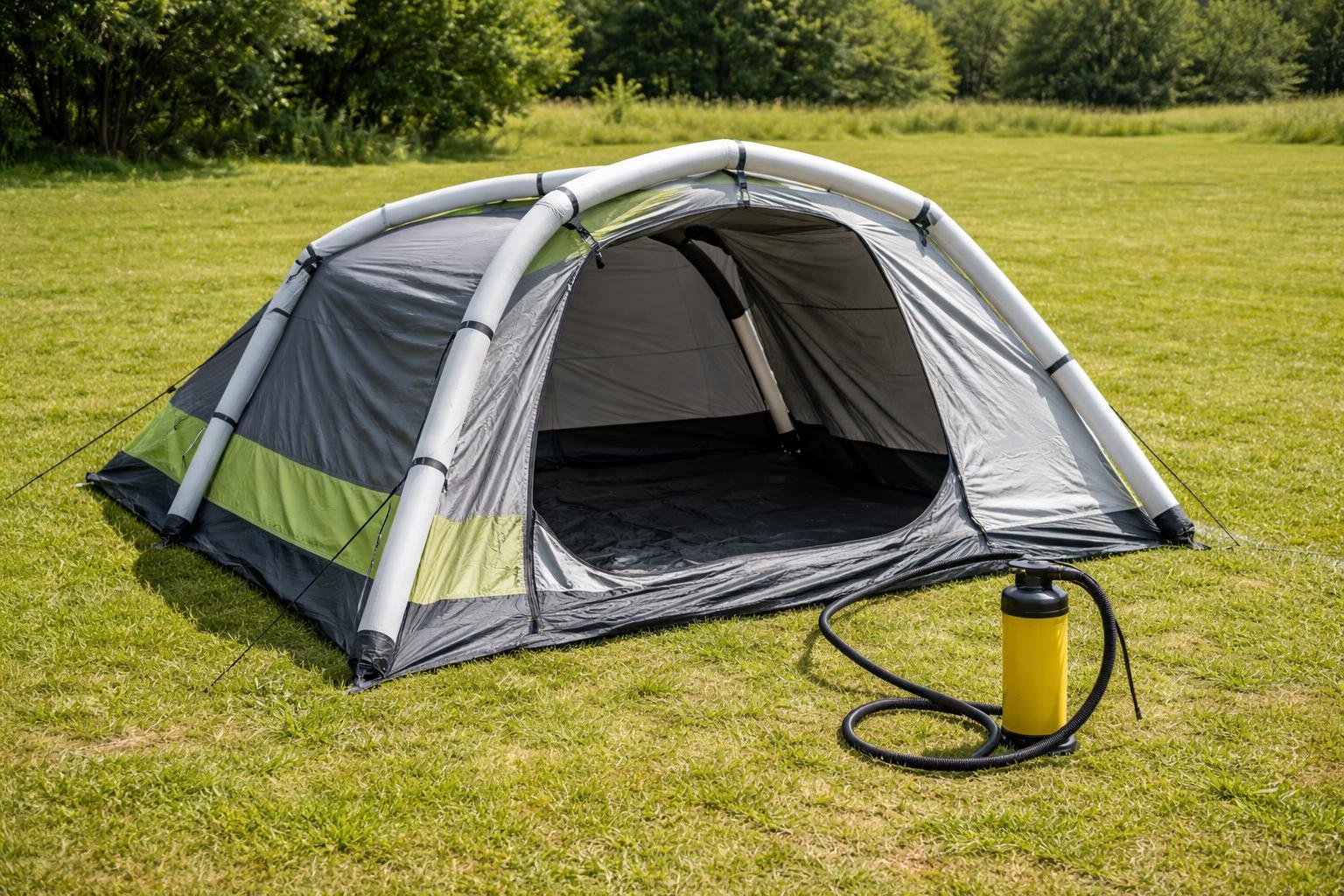
An inflatable tent, often referred to as an air tent or air beam tent, represents a significant evolution in camping shelter technology. Unlike traditional tents that rely on rigid metal poles to form their structure, an inflatable tent utilizes robust, interconnected air beams that, once inflated, create a stable and rigid frame, enhancing its performance in windy conditions.
These air beams, typically constructed from durable thermoplastic polyurethane (TPU) encased in a protective outer sleeve, are pumped full of air using either a manual or electric pump through a dedicated valve. This innovative design eliminates the need for fiddly tent poles, streamlining the pitching process considerably and often resulting in a remarkably spacious interior free from internal obstructions that traditional pole tents can sometimes present.
Inflatable Tents vs Traditional Tents
The fundamental difference between inflatable tents and traditional tents lies in their structural support. Traditional tents, or pole tents, use a system of interlocking metal or fiberglass poles to create their shape and provide stability. This often involves a multi-step assembly process, threading poles through sleeves and connecting them, which can be particularly challenging in adverse weather conditions or when attempting to pitch a large family tent.
In contrast, inflatable tents, such as those from Outwell or Vango, replace these rigid components with inflatable air beams. This crucial distinction provides several advantages, including a quicker setup, reduced risk of pole snapping in high winds, and often a more robust structure once fully inflated, although the packed-down bulk and weight can sometimes exceed that of a conventional tent.
Why Choose Inflatable Camping?
Choosing inflatable camping, particularly for those undertaking family camping trips or car camping adventures, often comes down to a desire for convenience and efficiency in setting up camp. The primary advantage inflatable tents offer is their remarkably quick setup time, which is particularly beneficial for those who prefer to avoid the hassle of setting up metal poles.; instead of wrestling with numerous tent poles, you simply unroll the tent, peg down the corners, and inflate the air beams using a pump.
This can transform the pitching process from a potential source of frustration into a swift and enjoyable task, allowing campers to dedicate more time to relaxing and enjoying their next camping trip. Furthermore, many quality inflatable tents boast excellent stability in wind and rain, often featuring high hydrostatic head ratings and robust construction that rivals or even surpasses many traditional pole tents, making them a worthy investment for various camping styles.
How We Evaluated Inflatable Tents
To provide accurate and practical recommendations, we evaluated inflatable tents based on the factors that matter most to campers:
- Setup speed
- Wind resistance
- Waterproof performance
- Long-term durability
- Air retention
- Ease of repair
- Interior space and comfort
- Packed size and portability
- Verified user reviews
- Overall value for money
By considering these criteria, we identified inflatable tents that offer the best combination of convenience, reliability, and performance for family camping, car camping, festivals, and outdoor adventures.
9 Lesser-Known Truths About Inflatable Camping Tents
Truth #1: Real-World Cost vs Value
When considering an inflatable tent, many campers initially focus on the higher upfront cost compared to a traditional tent. While a quality inflatable tent might seem like a significant investment at around £200, it’s crucial to evaluate its long-term value compared to less durable options, especially when considering the advantages of inflatable tents.
For instance, my four-person tent, a Berghaus Air, cost more initially, but its quick setup time makes it worth the investment compared to bulky and heavy options. its durability and quick setup have saved me countless hours of frustration over multiple family camping trips. The convenience of swiftly pitching an air tent, especially after a long journey, adds immense value to the overall camping experience, often making it worth the investment for those who camp frequently.
Truth #2: The Risks of Pump Failure
One often overlooked vulnerability of inflatable camping is the reliance on the pump. While many inflatable tents come with a reliable pump, a pump failure can completely derail your setup. I once encountered a faulty valve on my manual pump during a trip, leaving me unable to inflate my tent. Always pack a backup manual pump for your inflatable tent for camping., or at the very least, ensure your primary pump is in excellent working order and consider a reputable brand’s electric pump as a primary, with a hand pump as redundancy, especially for a large inflatable tent. This simple precaution ensures your air-filled shelter is always ready to go.
Truth #3: Cold Weather Performance Issues
While inflatable tents are generally robust, their cold weather performance can be a concern, particularly in windy conditions. The air within the beams can contract significantly in freezing temperatures, potentially causing the tent to sag and lose some of its structural integrity, a concern often addressed in the guide to inflatable tents. I experienced this with an Alpkit inflatable tent on a chilly autumn trip; the air beams needed re-inflating more frequently to maintain tension. While a quality inflatable tent provides excellent insulation through its fabric, the air-filled structure itself doesn’t offer the same rigidity in extreme cold as solid poles, making regular top-ups crucial to maintain stability.
Truth #4: Setup Time on Uneven Ground
The quick setup often lauded for inflatable tents assumes a relatively flat pitch. On uneven ground, however, pegging out the base properly before inflation becomes critical, adding to the overall setup time. If the base isn’t taut and evenly spread, the air beams can inflate awkwardly, causing wrinkles or an unstable structure, which can be a drawback in windy conditions. I once struggled with a Decathlon inflatable tent on a sloping campsite, spending extra time adjusting the initial pegging to ensure a stable and taut pitch before even touching the pump, revealing that “quick setup” is sometimes conditional.
Truth #5: Long-Term Air Retention Challenges
Over extended camping trips, or after several seasons of use, maintaining long-term air retention in an inflatable tent can become a challenge. While modern air beam tents are designed to be airtight, subtle leaks can develop over time, requiring more frequent top-ups. I’ve noticed this with some older Vango models; after a week-long trip, the beams might need a slight re-inflation to maintain their optimal firmness, especially in fluctuating temperatures, as noted in the guide to inflatable tents. It’s a minor inconvenience but something traditional tent users never encounter, making it a distinct characteristic of inflatable camping, especially in comparison to bulky and heavy alternatives.
Truth #6: Puncture Repair Reality
The fear of a puncture is a common concern for inflatable tent owners, and the reality of puncture repair is something often downplayed. While most quality inflatable tents come with a repair kit, it’s wise to consult a guide to inflatable tents for additional maintenance tips. patching a significant hole, especially in an internal air beam, can be more involved than patching a fabric tear on a conventional tent. I’ve had to perform a roadside repair on an awning beam after snagging it on a branch; it requires patience and a clean, dry surface for the patch to adhere correctly, highlighting that while repairable, it’s not always a five-minute fix.
Truth #7: Packdown Bulk Considerations
Despite the ease of setup, the The pack-down bulk of an inflatable tent is often considerably greater than a traditional tent of comparable size, especially when considering the best value for space.. The robust air beams, even deflated, retain a certain volume and rigidity, making them challenging to compress into a small bag. My experience with a large Outwell family tent shows that while it packs into its designated bag, it takes up substantial space in the car, making it less ideal for backpacking or situations where minimal luggage is paramount, in stark contrast to lightweight backpacking tents.
Truth #8: Compatibility with Camping Cots
When it comes to interior space and compatibility, fitting camping cots inside an inflatable tent requires careful consideration, especially when using a camping mattress for added comfort. While many inflatable tents offer a spacious interior, the tent design can vary significantly between different models. The tapering of the air beams and the specific floor plan can limit where cots can be placed without interfering with the tent’s structure or creating an uncomfortable fit, which is important in a 6-person tent.. I’ve found with several air tent models that while the footprint is generous, the usable floor area for cots can be surprisingly restrictive, making it essential to check internal dimensions against cot sizes before purchasing an inflatable camping tent.
Truth #9: Resale Value Insights
The resale value of an inflatable tent, compared to a traditional pole tent, can be quite variable and is largely dependent on its condition and brand reputation. While premium brands like Outwell or Berghaus tend to hold their value better, any signs of wear, especially minor air leaks or significant patches, can drastically reduce its market appeal. I’ve attempted to sell a well-used inflatable tent and found buyers were particularly wary of the air-filled system’s integrity, often preferring brand-new options or heavily discounted second-hand pole tents, suggesting the depreciation curve can be steeper for these advanced shelters.
Inflatable Tent Pros and Cons at a Glance
| Pros | Cons |
|---|---|
| ✅ Extremely fast setup compared to pole tents | ❌ Higher upfront cost |
| ✅ No poles to assemble or break | ❌ Requires a pump for setup |
| ✅ Excellent wind resistance due to flexible air beams | ❌ Bulkier packed size than many traditional tents |
| ✅ Spacious interiors with fewer obstructions | ❌ Air pressure may need occasional top-ups |
| ✅ Great for family camping and car camping, especially with inflatable tents like those designed for larger groups. | ❌ Not ideal for backpacking |
| ✅ Air beams are less likely to snap in strong winds | ❌ Puncture repairs can be more involved than pole repairs |
| ✅ Beginner-friendly setup process | ❌ Heavier than most backpacking tents |
| ✅ Comfortable and convenient for longer trips | ❌ Premium models can be expensive |
Choosing the Right Inflatable Tent for Your Needs
For Family Campers
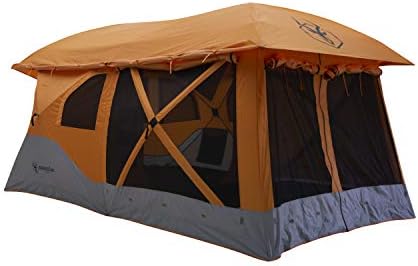
Family campers get the most out of inflatable tents and it’s not even close. When you’re managing kids, gear, and a tired partner after a long drive, shaving 20 minutes off setup isn’t a luxury, it’s sanity. After testing several models, three stand out for families shopping on Amazon. The Gazelle T4 Plus Hub Tent handles four people comfortably with a near-instant hub deployment, a waterproof 75D polyester shell, and a generous 94 sq ft of floor space consistently well-reviewed by family campers across multiple seasons.
The Core 9 Person Inflatable Tent steps up for larger families, offering three rooms, 100 sq ft of space, and Core’s H20 Block technology rated at 1200mm hydrostatic head, making it a solid wet-weather option. For a mid-range pick, the Outsunny 4-Person Inflatable Camping Tent delivers quick air beam setup and a built-in pump compatibility that keeps things simple for first-timers. All three are available on Amazon.com with Prime shipping. Look for a minimum 1500mm hydrostatic head rating and confirm the packed dimensions fit your vehicle boot before ordering bulk is the one thing family inflatable buyers consistently underestimate.
For Solo Backpackers
Let’s be straight with solo backpackers if you’re covering serious miles on foot, an inflatable tent is not your answer. The lightest air beam tents still clock in at 4–6kg packed, which is a non-starter when every gram matters on a multi-day trail. That said, if your version of solo camping involves driving to a site and hiking 10 minutes to pitch, the picture changes entirely.
The Naturehike Cloud-Up 1 Inflatable Tent is the closest thing to a solo-friendly air tent on Amazon right now compact, lightweight for its category at under 3kg, and straightforward to pitch alone in under 10 minutes. For solo campers who want more living space at a base camp, the Toogh 1-2 Person Inflatable Camping Tent offers a more spacious interior with a simple single-valve inflation system that genuinely earns the “quick setup” label. If budget allows, consider investing in the best value inflatable tent for your needs.
is your primary filter, the KingCamp Inflatable 1-Person Tent covers the basics with a waterproof ripstop shell and a packed size manageable enough for a car boot or truck bed. All three are searchable on Amazon.com with solid review counts worth reading before you commit. Just be realistic solo inflatable camping is a car camping upgrade, not a backpacking solution.
For Festival Goers
Festival camping is where inflatable tents genuinely shine and where I’d recommend them without hesitation. You’re arriving Friday evening, the field is packed, the light is fading, and your neighbours are already three drinks in. The last thing you need is a bag full of poles and a 45-minute setup battle. Inflatable tents cut that chaos completely.
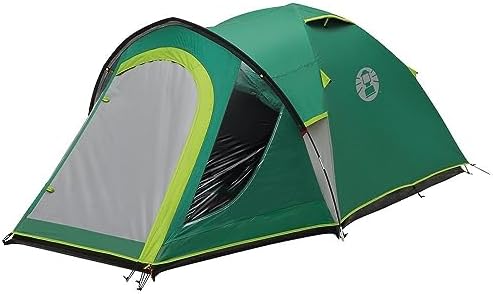
The Coleman Kobuk Valley 4 Plus Inflatable Tent is a festival favourite on Amazon for good reason four-person capacity, pre-attached air beams that inflate in one go, and a robust 4500mm hydrostatic head rating that laughs at British festival weather. For smaller groups or solo festival-goers, the Vango Nevis 200 Inflatable Tent is a compact two-person option with Vango’s AirBeam technology, a fast single-pump inflation system, and a packed size that fits in an overhead locker rare for an air tent.
If you want maximum value without sacrificing durability, the Outsunny 2-3 Person Inflatable Camping Tent covers the essentials with a straightforward valve system and a waterproof outer shell that handles overnight rain without drama. All three are available on Amazon.com with strong review histories worth scanning before you buy. One practical tip most festival guides skip always inflate your tent at home the night before your first festival use. Finding a slow leak in your living room is infinitely better than discovering it at midnight in a muddy field.


Best Inflatable Tent for Camping: Quick Comparison
| Tent | Capacity | Best For | Setup Time | Waterproof Rating | Our Rating |
|---|---|---|---|---|---|
| Gazelle T4 Plus Hub Tent | 4 Person | Best Overall Family Tent | ~90 Seconds is the typical time it takes to set up an inflatable tent for camping. | 2000mm | ⭐⭐⭐⭐⭐ |
| Core 9 Person Instant Cabin Tent | 9 Person | Large Families | ~2–5 Minutes | H20 Block Technology | ⭐⭐⭐⭐⭐ |
| Coleman Kobuk Valley 4 Plus | 4 Person | Festivals | ~10 Minutes | 4500mm | ⭐⭐⭐⭐⭐ |
| Naturehike Cloud-Up Inflatable | 1–2 Person | Solo Camping | ~10 Minutes | 4000mm | ⭐⭐⭐⭐½ |
| Outsunny Inflatable Camping Tent | 2–4 Person | Budget Buyers | ~5 Minutes | 3000mm | ⭐⭐⭐⭐ |
Quick Buying Recommendations
🏆 Best Overall: Gazelle T4 Plus Hub Tent
👨👩👧👦 Best for Families: Core 9 Person Instant Cabin Tent
🎵 Best for Festivals: Coleman Kobuk Valley 4 Plus
🎒 Best for Solo Campers: Naturehike Cloud-Up Inflatable
💰 Best Budget Pick: Outsunny Inflatable Camping Tent
Frequently Asked Questions
Are inflatable tents safe in strong winds?
Yes. Quality inflatable tents often flex rather than snap, making them highly wind-resistant, which is one of the advantages of inflatable tents.
Do inflatable tents lose air overnight?
Minor pressure changes are normal due to temperature fluctuations.
What happens if an air beam punctures?
Most can be repaired using included repair kits.
How long do inflatable tents last?
A quality inflatable tent can last 5–10+ years with proper care.
Can one person set up an inflatable tent?
Yes. Most models can be pitched by one person.
Are inflatable tents waterproof?
Most quality models feature waterproof fabrics and sealed seams.
Can inflatable tents be used in winter?
Yes, but air pressure should be checked more frequently in cold weather.
Do inflatable tents require electricity?
No. Most include manual pumps.
Final Verdict: Are Inflatable Tents Worth It?
After years of camping with both traditional pole tents and modern air tents, my answer is simple: yes, inflatable tents are worth it for most campers.
If you’re a family camper, car camper, or festival-goer, the convenience of pitching a tent in minutes instead of wrestling with poles can completely transform your camping experience. Modern inflatable tents are durable, weather-resistant, and surprisingly stable in strong winds, making them a practical alternative to traditional tents.
That said, they aren’t the perfect choice for everyone. Backpackers and ultralight hikers will still benefit more from lightweight pole tents due to their lower weight and smaller packed size. Inflatable tents also require a larger upfront investment and depend on a pump for setup.
Key Takeaways
✔ Faster and easier setup than traditional tents
✔ Excellent wind resistance and weather protection
✔ Spacious interiors ideal for families and groups
✔ No fragile poles to break or replace
✔ Best suited for car camping, family camping, and festivals
✔ Less suitable for backpacking and ultralight adventures
For most campers, the time saved, reduced frustration, and added comfort easily justify the higher price. Once you’ve experienced setting up an inflatable tent in just a few minutes, it’s difficult to go back to traditional poles.
Ready to Choose the Right Inflatable Tent?
Compare the top-rated inflatable tents featured in this guide and choose the model that best fits your camping style, group size, and budget. Whether you’re planning a family camping trip, a festival weekend, or a comfortable basecamp adventure, the right inflatable tent can make every trip easier, faster, and more enjoyable.
👉 Check our recommended inflatable tents above and find the best option for your next camping adventure.