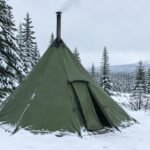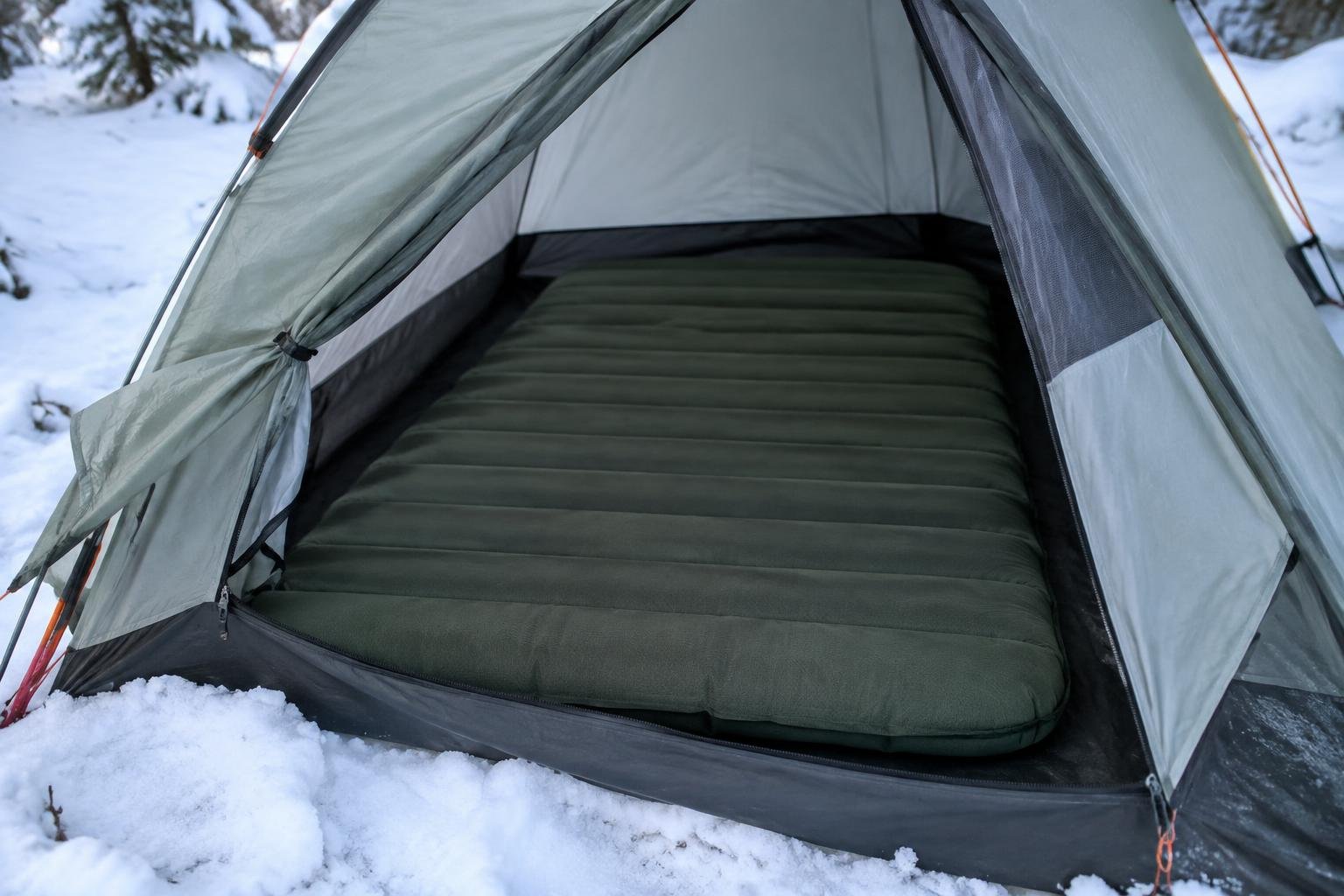
The best insulated sleeping pads for cold weather pair a high R-value with low weight and enough thickness to sleep well on frozen ground. This sleeping pad review compares seven pads for campers and backpackers who are tired of waking up cold. Four are built for true winter use and three suit shoulder season or mild winter nights.
Whether you want the best warmth-to-weight ratio for your next camping trip, a plush pad for side sleeping, or comfortable sleeping on frozen ground, match the pad to your coldest night.
Quick Verdict: Which Insulated Sleeping Pad Should You Buy?
Short answer: The Therm-a-Rest NeoAir XTherm NXT is the best insulated sleeping pad for most cold-weather campers, with a 7.3 R-value at 15.5 oz. Choose the NEMO Tensor Extreme Conditions (8.5 R-value) for the harshest cold, or the Exped Ultra 6.5R (6.9 ASTM R-value) for the lowest price tier among the winter-rated pads.
- Best Overall and Best Lightweight: Therm-a-Rest NeoAir XTherm NXT. A 7.3 R-value at 15.5 oz in Regular, the lightest winter-rated pad here.
- Best for Extreme Cold: NEMO Tensor Extreme Conditions Ultralight Insulated. An 8.5 R-value, the highest on this list.
- Best Budget (winter-rated): Exped Ultra 6.5R. A 6.9 R-value at a lower price tier than the other winter-rated pads.
- Best for Comfort and Side Sleepers in winter: Sea to Summit Ether Light XR Pro. A 7.4 R-value and 3.9 in of thickness, the thickest winter-rated pad.
- Best for Shoulder-Season Comfort: Therm-a-Rest NeoLoft. The thickest pad here at 4.6 in, with a 4.7 R-value.
- Best for Three-Season Backpacking: Big Agnes Rapide SL Insulated. About 18 oz in Regular, with a 4.8 R-value.
- Best Entry-Level Pad for Mild Cold: Klymit Insulated Static V2. A 4.2 R-value at an accessible price tier.
How to read this list: the first four reviews below (R-values 6.9 to 8.5) are winter pads. The last three (R-values 4.2 to 4.8) are shoulder-season pads, and in freezing conditions they need a foam pad underneath.
Best Insulated Sleeping Pads Compared
| Product | R-value | Weight (oz / g) | Thickness | Best for | Rating |
|---|---|---|---|---|---|
| NEMO Tensor Extreme Conditions Ultralight Insulated | 8.5 | 16 oz / 454 g (Regular Mummy) | 3.5 in | Extreme cold (winter) | 8.7/10 |
| Therm-a-Rest NeoAir XTherm NXT | 7.3 | 15.5 oz / 440 g (Regular) | 3 in | Overall and lightweight (winter) | 8.9/10 |
| Sea to Summit Ether Light XR Pro | 7.4 | 21.9 oz / 620 g (Regular Mummy, with stuff and pump sack) | 3.9 in | Winter comfort, side sleepers | 8.5/10 |
| Exped Ultra 6.5R | 6.9 | 16 oz / 455 g (Medium) | 3.5 in | Budget (winter) | 8.6/10 |
| Therm-a-Rest NeoLoft | 4.7 | 25 oz / 705 g (Regular) | 4.6 in | Shoulder-season comfort | 7.2/10 |
| Big Agnes Rapide SL Insulated | 4.8 | 18 oz / 510 g (Regular) | 3.5 in (4.25 in outer chambers) | Three-season backpacking | 7.5/10 |
| Klymit Insulated Static V2 | 4.2 | 22 oz / 620 g (Regular) | 2.5 in | Entry-level, mild cold | 6.9/10 |
Weights are manufacturer-listed for the size shown, rounded, with grams alongside ounces. They change with size and shape (mummy or rectangular) and with whether sacks are counted, so confirm the exact variant you order. R-values are manufacturer-listed; Sea to Summit, Exped, Big Agnes, Klymit and Therm-a-Rest list ASTM-tested figures. Prices change often, so check the current price on Amazon.
How We Evaluate Insulated Sleeping Pads
Our ratings are research-based. We did not hands-on test these pads for this guide. Each score comes from manufacturer specifications, retailer spec sheets and independent reviews, then gets scored on six weighted criteria, judged for cold-weather use:
- Warmth and R-value (30%): how well the pad resists heat loss to cold ground.
- Comfort (20%): thickness, width and support for side sleepers.
- Weight (15%): weight in the Regular size.
- Value (15%): what you get for the price tier.
- Durability (10%): fabric specs and common owner-reported issues, not lab testing.
- Packability (10%): packed size and ease of setup.
How to Read the Editorial Rating
Each criterion is scored from 0 to 10 relative to the other pads in this roundup: 10 is the best here for that criterion, around 5 is an average cold-weather pad, and anything lower is a clear weakness. The editorial rating is the weighted total out of 10, rounded to one decimal. A 7 to 8 means a solid pick with a real trade-off, and 8.5 or higher means a pad we would recommend for its stated job with few caveats.
How value is scored: value compares the warmth and comfort you get against recent US retail listings. Those listings ran from roughly $80 to $110 for the Klymit, $160 to $220 for the Big Agnes, about $200 for the Exped, about $230 for the XTherm NXT, $250 to $280 for the NEMO, and about $270 for the NeoLoft and Sea to Summit, depending on size and retailer. Value and durability are judgment calls, and we say so.
| Pad | Warmth (30%) | Comfort (20%) | Weight (15%) | Value (15%) | Durability (10%) | Packability (10%) | Total |
|---|---|---|---|---|---|---|---|
| NEMO Tensor Extreme Conditions | 10 | 8.5 | 9 | 6.5 | 7.5 | 9.5 | 8.7 |
| Therm-a-Rest NeoAir XTherm NXT | 9.5 | 8.5 | 9.5 | 7.5 | 8 | 9.5 | 8.9 |
| Sea to Summit Ether Light XR Pro | 9.5 | 9 | 8 | 6.5 | 8 | 9 | 8.5 |
| Exped Ultra 6.5R | 9 | 8.5 | 8.5 | 9 | 7 | 8.5 | 8.6 |
| Therm-a-Rest NeoLoft | 6 | 10 | 6 | 6.5 | 8 | 7 | 7.2 |
| Big Agnes Rapide SL Insulated | 6 | 8 | 8.5 | 8 | 7 | 9 | 7.5 |
| Klymit Insulated Static V2 | 5.5 | 6.5 | 7 | 9 | 8 | 7.5 | 6.9 |
We re-check specs when manufacturers update a model and note the date at the end of this page.
How to Choose a Sleeping Pad for Winter Camping
The right insulated sleeping pad comes down to your coldest night, your sleeping position and how much weight you will carry. The sections below cover the numbers that matter.
What Is R-Value, and What R-Value Do I Need for Winter Camping?
A sleeping pad’s ability to resist heat loss to the ground is measured as R-value. A higher number means more insulation. For winter camping, aim for an R-value of about 5 or higher, and choose 6 or more for snow and frozen ground. Check the manufacturer’s tested rating before buying.
ASTM F3340-18 is the lab standard used to measure sleeping pad R-value. Many major brands began publishing ASTM-tested values around 2020, which makes their ratings broadly comparable. Not every brand or product lists an ASTM number, though, and some older listings still show a legacy figure, so check which one you are reading. Use this common rule of thumb as a starting point:
| R-value | Typical use |
|---|---|
| Below 2 | Warm summer nights |
| 2 to 4 | Three-season camping |
| 4 to 5 | Cold nights and shoulder season |
| 5 and above | Winter camping |
| 6 and above | Snow and frozen ground |
Brands draw these lines differently, and cold sleepers need extra margin. Exped, for example, says an R-value of 6.5 meets its minimum recommendation for mats used reliably in all four seasons. Klymit markets its 4.2 pad as four-season, while we treat anything below 5 as a shoulder-season pad.
Inflatable Pads vs Foam Pads vs Insulated Air Pads
An inflatable sleeping pad packs small, a closed-cell foam pad is solid and cannot deflate, and an insulated air pad adds fill or reflective layers inside an air pad to raise warmth. Self-inflating pads sit in between, using open-cell foam that expands when you open the valve; they are durable but heavier and bulkier. Insulated air pads are the usual winter choice, and a foam pad underneath adds backup warmth.
- Air pad: light and comfortable, but can be punctured.
- Foam pad: durable and low cost, but bulky.
- Insulated air pad: all seven pads here. The pad uses synthetic fill, reflective film, or both. NEMO, Big Agnes, Sea to Summit and Therm-a-Rest use reflective layers; Exped and Klymit combine reflective film with synthetic fill.
For lighter options outside winter, see our guide to ultralight sleeping pads.
Insulated Pad vs Standard Sleeping Pads
Standard sleeping pads are non-insulated air pads with open chambers, so heat can circulate and escape through the pad. An insulated pad adds reflective film or synthetic fill to slow that loss. The names can be confusing: Klymit sells both an Insulated Static V2 and a different, non-insulated Static V2, so confirm the listing before you buy.
Do I Need to Stack Two Pads?
Stacking a closed-cell foam pad under an inflatable pad adds warmth, because the R-values of stacked pads add together. It also protects you if the air pad fails. The trade-off is extra weight and bulk. It makes sense with the three shoulder-season pads in this guide when temperatures drop below freezing.
How Do Weight, Packed Size, Noise and Pad Width Affect Choice?
Compare weight and R-value together, never weight alone, because a lightweight pad with a low R-value will leave you cold. Lighter pads often use thinner fabric, so check durability too. Narrow Regular pads are about 20 in wide, and wide sizes help side sleepers but weigh more. Some pad fabrics crinkle when you move, so noise matters if you sleep lightly.
Why Does Winter Inflation Matter?
In freezing weather, inflating a pad by mouth puts moist breath inside it, which can condense or freeze. A pump sack avoids this. The NEMO, Therm-a-Rest, Sea to Summit, Exped and Big Agnes pads in this guide each come with a pump or inflation sack, so you do not need to blow them up by mouth.
Common Mistakes When Choosing the Right Insulated Sleeping Pad
- Buying on weight alone. Warmth is the reason you want an insulated pad.
- Ordering the wrong variant. The Sea to Summit Ether Light XR (not Pro) is rated 4.1, and Klymit sells a non-insulated Static V2 and an Insulated Static V (rated 4.4 in some listings) alongside the Insulated Static V2 (4.2). Check that the listing says XR Pro or Insulated Static V2 before you order.
- Buying an old Big Agnes version. The current Rapide SL Insulated is rated 4.8; the earlier PrimaLoft version was rated 4.2.
- Ignoring the coldest night. Match R-value to the lowest temperature you expect, with some margin.
- Skipping a repair kit and groundsheet. Air pads can be punctured, and a failed pad on a cold night is a real problem.
- Treating the pad as a separate item. New to cold trips? Start with our winter camping for beginners guide.
NEMO Tensor Extreme Conditions Ultralight Insulated – Best for Extreme Cold
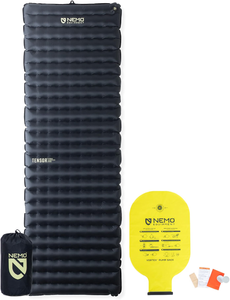
The Tensor Extreme Conditions has the highest R-value on this list at 8.5, yet the Regular Mummy weighs about 16 oz. It suits winter backpackers, snow campers and very cold sleepers who need maximum warmth per ounce. It costs more than most pads here and is more insulation than three-season trips need.
Key specs
- R-value: 8.5 (REI listing)
- Weight: 16 oz for Regular Mummy, per NEMO’s launch (SGB Online); larger sizes weigh more, with Regular and Wide listed from about 1 lb 6 oz
- Size and thickness: 3.5 in thick; Regular is 72 x 20 in
- Type: Air pad with suspended layers of Thermal Mirror reflective film in an Apex baffle design
- Packed size: about 10 x 4 in for Regular
- Noise and price tier: NEMO describes the construction as quiet; premium price tier
Pros
- Highest R-value in this roundup
- 3.5 in of cushioning with a 40D nylon bottom for puncture resistance
- Light for its warmth, and the Vortex pump sack keeps moisture out of the pad
- Valve designed for adjustment in very cold temperatures
Cons
- Premium price tier, so check the current price on Amazon
- Regular and Wide sizes are noticeably heavier than the Regular Mummy
- More warmth than summer or three-season trips need
Who should buy: winter backpackers, snow campers and cold sleepers. Who should skip: three-season campers and anyone on a tight budget.
Editorial rating: 8.7/10. The warmest pad here, held back by price. Among insulated NEMO Tensor pads, the lighter Tensor All-Season Ultralight Insulated (reviewed by BetterTrail at an R-value of 5.4 and 14.1 oz) is the shoulder-season alternative.

- Apex baffle design suspends more insulating layers than ever before, strategically spaced for the highest R-value possib…
- Four layers of floating Thermal Mirror metallized film provide quiet insulation with an unprecedented warmth-to-weight r…
- 3.5 inches of stable, cushioned loft for incredibly comfortable nights.
Therm-a-Rest NeoAir XTherm NXT – Best Overall and Lightest Winter Sleeping Pad
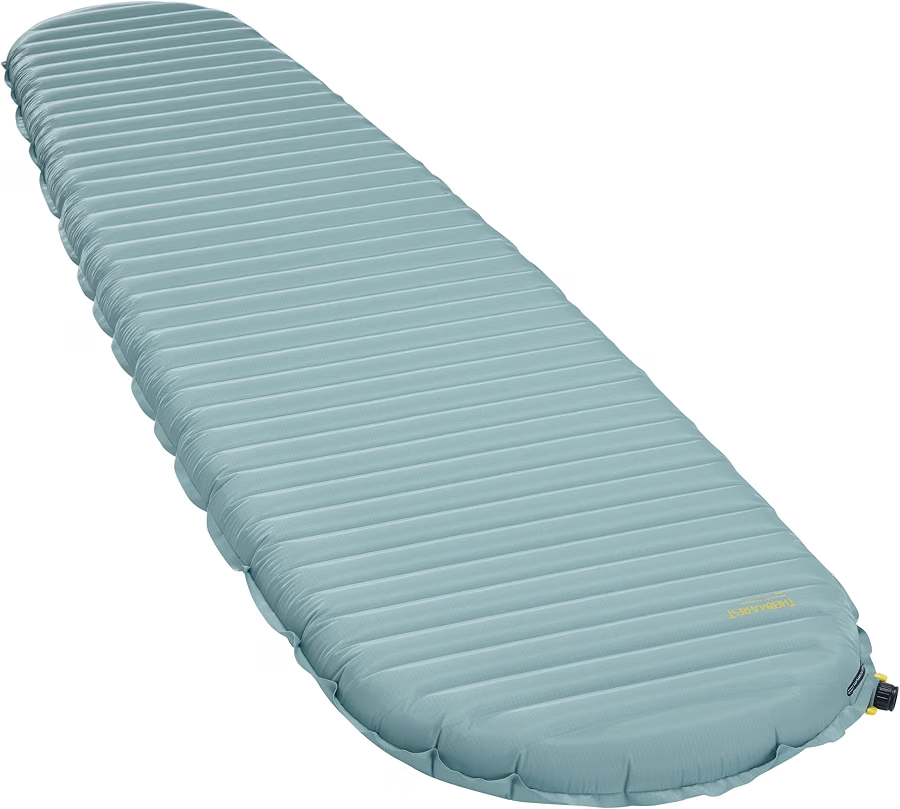
The XTherm NXT pairs a 7.3 R-value with a Regular weight of 15.5 oz, the lightest winter-rated pad on this list. It suits backpackers and winter campers who want one pad for most cold trips. Wider sizes add weight, and it costs more than the Exped.
Key specs
- R-value: 7.3 (REI listing)
- Weight: 15.5 oz for Regular (BetterTrail); CleverHiker measured about 16 oz; Regular Wide is about 19 oz
- Size and thickness: Regular is 72 x 20 in, 3 in thick; Wide, Long and rectangular Max sizes are available
- Type: Air pad with Triangular Core Matrix baffles and ThermaCapture reflective layers
- Packed size: about 9 x 4.5 in (Regular)
- Noise and price tier: CleverHiker notes a slight crinkle sound; premium price tier
Pros
- 7.3 R-value at 15.5 oz is the best warmth-to-weight ratio of the pads with a Regular rectangular shape
- Pump sack, stuff sack and repair kit included
- Several sizes, from Regular to wide and rectangular Max
- CleverHiker rates it 4.5/5 and calls it its most trusted winter pad
Cons
- 3 in thick, so thinner than the Sea to Summit and the NeoLoft
- Costs more than the Exped for a similar winter role
- CleverHiker lists slower inflation and deflation, so use a groundsheet and pack patience
Who should buy: most winter backpackers and campers. Who should skip: budget shoppers and side sleepers who want a thicker pad.
Editorial rating: 8.9/10. The best balance of warmth, weight and availability.
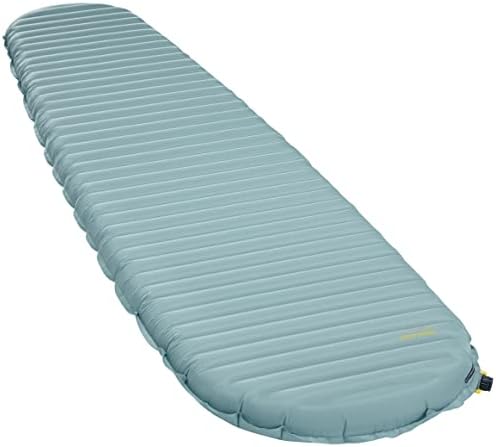
- 3-inch-thick ultralight air mattress trusted by alpinists and mountaineers looking for extra warmth and durability in th…
- Reflective ThermaCapture technology traps radiant heat while the Triangular Core Matrix construction minimizes convectiv…
- Foam-free NeoAir design weighs just 15.5 oz (440 g) in size Regular and is super-packable, rolling up as small as a conv…
Sea to Summit Ether Light XR Pro – Best Inflatable Pad for Winter Comfort and Side Sleepers
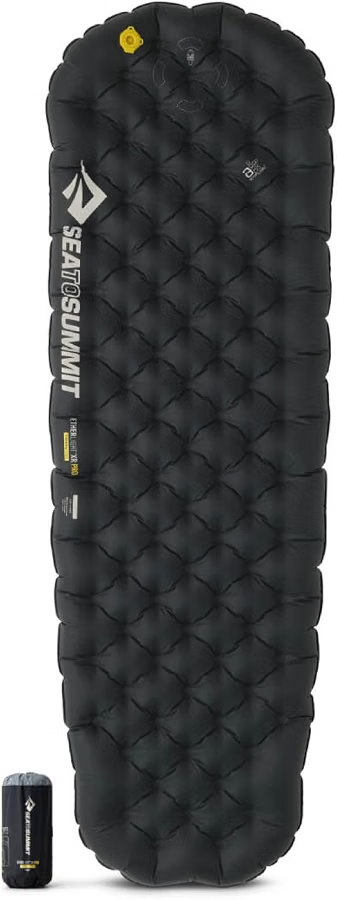
The Ether Light XR Pro reaches a 7.4 R-value with 3.9 in of thickness, the thickest winter-rated pad here. It suits side sleepers and comfort-focused winter backpackers who accept about 22 oz of weight. Buy the Pro version, since the standard Ether Light XR is rated far lower.
Key specs
- R-value: 7.4, ASTM-tested (Sea to Summit)
- Weight: 620 g (21.9 oz) for Regular Mummy including stuff and pump sack (Wild.com.au review)
- Size and thickness: 3.9 in (10 cm) thick; Regular Mummy, and larger rectangular sizes up to about 78 x 25 in
- Type: Air pad with ThermalCore insulation (multiple reflective TRM layers) and Air Sprung Cells
- Packed size: about 8.3 x 4.7 in (21 x 12 cm, Regular Mummy)
- Noise and price tier: Sea to Summit notes some sound from the face fabric; premium price tier
Pros
- Thickest winter-rated pad on this list, a plush pad for side sleeping
- 7.4 R-value suits snow and frozen ground
- Stuff and pump sack included, with a micro-adjustable valve
- Sea to Summit provides independent lab-tested R-values
Cons
- Heavier than the NEMO and Therm-a-Rest winter pads
- Face fabric can make noise, depending on your bag and tent floor
- Premium price tier; the similarly named Ether Light XR (no Pro) is rated 4.1
Who should buy: side sleepers and winter campers who value cushioning. Who should skip: gram-counting ultralight backpackers.
Editorial rating: 8.5/10. Excellent winter comfort, with a weight and price penalty.

- High-performance insulated sleeping pad delivers exceptional comfort, warmth, and packability for alpine expeditions, wi…
- ThermalCore insulation uses multiple TRM layers to reflect infrared heat back to the sleeper while remaining quiet and l…
- ASTM-tested R-Value of 7.4 provides reliable four-season insulation for cold-weather and winter camping conditions
Exped Ultra 6.5R – Best Budget Winter Pad
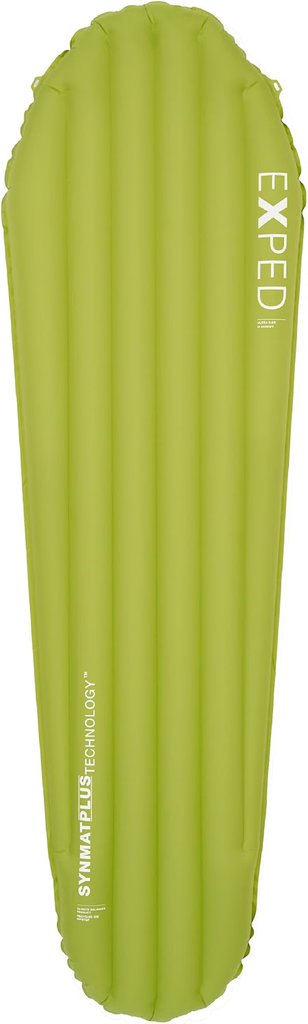
The Ultra 6.5R has a 6.9 ASTM R-value, so it is winter-capable at a lower price tier than the other three winter-rated pads. The Medium weighs about 16 oz. It suits budget-minded winter campers, though the thin 20D fabric needs a groundsheet.
Key specs
- R-value: 6.9 ASTM. The “6.5R” in the name reflects Exped’s all-season R-value target; current listings show 6.9 (Locally listing, GearJunkie)
- Weight: about 16 oz (455 g) for Medium; the Medium Mummy is about 12 oz (SectionHiker)
- Size and thickness: 3.5 in thick; Medium is 72 x 20.5 in, Medium-Wide is 25.6 in
- Type: Air pad with recycled microfiber fill and reflective foil
- Packed size: about 9 x 4.5 in (23 x 11 cm, Medium)
- Noise and price tier: about $200 in recent listings, a lower tier than the other winter-rated pads
Pros
- 6.9 R-value at a lower price tier than the NEMO, XTherm and Sea to Summit
- Schnozzel pump bag and repair kit included
- Light enough for backpacking, rated for all-season use
- Mummy versions drop to about 12 oz for the Medium
Cons
- Thin 20D fabric needs care; Exped’s near-identical Dura 6.5R uses 75D fabric but weighs about 23 oz (SectionHiker)
- The mummy taper will not suit every sleeper (BetterTrail)
- Medium width is narrow at 20.5 in for restless sleepers
Who should buy: winter campers who want R-value for the money. Who should skip: ultralight purists and rough-terrain sleepers who skip the groundsheet.
Editorial rating: 8.6/10. The best warmth per dollar on the list, with durability the main caution.

- All-Season Ultralight Sleeping Pad: Rated for temperatures below freezing with a 6.9 R-value, the Ultra 6.5R is the go-a…
- SYNMAT PLUS Technology: Combines recycled synthetic microfiber insulation with heat-reflective foil layers for maximum t…
- 3.5-Inch Thickness with Comfort Cradle Rails: Deep cushioning and tapered outer siderails keep you centered and sleeping…
Therm-a-Rest NeoLoft – Best for Shoulder-Season Comfort
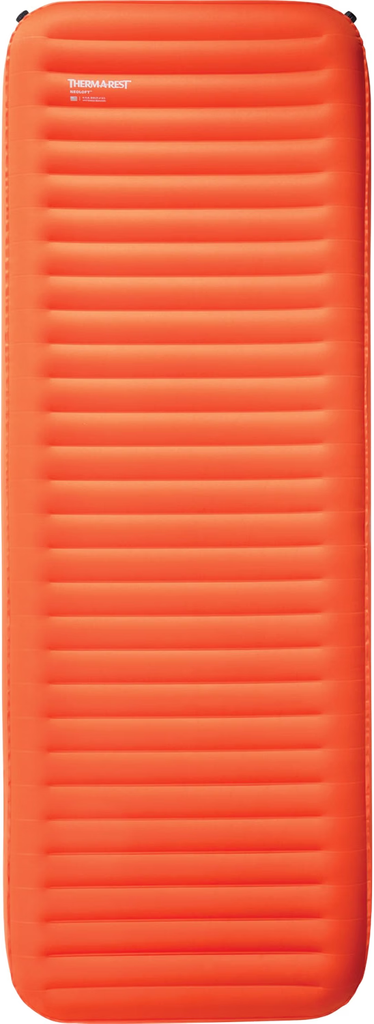
The NeoLoft is the thickest pad here at 4.6 in, with a 4.7 R-value. That makes it a comfort-first shoulder-season pad, not a standalone winter pad. It suits side sleepers on cool nights near freezing. In deep cold, stack it on a foam pad.
Key specs
- R-value: 4.7 (retailer listing quoting Therm-a-Rest)
- Weight: about 25 oz (1 lb 8.9 oz, Regular); Regular Wide is 1 lb 14 oz
- Size and thickness: 4.6 in (11.7 cm) thick; Regular Wide is 26 x 73 in
- Type: Air pad with ContourCore Matrix (two stacked rows of triangular chambers) and ThermaCapture reflective layers, with no fill insulation; 50D polyester knit top and 75D polyester bottom
- Packed size: about 5.7 x 9.5 in (Regular)
- Noise and price tier: noise not published; higher price tier
Pros
- Thickest pad in this roundup, a strong choice for side sleepers
- 75D bottom fabric is the sturdiest on the list
- 3D sidewall construction adds sleeping surface and side rails
- High-volume pump sack, stuff sack and repair kit included
Cons
- R-value of 4.7 is not enough alone for deep winter
- Heavier than the winter-rated pads, with a larger packed size
- Higher price tier than its warmth would suggest
Who should buy: side sleepers on shoulder-season and mild winter trips. Who should skip: deep-winter campers and ultralight backpackers.
Editorial rating: 7.2/10. Unmatched comfort, limited by modest warmth and higher weight. For more comfort ideas, see our camping cots for side sleepers.

- The NeoLoft is the offspring of our ultralight and compact NeoAir pads and the proven comfort of our car camping line to…
- Our 3D Sidewall construction provides 4.6 inches of comfort and includes side rails to keep you centered, perfect for si…
- ContourCore Matrix construction is an evolution of our industry-leading Triangular Core Matrix, that contours, cushions,…
Big Agnes Rapide SL Insulated – Best for Three-Season Backpacking
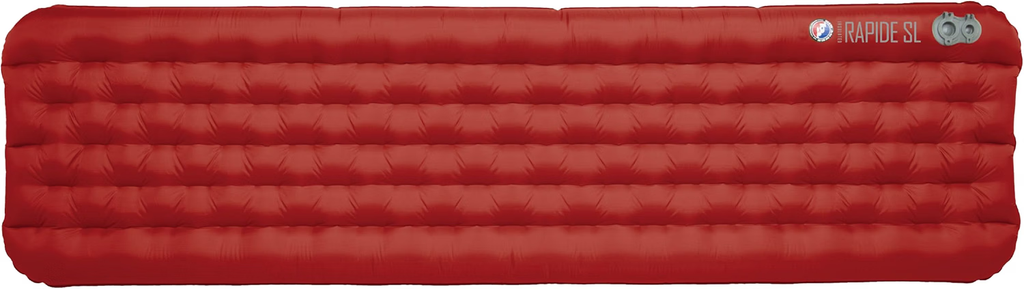
The Rapide SL Insulated weighs about 18 oz in Regular, packs to 4 x 7 in and has a 4.8 R-value. Big Agnes rates it for three seasons. It suits backpackers who camp from spring through fall and want a quilted, comfortable top. On frozen ground, add a closed-cell foam pad.
Key specs
- R-value: 4.8 for the current version, which swapped PrimaLoft for two layers of reflective film; the earlier version was rated 4.2 (Ultralight Outdoor Gear, older 4.2 listing)
- Weight: 18 oz / 510 g (Regular); 23 oz (25 x 72 in wide) (REI)
- Size and thickness: 3.5 in thick with 4.25 in outer chambers; Regular is 72 x 20 in
- Packed size: 4 x 7 in (Regular)
- Noise and price tier: noise not published; moderate price tier
Pros
- Light and very compact for its comfort
- Quilted top and raised outer chambers cradle side sleepers
- Pump sack and repair patches included
- Moderate price tier
Cons
- Some REI buyers report it feeling colder than the 4.8 R-value suggests
- Rated for three seasons, so it is not a standalone winter pad
- Retailers may still list the older 4.2 version, so confirm the R-value before buying
Who should buy: three-season backpackers who want comfort without weight. Who should skip: winter and snow campers.
Editorial rating: 7.5/10. A light, comfortable pad with modest warmth.

- Superior Insulation Technology – Every camping sleeping pad in our Rapide SL series delivers exceptional warmth with imp…
- Premium Comfort Design – Our inflatable sleeping pads for camping feature a quilted top that creates a cushioned, pillow…
- Ultralight & Durable Materials – Built with superlight double ripstop nylon and aviation-grade TPU lamination, our ultra…
Klymit Insulated Static V2 – Best Entry-Level Pad for Mild Cold
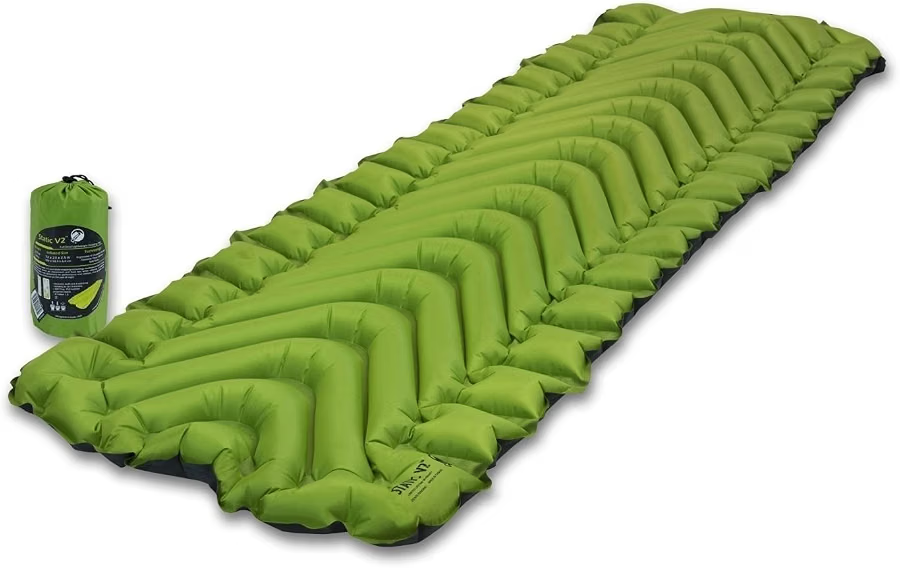
The Insulated Static V2 has a 4.2 ASTM R-value and 2.5 in of thickness. That puts it in the shoulder-season range, even though Klymit markets it as four-season. It suits budget campers on cool nights, and it needs a foam pad underneath in freezing weather.
Key specs
- R-value: 4.2 ASTM (Klymit)
- Weight: about 22 oz / 620 g (Regular)
- Size and thickness: 2.5 in thick; 72 x 23 in
- Type: Air pad with reflective film layers, 120 g synthetic insulation and a 75D polyester shell
- Packed size: about 7.5 x 5.5 in
- Noise and price tier: noise not published; entry-level price tier
Pros
- Entry-level price tier for an insulated pad
- 23 in width is wider than most Regular pads
- 75D polyester shell is durable
- Simple V-chamber design
Cons
- Lowest R-value and thinnest pad here, which side sleepers may find too thin
- Heavier than the Big Agnes and Therm-a-Rest pads for its warmth
- Easily confused with the non-insulated Static V2 and the Insulated Static V (4.4 in some listings), so check the listing
Who should buy: budget campers on cool nights who will add a foam pad. Who should skip: winter campers and side sleepers.
Editorial rating: 6.9/10. Good value, but the lowest warmth on the list.

- CAMPING SIMPLIFIED. The Insulated Static V Lite mattress packs light and small in a backpack, while still offering body-…
- ALL THE COMFORT OF HOME. Sleep better all night with our exclusive V-Chamber design that conforms to the shape of your a…
- 4 SEASON INSULATION. This mat's V-Chambers are filled with light and lofty Klymalite synthetic insulation. With an excep…
Best Backpacking Sleeping Pads of 2026 by Need and Budget
Best Sleeping Pad for Winter Camping: The Short List
- Lowest price tier that is still winter-rated: the Exped Ultra 6.5R. More ideas in our budget camping gear guide.
- Coldest conditions: the NEMO Tensor Extreme Conditions (8.5), then the Sea to Summit Ether Light XR Pro (7.4).
- Most comfortable sleeping in winter: the Sea to Summit Ether Light XR Pro at 3.9 in thick.
Best Ultralight Winter Pad
The Therm-a-Rest NeoAir XTherm NXT is the best ultralight pad here for cold weather at 15.5 oz. If you want a lightweight pad for winter backpacking and also want durability, the Exped Dura 6.5R is the heavier, tougher sibling of the Ultra.
Favorite Backpacking Sleeping Pad Picks for Shoulder Season
The Therm-a-Rest NeoLoft, Big Agnes Rapide SL Insulated and Klymit Insulated Static V2 are the pads for backpacking on shoulder-season trips, each with a foam pad below freezing. Among the pads available at this tier, the Big Agnes is the best backpacking pad for weight, and the NeoLoft is the premium pad for comfort.
Car Camping With Less Weight Pressure
If weight does not matter, compare these pads with camping air mattresses.
How to Stay Warm Beyond the Pad
A warm pad is one layer of your sleep system. These pieces work together:
- Sleeping bag pairing: the pad insulates from below and the bag from above. Match both to the coldest night. See our picks for sleeping bags for cold weather, or go colder with 0 degree sleeping bags.
- Ground insulation: add a closed-cell foam pad or a groundsheet between you and the cold ground.
- Tent choice: a winter-ready shelter holds heat and blocks wind. Compare hot tents, and if you plan to heat a tent, review our tent heater options and use only heaters made for tent use.
- Moisture control: damp gear loses insulation fast. Learn how to stop tent condensation.
- General habits: for more cold-night strategies, see how to stay warm while camping.
A good pillow also helps you sleep. See our camping pillows.
Insulated Sleeping Pads FAQ
What is the difference between an insulated pad and a regular air pad?
A regular (non-insulated) air pad has open air chambers, so heat circulates inside the pad and escapes to the ground. An insulated pad adds reflective film, synthetic fill, or both, to slow that heat loss and raise the R-value. The extra layers add some weight and cost. If you camp below about 40°F, choose an insulated pad, and always check that the listing is the insulated variant, since some brands sell both under similar names.
What R-value is best for winter camping?
Most winter campers aim for an R-value of about 5 or higher, and 6 or more for snow and frozen ground. Cold sleepers may want extra margin. Check the manufacturer’s tested rating, and stack a foam pad under an inflatable pad if it falls short of the conditions you expect.
Is a higher R-value always better?
Not always. A higher R-value adds warmth, but pads with higher ratings can cost more and feel warm in summer. If you camp in mild conditions, a high-R pad can be more than you need. Match the rating to the coldest temperatures you expect, with a safety margin.
Can you use an insulated pad in summer?
Yes, but a winter-rated pad can feel warm in genuine heat. If you mostly camp in summer, a pad with a lower R-value saves weight and money. Pair it with 3-season sleeping bags for warmer trips.
How do I stop my pad from losing heat?
Set the pad on a clean, dry groundsheet, keep it out of snow and wet, and add a foam pad underneath. Choose an R-value that fits the conditions, inflate with a pump sack to keep moisture out, and pair the pad with a sleeping bag rated for the temperatures you expect.
Do I need a sleeping pad if I have a good sleeping bag?
Yes. Sleeping bag insulation compresses under your body weight, so the pad provides most of the insulation beneath you. Without a suitable pad, the ground pulls heat away even in a warm bag. Learn more in our guide on how to choose a sleeping bag.
Are insulated pads heavier?
Often, yes, because extra insulation adds weight or bulk. In this guide, the winter-rated pads range from about 15.5 to 22 oz in Regular, while the thickest comfort pad, the NeoLoft, weighs about 25 oz. Compare weight and R-value together rather than weight alone.
Do insulated sleeping pads get punctured easily?
Any air pad can be punctured by sharp objects, so use a groundsheet and clear your tent floor. Brands include repair patches or kits, and carrying them is sensible on winter trips. A foam pad underneath adds a backup if the air pad fails.
Should I choose a regular or wide pad?
Side sleepers and restless sleepers often prefer wide pads because the edges give more room. Wide sizes weigh more, for example about 19 oz for the XTherm NXT Regular Wide versus 15.5 oz for the Regular. Check your tent floor width and pack weight before you decide.
What is the warmest sleeping pad on this list?
The NEMO Tensor Extreme Conditions has the highest listed R-value at 8.5. The Sea to Summit Ether Light XR Pro (7.4), Therm-a-Rest NeoAir XTherm NXT (7.3) and Exped Ultra 6.5R (6.9) follow. The remaining three pads are rated between 4.2 and 4.8.
Can a three-season pad work in winter?
Sometimes. A pad with an R-value around 4 to 5, such as the NeoLoft, Big Agnes Rapide SL or Klymit Insulated Static V2, can work in light winter conditions when stacked on a closed-cell foam pad. For snow and frozen ground, choose a pad with an R-value of 6 or more instead.
Should I inflate my pad by mouth in winter?
Avoid it. Breath adds moisture inside the pad, which can condense or freeze in cold weather. Use a pump sack instead. NEMO notes that its Vortex pump sack inflates the Tensor without adding excess moisture, and several pads in this guide include a pump or inflation sack.
Does R-value guarantee I will stay warm?
No. R-value measures the pad in a lab test, but warmth also depends on your sleeping bag, clothing, metabolism and tent. Some buyers report certain pads feeling colder than their ratings suggest. Treat R-value as a guide, leave a margin, and test your setup on a mild night first.
Final Recommendation: Best Insulated Sleeping Pads for Cold Weather
For most cold-weather campers, the Therm-a-Rest NeoAir XTherm NXT is the best choice: a 7.3 R-value at 15.5 oz. If you camp in the harshest cold, choose the NEMO Tensor Extreme Conditions Ultralight Insulated (8.5 R-value). If price matters most, the Exped Ultra 6.5R (6.9 R-value) is the best budget pick that is still winter-rated. The NeoLoft, Big Agnes Rapide SL and Klymit pads are shoulder-season choices that need foam under them in freezing weather.
Ready to compare current prices? Check Price on Amazon for our top pick, or use the buttons in the reviews above.
About the Author
Ricky Thorne is an outdoor adventure specialist and the founder of CampingSaga. With over 15 years of experience navigating backcountry trails and mountain summits, Ricky has turned a lifelong passion for rugged exploration into a mission to help others gear up safely. He specializes in minimalist camping, technical gear field-testing, and wilderness survival skills. When he’s not documenting his latest trek, Ricky is usually found scouting remote fishing spots or testing the limits of ultralight shelters in the wild.
Why Trust CampingSaga
CampingSaga is an Amazon-affiliate camping and outdoor gear site. We pick products by comparing manufacturer specifications, category fit and independent reviews, and we do not claim hands-on testing unless we have done it. We list the downsides of every pick, and we re-check specs when brands update a model. If you spot an error, contact us and we will review and correct it. Specs were last cross-checked against manufacturer and retailer listings on November 14, 2026.
Sources
Manufacturer and manufacturer-listed specs
- Klymit Insulated Static V2
- Sea to Summit Ether Light XR Pro
- Therm-a-Rest NeoLoft (retailer listing quoting Therm-a-Rest copy)
- NEMO Tensor Extreme Conditions launch coverage
- Exped Ultra 6.5R, ASTM 6.9 listing
- Big Agnes Rapide SL Insulated, current 4.8 version (REI)
- Big Agnes Rapide SL redesign details (Ultralight Outdoor Gear)
Independent reviews