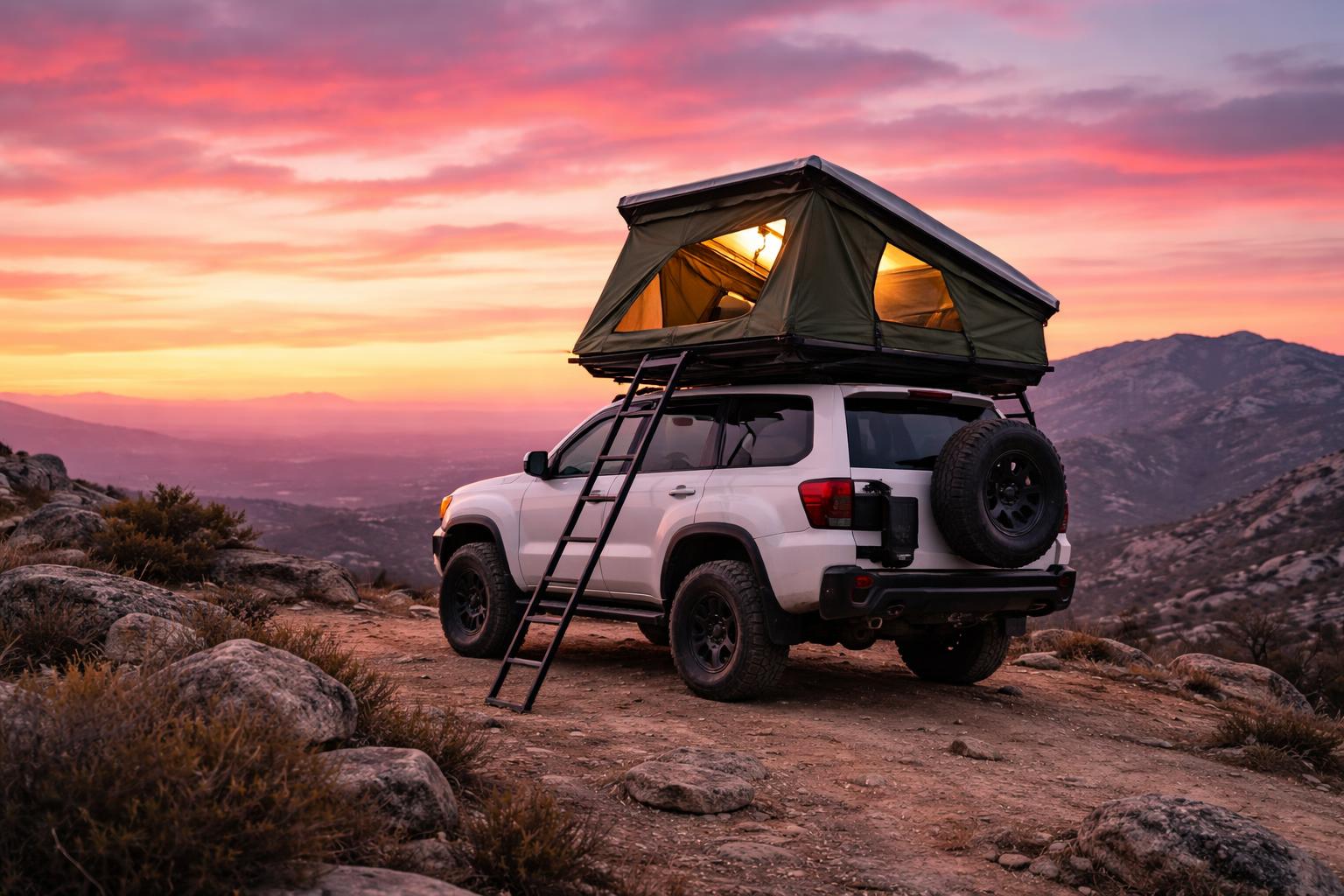
After 15+ years of vehicle-based camping and overlanding, I’ve mounted, packed down, and slept in more rooftop tents sometimes just called roof tents than I can count. Overlanding gear has exploded in popularity, and rooftop tents generally sit at the center of that shift, but not every camping tent marketed for overlanding earns its price tag. For this guide, I went deeper than the usual spec-sheet roundup: I cross-referenced manufacturer documentation, verified owner reports, and independent reviews across seven currently available Amazon models to find the top rooftop tent picks that actually deliver, whether you’re new to overlanding or upgrading from a ground tent.
How this guide works: the ratings below reflect a structured analysis of published manufacturer specs, load ratings, warranty terms, and verified owner feedback not a single tester’s personal overnight in every unit. Where a manufacturer doesn’t publish a figure, I’ve marked it “Not published” rather than estimating. See “Why Trust CampingSaga” below for the full methodology.
Quick Verdict: Best Rooftop Tents of 2026
| Category | Pick | Why |
|---|---|---|
| Best Overall | Tuff Stuff Ranger Overland | Best balance of space, included annex, and 4-season durability |
| Best Hardshell Rooftop Tent | Naturnest Sirius 1 Hardshell | Fastest setup on this list (~30 seconds), 39mph wind rating, YKK zippers |
| Best Budget | Smittybilt Overland GEN2 Tent STD (SB2583) | Proven Smittybilt design, lowest price point, huge install base |
A note on the numbers: the Hardshell pick actually scores higher below (8.7 vs. 8.6) than the Ranger Overland’s “Best Overall” pick. That’s intentional “Best Overall” isn’t awarded to the highest raw score, it’s awarded to the tent that fits the widest range of buyers (price, space, included annex). The Hardshell wins on raw score because it dominates Ease of Setup and Weather Resistance, but its unpublished load rating and thinner support network make it the stronger niche pick rather than the default choice. See Scoring Methodology further down for how this is weighted.
If you only read one section, read this: before you buy anything on this list, check three separate figures your vehicle’s own roof load ratings, your roof rack or crossbar’s load ratings, and the tent’s own weight capacity and let whichever is lowest govern your decision. See the Buying Guide for exactly how these differ and why none of them can be assumed from the others.
Rooftop Tent Comparison Table
| Model | Type | Sleeps | Weight (tent) | Load Capacity | Open Dimensions | Warranty |
|---|---|---|---|---|---|---|
| Tuff Stuff Ranger Overland | Soft shell | 3 | 164 lbs | 800 lbs | 65″ x 96″ x 52″ | Not published by manufacturer |
| Smittybilt Overland GEN2 Tent STD (SB2583) | Soft shell | 2-3 | Not published for this SKU | 660 lbs | 95″ x 56″ x 51″ | Not confirmed for this SKU GEN1 line carried 1 year |
| Naturnest Sirius 1 Hardshell | Hard shell | 2-3 | ~150 lbs | Not published | ~85″ x 51″ x 47-59″ (open, varies by listing) | Not published by manufacturer |
| SanHima Hotham Hard Shell Aluminum | Hard shell | 2-3 | 163-176 lbs (with/without ladder) | 771.6 lbs | 83.5″ x 57.1″ x 63.66″ | 2 years (confirmed for SanHima’s Hotham Lite line; not independently confirmed for this size variant) |
| OVS TMBK 3-Person | Soft shell | 3 | ~100 lbs | Not published | Standard footprint | 4 years |
| Naturnest Polaris Plus | Hard shell | 2 | ~110 lbs | Not published | 82.6″ x 52″ (height not published) | Not published by manufacturer |
| OVS Nomadic 3 Extended | Soft shell | 3 | Not published | 850 lbs | Extended footprint | 4 years |
Hardshell Rooftop Tent vs. Softshell Rooftop Tent: At a Glance
| Factor | Hard Shell | Soft Shell |
|---|---|---|
| Typical setup time | Under 2 minutes (gas struts) | 5-15 minutes |
| Typical price | Higher | Lower |
| Aerodynamics / MPG impact | Better (low profile) | More drag, especially XL models |
| Interior space per dollar | Lower | Higher |
| Weight | Often lighter shell, but varies by model | Varies widely, generally heavier fabric-and-frame builds |
| Weather sealing | Generally tighter seams, rigid shell | Good, but seams and zippers are more exposed |
| Repairability in the field | Harder shell damage is a bigger repair | Easier fabric patches, accessible seams |
| Best for | Frequent trips, late arrivals, foul-weather camping | Budget-conscious buyers, families needing max interior space |
Neither a hardshell rooftop tent nor a softshell rooftop tent is objectively “better” it’s a tradeoff between setup speed/weather sealing and price/interior space. Hardshell tents typically use a fiber-reinforced plastic shell or an ABS-and-aluminum hard top; many of these clamshell tents open via gas struts, while others use a low-profile wedge tent form factor instead. Softshell models rely on heavier-duty tent fabric stretched over an aluminum frame, and how rooftop tents use that fabric-versus-shell construction is really the whole ballgame here.
Four of the seven tents in this guide are softshell and three are hardshell, which reflects Amazon’s current rooftop tent marketplace fairly closely: established truck-accessory brands like Smittybilt and Overland Vehicle Systems still dominate softshell, while budget hardshell options from import brands like Naturnest and SanHima have become widely available too. Premium hardshell brands like iKamper, Roofnest, and Thule mostly sell direct or through specialty retailers rather than Amazon.
Rooftop Tent Picks by Vehicle Type
- Compact SUVs and crossovers: the Naturnest Polaris Plus or OVS TMBK both are light enough that every pound off your vehicle’s roof matters less.
- Midsize SUVs: the Tuff Stuff Ranger Overland or Smittybilt GEN2 Overlander STD strike the best balance of space and rack-friendly weight.
- Full-size SUVs and trucks: the SanHima Hotham Hard Shell and OVS Nomadic 3 Extended are among the better tents for trucks and larger platforms, built for trucks or SUVs with higher-rated racks.
- Frequent overlanders: the Naturnest Sirius 1 Hardshell, where gas struts lift the top of the tent open in about 30 seconds rather than minutes.
Who Should Buy a Rooftop Tent?
A rooftop tent makes sense if you regularly car camp or overland, want to skip searching for level, rock-free ground, and camp in a vehicle-accessible area (not backcountry, since you can’t carry it far from your rig). It’s a poor fit if you backpack, camp somewhere your vehicle can’t reach, or only camp once or twice a year the cost and permanent roof-rack commitment are hard to justify for occasional use. If that’s you, your best camping option is probably a quality ground tent instead (see our Dome Tent vs. Cabin Tent guide), which will serve you better for less money.
Rooftop Tent vs. Ground Tent
| Factor | Rooftop Tent | Ground Tent |
|---|---|---|
| Setup time | 2-15 minutes, no site prep needed | 15-30+ minutes, requires level ground |
| Cost | $1,300-$3,000+ | $50-$800 for most quality options |
| Portability from vehicle | None stays with the vehicle | Full can hike it anywhere |
| Ground clearance from insects/water | Elevated, off the ground | At ground level |
| Fuel economy impact | Measurable (weight + drag) | None |
| Vehicle compatibility required | Yes roof rack and load ratings | No |
This is really a variation on the broader car camping vs. tent camping decision a rooftop tent is car camping taken to its logical extreme. If space and backcountry access matter more than convenience, a ground tent including inflatable models, which split the difference on setup speed is the better call. Our Inflatable Tent vs. Pole Tent comparison breaks down that tradeoff in more detail.
1. Tuff Stuff Ranger Overland Best Overall
Overall Rating: 8.6/10 ⭐ (equal-weighted average of the four categories below see scoring methodology)
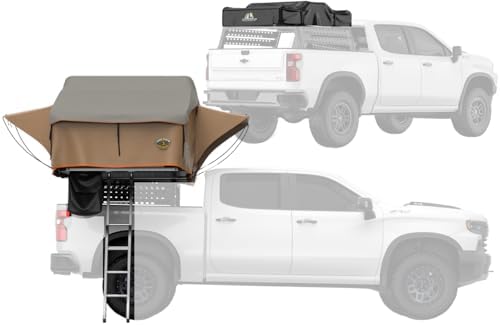
Quick Verdict: The most complete package on this list the included annex room and genuine 3-person interior space justify the mid-range price, but it’s not the fastest to set up.
- Space & Comfort: 9.0/10
- Weather Resistance: 8.5/10
- Value: 8.8/10
- Ease of Setup: 8.0/10
The Ranger Overland earns the top spot because it solves the biggest complaint about mid-range rooftop tents: not enough room. Its 65″ x 96″ footprint (expanding to 132″ with the overhang) gives three adults genuine sleeping space, and the included annex room something competitors often charge $300-500 extra for adds nearly 100 sq. ft. of combined interior space when zipped on.
Specifications
| Spec | Detail |
|---|---|
| Weight Capacity | 800 lbs |
| Ladder Capacity | 300 lbs |
| Tent Weight | 164 lbs |
| Open Dimensions | 65″ x 96″ x 52″ |
| Closed (Packed) Dimensions | 65″ x 48″ x 15″ |
| Material | 280g poly/cotton rip-stop |
| Rainfly | 420D polyester/Oxford, PU-coated |
| Floor | Aluminum & fiberglass, 1″ thick |
| Crossbar Requirement | Mounting rails 26.5″ apart; fits crossbars up to 3.25″ wide |
| Setup Time | 10-15 minutes (per manufacturer/retailer FAQ) |
| Warranty | Not publicly specified confirm with Tuff Stuff Overland before purchase |
Pros and Cons
- Pros: Included annex room, genuinely spacious 3-person footprint, manufacturer-reported resistance to 70+ mph winds, upgraded rainfly with YKK zippers and para-cord pulls
- Cons: Heavier than comparable softshells at 164 lbs, slower setup than hard shell competitors, warranty terms aren’t clearly published
Best For & Who Should Skip It Best for overlanders and families who prioritize interior space and four-season capability over setup speed. Skip it if your vehicle and rack’s dynamic load ratings can’t comfortably clear this tent’s 164-lb packed weight that threshold varies by vehicle, so check your own numbers rather than assuming or if you want sub-5-minute deployment, in which case a hard shell suits you better.
- Pvc
- Imported
- Mounting hardware & brackets for installation (fits up to 3.25″ cross bars)
2. Smittybilt Overland GEN2 Tent STD (SB2583) Best Budget
Overall Rating: 8.2/10 ⭐
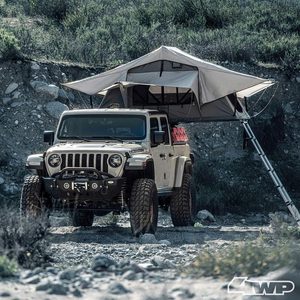
Quick Verdict: The lowest-cost tent here that doesn’t feel like a compromise the direct successor to Smittybilt’s original budget softshell, with the same proven formula.
- Space & Comfort: 7.3/10
- Weather Resistance: 7.8/10
- Value: 9.3/10
- Ease of Setup: 8.5/10
The GEN2 Overlander STD is Smittybilt’s current entry-level softshell, replacing the earlier 2783 model in their lineup. It delivers a durable rooftop tent at the lowest price point in this guide, backed by Smittybilt’s large installed user base meaning parts, annex accessories, and troubleshooting advice are easy to find.
Specifications
| Spec | Detail |
|---|---|
| Weight Capacity | 660 lbs |
| Tent Weight | Not published for this SKU check current listing |
| Open Dimensions | 95″ x 56″ x 51″ |
| Closed (Packed) Dimensions | Not published for this SKU check current listing |
| Sleeps | 2-3 people |
| Mattress | 92″ x 55″, 60mm high-density foam |
| Material | Heavy-duty 600D ripstop polyester |
| Frame | Anodized aluminum |
| Crossbar Requirement | Not specified by Smittybilt verify against your rack before ordering |
| Setup Time | Manufacturer describes as fast-fold, tool-free; exact time not independently verified for this SKU |
| Warranty | Not confirmed for this specific SKU Smittybilt’s predecessor GEN1 Overlander line carried a 1-year term; verify current terms before purchase |
Pros and Cons
- Pros: Strong price-to-durability ratio, no-see-um mosquito mesh, LED interior strip light, huge aftermarket accessory support
- Cons: Lowest load capacity on this list among published figures (660 lbs), tent weight and warranty term not clearly published for this SKU, 2-3 person capacity is tighter than the Ranger
Best For & Who Should Skip It Best for first-time rooftop tent buyers and budget-conscious couples. Skip it if you need to sleep three adults comfortably or want a clearly published load capacity above 700 lbs the SanHima Hotham is the better step up.

- Open size 95″” W x 56″” L x 51″” H
- Sleeps 2-3
- Bed size: Full, 92″” x 55″”
3. Naturnest Sirius 1 Hardshell Best Hardshell Rooftop Tent
Overall Rating: 8.7/10 ⭐
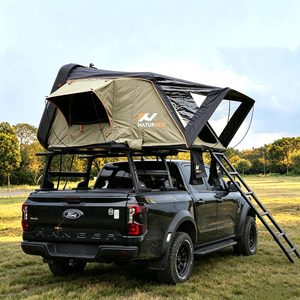
Quick Verdict: The fastest tent on this entire list about 30 seconds to open via gas struts with genuinely strong wind-resistance credentials for a budget hardshell.
- Space & Comfort: 8.0/10
- Weather Resistance: 8.5/10
- Value: 8.5/10
- Ease of Setup: 9.6/10
For buyers who value setup speed and weather sealing over price, the Sirius 1 is one of the fastest-deploying hardshell rooftop tents currently sold on Amazon. The aluminum-framed shell and gas struts lift the top of the tent open in roughly 30 seconds rather than minutes, and it’s rated to handle winds up to 39mph.
Specifications
| Spec | Detail |
|---|---|
| Weight Capacity | Not published by manufacturer |
| Tent Weight | ~150 lbs |
| Shell/Frame | Aluminum frame with stainless steel components |
| Wind Rating | Up to 39mph |
| Body Fabric | 310g polyester, weatherproof, breathable, UV-resistant |
| Zippers | YKK, rated for 20,000 pull cycles |
| Mattress | Triple-layer, memory foam |
| Sleeps | 2-3 people |
| Setup Mechanism | Gas struts |
| Crossbar Requirement | Not published verify against your rack |
| Setup Time | ~30 seconds per manufacturer listing |
| Warranty | Not published by manufacturer confirm current terms before purchase |
Pros and Cons
- Pros: Fastest setup on this list (~30 seconds), corroborated 39mph wind rating, YKK zippers rated for heavy long-term use, built-in skylight for stargazing
- Cons: Manufacturer doesn’t publish a weight capacity or warranty term, less established brand history and support network than Smittybilt or OVS, less interior customization than annex-equipped softshells
Best For & Who Should Skip It Best for overlanders who camp frequently enough that setup speed and weather protection matter more than raw price or brand longevity. Skip it if you want a clearly published load capacity and warranty to plan around, or if budget is the primary constraint a softshell saves money for similar capacity.

- Slimline & Hard Shell: Sturdy and aerodynamic, this hardshell tent is constructed from impact-resistant ABS polymer and …
- Easy 30-second setup: This roof tent features a folding design and comes with a hydraulic automatic pneumatic boom, allo…
- Spacious Comfort for 2-3 People: Experience a spacious sleeping area of 82.6″ x 63″ with 47.2″ of headroom, perfectly fi…
4. SanHima Hotham Hard Shell Aluminum Rooftop Tent Best-Documented Hardshell Specs
Overall Rating: 8.6/10 ⭐
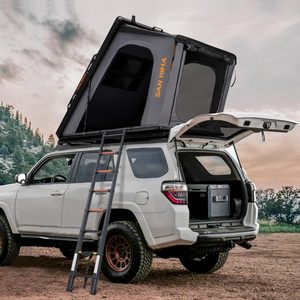
Quick Verdict: The most thoroughly spec’d hardshell on this list SanHima publishes load capacity, waterproof rating, and dimensions that most budget hardshell competitors leave blank.
- Space & Comfort: 8.3/10
- Weather Resistance: 9.0/10
- Value: 7.8/10
- Ease of Setup: 9.3/10
Unlike most budget hardshell imports on this list, SanHima publishes a full spec sheet for the Hotham including a 771.6-lb max tent load rating, a specific waterproof rating, and precise dimensions which is genuinely rare at this price point and worth crediting. Note this is a 2-3 person tent, not a 3-4 person one, despite its roomier-than-average interior.
Specifications
| Spec | Detail |
|---|---|
| Max Tent Load | 771.6 lbs |
| Tent Weight | 163.1 lbs (ladder removed), 173.1 lbs (ladder attached) |
| Folded Dimensions | 83.5″ x 57.1″ x 5.43″ |
| Unfolded Dimensions | 83.5″ x 57.1″ x 63.66″ |
| Internal Dimensions | 78.7″ x 51.6″ x 58.3″ |
| Mattress | Memory foam, 78.3″ x 51.2″ x 1.97″ |
| Sleeps | 2-3 people |
| Waterproof Rating | PU 5000mm |
| UV Protection | UPF 50+ |
| Body Material | 420D double ripstop Oxford fabric & 280GT polyester-cotton |
| Base | Aluminum honeycomb panel |
| Ladder | 7.5 ft, 330.7-lb rated capacity |
| Max Crossbar Load | 220.5 lbs |
| Mounting Rails Spacing | 29.3 inches |
| Setup Mechanism | Gas struts (600 Newton rating on comparable SanHima models) |
| Setup Time | ~30 seconds, consistent with SanHima’s other Hotham-line listings |
| Warranty | 2 years, confirmed for SanHima’s Hotham Lite line on Amazon; not independently confirmed for this specific size variant |
Pros and Cons
- Pros: Most thoroughly published spec sheet of any hardshell on this list, highest tied load capacity (771.6 lbs), strong 5000mm waterproof rating, roomy 78.7″ x 51.6″ interior
- Cons: Heaviest tent on this list at up to 173 lbs with ladder, still only rated for 2-3 people despite the size, warranty confirmed only for a related size variant rather than this exact one
Best For & Who Should Skip It Best for buyers who want a hardshell with genuinely transparent specs to plan a vehicle-and-rack fit around, and for couples or small groups who want maximum interior room in a 2-3 person hardshell. Skip it if you need true 3-4 person sleeping capacity no hardshell on this list officially offers that or if the ~173-lb packed weight exceeds your rack’s dynamic rating.

- Slimline & Lightweight: At only 160.9 lb, the Hotham, shedding 8% off its predecessor’s weight, not only improves fuel e…
- Digital Convenience Right at Your Fingertips: Need to stay connected on your trip? No problem. Charge up your phone, tab…
- Starry Skyview Window: Our Hotham rooftop tent features a skyview window that brightens your space, creates a spacious a…
5. Overland Vehicle Systems TMBK 3-Person Best Lightweight Pick
Overall Rating: 8.0/10 ⭐
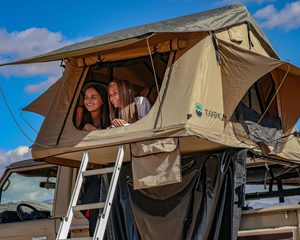
Quick Verdict: The pick for smaller SUVs and crossovers where every pound of roof load matters the tradeoff is an unpublished load rating you’ll want to double-check with OVS directly.
- Space & Comfort: 7.6/10
- Weather Resistance: 7.9/10
- Value: 8.2/10
- Ease of Setup: 8.4/10
At roughly 100 lbs, the TMBK is one of the lightest 3-person rooftop tents available, which matters most for owners of crossovers and smaller SUVs with modest dynamic roof ratings.
Specifications
| Spec | Detail |
|---|---|
| Weight Capacity | Not published by OVS for this model |
| Tent Weight | ~100 lbs |
| Sleeps | 3 people |
| Base | Aluminum-plated, marine-grade stainless hardware |
| Body Material | 600D heavy-duty poly-cotton ripstop |
| Rainfly | 420D polyester Oxford |
| Ladder | 81″ sliding, steel hinges |
| Crossbar Requirement | Not published OVS states it installs on most factory/aftermarket racks; confirm weight rating |
| Setup Time | Not published by OVS |
| Warranty | 4 years (standard across OVS roof top tent line) |
Pros and Cons
- Pros: Lightest 3-person option on this list, skylight window, no-modification install, 4-year warranty tied for longest on this list
- Cons: No published static load rating, no annex included standard, setup time not independently confirmed
Best For & Who Should Skip It Best for owners of crossovers, RAV4-class SUVs, and smaller trucks whose roof rack dynamic rating is the limiting factor. Skip it if you want a precise published max-load figure to plan around contact OVS directly for that number before buying.

- Oxford,Polyester
- Universal rooftop tent: 3-person rooftop tent for Jeep, SUV, truck, trailer, or car camping. No more sleeping on the gro…
- Enjoy elevated 360-degree views. Stargaze or watch the morning sunrise through the integrated skylight.
6. Naturnest Polaris Plus Best for Compact SUVs
Quick Verdict: A lightweight, sub-one-minute hardshell built for smaller vehicles the tradeoff is a young brand with less published spec data than the established players on this list.
Overall Rating: 8.2/10 ⭐
- Space & Comfort: 6.8/10
- Weather Resistance: 8.0/10
- Value: 8.3/10
- Ease of Setup: 9.6/10
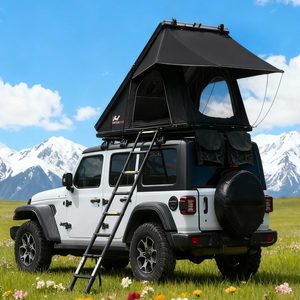
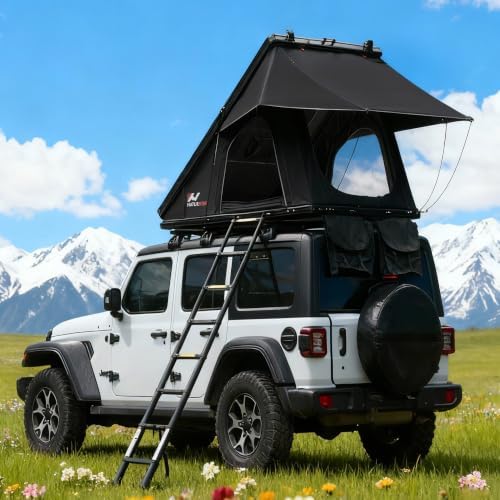
At roughly 110 lbs, the Polaris Plus is one of the lightest hardshell tents on the market, built around a triangular clamshell design that opens in about a minute no gas struts required, just a push-open mechanism.
Specifications
| Spec | Detail |
|---|---|
| Weight Capacity | Not published by manufacturer |
| Tent Weight | ~110 lbs |
| Footprint | ~82.6″ x 52″ (height not published) |
| Shell Material | Aircraft-grade aluminum alloy |
| Mattress | ~2″ (5cm) non-deformable foam |
| Sleeps | 2 people |
| Setup Mechanism | Push-open clamshell, no gas struts |
| Ladder | Retractable, ~2.3m (approx. 90″) |
| Crossbar Requirement | Naturnest recommends at least 2 crossbars; crossbar rating must equal or exceed the tent’s weight |
| Setup Time | ~1 minute per manufacturer |
| Warranty | Not published by manufacturer confirm current terms before purchase |
Pros and Cons
- Pros: Lightest hardshell on this list (~110 lbs), ~1-minute setup with no gas struts to maintain, aerodynamic triangular profile
- Cons: 2-person capacity limits it for families, manufacturer doesn’t publish weight capacity or warranty, newer brand with a thinner independent review base than Smittybilt or OVS
Best For & Who Should Skip It Best for solo travelers, couples, and compact-SUV owners who want a fast-deploying hardshell without the weight penalty of larger models. Skip it if you need to sleep more than two people, or if you’d rather buy from a longer-established brand.
- Polyester
- Imported
- All-Weather Fortress for 4-Season Adventures: Built for any climate. The rigid aluminum shell, combined with sound & the…
7. Overland Vehicle Systems Nomadic 3 Extended Best for Trucks & Extended Trips
Quick Verdict: The highest published load rating and longest warranty on this list the natural pick if you’re mounting to a full-size truck and camping hard, not casually.
Overall Rating: 8.2/10 ⭐
- Space & Comfort: 8.5/10
- Weather Resistance: 8.3/10
- Value: 8.1/10
- Ease of Setup: 7.9/10
The Nomadic 3 Extended posts the highest published weight capacity on this list at 850 lbs, backed by a 4-year manufacturer warranty. Its diamond-plated aluminum base and heat-sealed seams target buyers who camp in genuinely rough weather.
Specifications
| Spec | Detail |
|---|---|
| Weight Capacity | 850 lbs |
| Tent Weight | Not published by OVS |
| Base | Diamond-plated aluminum, marine-grade stainless hinges |
| Ladder | 96″ telescoping, locking strap |
| Body | Heavy-duty insulated, heat-sealed seams |
| Crossbar Requirement | Not published verify against your rack |
| Setup Time | Not published by OVS |
| Warranty | 4 years |
Pros and Cons
- Pros: Highest published load capacity on this list, 4-year warranty, heat-sealed seams that make this a genuinely durable tent for extended trips
- Cons: Manufacturer doesn’t publish tent weight, dimensions, or setup time, mid-pack ease-of-setup rating
Best For & Who Should Skip It Best for truck owners, families, and extended-trip overlanders who want maximum rated capacity and warranty coverage. Skip it if you’re mounting to a compact SUV this tent is sized and rated for larger platforms.

- Fitment: Anything with a factory or aftermarket roof rack; Please confirm rack weight capacity prior if you’re unsure
- Installation: Requires no drilling or modification to your vehicle if equipped with factory or aftermarket roof rack
- Tent Bonus Pack: Memory Foam Pillows, & Mini Broom and Dust Pan
Scoring Methodology
Every product above is scored across four equally weighted categories (25% each): Space & Comfort, Weather Resistance, Value, and Ease of Setup. The overall rating is a simple average of the four. Scores are an editorial assessment based on cross-referenced manufacturer specifications, warranty terms, verified owner feedback patterns across retailer and forum sources, and published setup-time claims not a blind aggregate of star ratings, and not a claim that every tent was personally slept in by this reviewer. Where a manufacturer doesn’t publish a spec, that gap is factored into the relevant category score (typically Value or Weather Resistance) rather than guessed at.
Why “Best Overall” isn’t simply the top score: the Naturnest Sirius 1 Hardshell scores higher on the 25/25/25/25 scale (8.7) than the Ranger Overland (8.6), because it wins decisively on Ease of Setup and Weather Resistance. But the Quick Verdict’s “Best Overall” label is assigned for breadth of fit the tent that suits the widest range of buyers on price, space, and included features not for the single highest average score. The Hardshell’s unpublished load rating and thinner brand support network make it the stronger pick for a narrower use case (frequent, weather-exposed trips) rather than the default recommendation. Use the category breakdowns, not just the overall number, to judge which tent fits your specific priorities.
Common Mistakes to Avoid When Buying a Rooftop Tent
- Confusing static and dynamic load ratings. Buying based on a tent’s high static weight capacity while never checking your own vehicle-and-rack dynamic rating which varies significantly by vehicle and is never a fixed number is the single most common, and most dangerous, mistake. See the Buying Guide below.
- Not measuring crossbar spacing before ordering. Mounting brackets have a maximum width range; if your crossbars are spaced outside it, the tent won’t mount without modification.
- Assuming “sleeps 3” or “sleeps 2-3” means comfortable for that many adults. Manufacturer sleep ratings are capacity estimates, not comfort ratings even the roomier hardshells on this list, like the SanHima Hotham, are still officially rated for 2-3 people despite their size, not 4.
- Skipping the annex decision until after purchase. If you want a zip-on annex room, confirm it’s either included (like the Ranger Overland) or sold as a compatible accessory before you buy.
- Ignoring published warranty length. Many of these tents carry surprisingly different warranty terms from 1 to 5 years across functionally similar softshell models worth weighing against price.
- Not accounting for the fuel economy hit. A rooftop tent left mounted on your vehicle’s roof year-round costs you mileage on every drive, not just camping trips factor that into the “value” side of the equation.
Buying Guide
Understanding Roof Load Ratings Three Numbers, Not One
Every roof top tent purchase starts with your vehicle, not the tent, and it involves three separate figures rather than one:
- Your vehicle’s own roof load ratings, published by the vehicle manufacturer in your owner’s manual a property of the roof structure itself, before any rack is added.
- Your roof rack or crossbar system’s load ratings, published separately by the rack manufacturer (Thule, Yakima, factory OEM, etc.) this can be lower than the vehicle’s own rating and is often the real bottleneck.
- The tent’s own weight capacity, published by the tent manufacturer what the tent’s frame can structurally hold. This is a completely separate figure from either of the above, not a substitute for them.
None of these three numbers can be inferred from the others. A tent rated for 800 lbs tells you nothing about whether your specific vehicle-and-rack combination can safely carry it.
Static vs. Dynamic Load, Explained Correctly
Within both your vehicle’s rating and your rack’s rating, you’ll find two further figures that measure different things mixing them up is the most common, and riskiest, mistake buyers make:
- Dynamic load rating is the maximum weight that roof-and-rack combination can safely carry while the vehicle is in motion. This covers the tent, ladder, and mattress not occupants, since nobody rides inside a rooftop tent while driving. This is the stricter of the two figures, but the actual number varies considerably by vehicle and rack: a compact crossover, a factory-rack midsize SUV, and a heavy-duty truck rack can differ by several hundred pounds. There is no single figure that applies across vehicles look up your specific combination rather than assuming a typical number.
- Static load rating is the maximum weight that same roof-and-rack combination can support while the vehicle is parked. This is the figure that has to cover the tent plus the people and gear sleeping inside it while camping, and it’s typically higher than the dynamic rating for the same vehicle and rack though the margin between the two also varies by vehicle, so check both rather than assuming one from the other.
The tent’s own weight capacity is a third, separate measurement what the tent’s structure can hold, independent of your vehicle. The number that actually governs your purchase is whichever of the three figures above is lowest for your specific setup.
Hard Shell vs. Soft Shell Tradeoffs
See the comparison table above for the full breakdown in short, hard shells trade higher upfront cost for faster setup and better weather sealing, while softshells trade setup speed for more interior space per dollar.
Vehicle Compatibility Checks
Measure your crossbar spacing and confirm it falls within the tent’s mounting bracket range. Also check that the tent’s closed width doesn’t overhang your doors, and verify your crossbars not just the roof itself are rated for the tent’s static weight.
Frequently Asked Questions
Will this fit my roof rack?
Confirm three things before assuming a rooftop tent is compatible with your setup: your rack’s dynamic weight rating exceeds the tent’s packed weight, your crossbar spacing matches the tent’s mounting bracket range, and your crossbars are rated for the tent’s static load once occupied.
Can one person set up a rooftop tent alone?
Hardshell tents with strut or push-open mechanisms, like the Naturnest Sirius 1, SanHima Hotham, or Naturnest Polaris Plus, are generally solo-friendly, though the heavier SanHima Hotham (up to 173 lbs with ladder) is better handled with two people for initial mounting. Larger softshells like the Ranger Overland are described by their manufacturers as easier with two people as well.
Does a rooftop tent affect gas mileage?
Yes. Added weight and wind resistance both play a role. Hard shells with lower profiles generally have less aerodynamic impact than bulkier XL softshells.
How long do rooftop tents typically last?
Published warranty terms on this list range from unpublished (several hardshell import brands) up to 4 years (OVS models), with most materials rated for years of regular seasonal use when properly stored off-season.
Can I install a rooftop tent myself?
Most models ship with mounting hardware and instructions; manufacturers generally estimate 1-2 hours for installation with two people. No drilling is typically required on vehicles with existing factory or aftermarket crossbars.
What’s the difference between a rooftop tent’s sleeping capacity and its weight capacity?
Sleeping capacity is a space estimate; weight capacity is the tent’s rated static structural limit. In practice, weight capacity tends to run well above what sleeping capacity alone would suggest, since it’s built with a margin for gear but treat that as a general pattern rather than a guarantee, and check the specific tent’s published numbers rather than assuming.
Is sleeping in a rooftop tent safe?
Yes, provided your vehicle-and-rack load ratings are respected and the tent is properly latched or zipped before driving. The core safety principles overlap with ground tent camping safety generally, with the added step of a pre-drive check that nothing on the roof has come loose.
Do rooftop tents work with pickup truck beds?
Yes, typically with a bed rack system. Larger, heavier tents like the OVS Nomadic 3 Extended and SanHima Hotham are well-suited to truck bed rack mounting.
Are soft shell tents durable enough for regular use?
The 600D-and-heavier ripstop materials used across this list are common in quality tents for camping generally and rated for years of regular seasonal use. The tradeoff versus hard shells is setup time and seam exposure, not baseline durability and keeping gear organized inside the tent goes a long way toward extending that lifespan.
How much does a rooftop tent typically cost?
Prices across this category generally start around $1,300 for budget-oriented softshells and climb toward $3,000+ for premium hard shell and extended-capacity models. Always confirm current pricing on the live listing, since it fluctuates.
Do I need an annex room?
An annex adds a zip-on ground-level room beneath the tent, useful for gear storage, a changing area, or extra sleeping space. The Tuff Stuff Ranger Overland includes one standard; other models on this list sell it as an add-on accessory.
Related Reading
- Dome Tent vs. Cabin Tent: 5 Shocking Truths You Can’t Ignore
- Car Camping vs. Tent Camping
- Camping in the Rain: 10 Pro Tips to Keep Your Tent Bone-Dry
- What Is a Rainfly?
- Inflatable Tent vs. Pole Tent: 7 Shocking Pros & Cons
- 19 Family Camping Tips
- Best 4-Season Tents for Winter Camping
- Is Tent Camping Safe?
- Camping Checklist for Beginners: 7 Mistakes to Avoid
Why Trust CampingSaga
CampingSaga has covered vehicle-based and ground camping gear since our tent cluster launched, including hands-on brand reviews (Big Agnes, Coleman, NEMO, North Face) and comparison testing across dome, cabin, and inflatable tent categories. When we set out to find the best rooftop tents on the market today, we didn’t rely on marketing copy from rooftop tent brands alone every spec in this rooftop tent comparison was cross-referenced against manufacturer documentation and at least one independent retailer source rather than taken from a single listing.
A rooftop tent that is easy to trust starts with transparent sourcing, so every gap in published data is disclosed rather than filled in with a guess. Rooftop tent design changes between model years, so if you spot an outdated spec or price, let us know we’d rather correct this guide than let it go stale.
About the Author
Ricky Thorne is a veteran outdoor guide with 15+ years of vehicle-based camping and overlanding experience. He specializes in practical gear evaluation, roof rack compatibility, and helping campers avoid the expensive mistake of buying gear that doesn’t fit their vehicle. Ricky created CampingSaga’s overlanding content to bring the same real-world, spec-verified approach to rooftop tents that he applies to ground tent reviews across the site.
Conclusion
There’s no single “best” rooftop tent on this list the goal here was to help you find the best rooftop tent for your vehicle, your group size, and how you actually camp, not to crown one universal winner among all the rooftop tents on the market. If you take away nothing else, take away this: check your vehicle-and-rack dynamic load rating before you fall in love with a tent’s feature list, because that number eliminates more options than price ever will.
Once you’ve done that, the Tuff Stuff Ranger Overland is the strongest all-around pick for most overlanders, the Smittybilt GEN2 Overlander STD remains the smartest entry point if budget is tight, and the Naturnest Sirius 1 Hardshell is worth considering if setup speed genuinely matters to you though weigh that against its thinner published spec sheet compared to established brands. Whichever rooftop tent you choose, measure twice, check the warranty terms, and confirm current pricing on the live listing before you buy.
FTC Disclosure
As an independent outdoor guide, I believe in full transparency. This article contains affiliate links. If you make a purchase through these links, I may earn a small commission at no extra cost to you. This helps support my work in providing well-researched, honest buying guides and continues to fuel future overlanding content. My recommendations are based on genuine analysis of manufacturer data and verified owner feedback, not sponsorship.