As Ricky Thorne, an outdoor guide with over 15 years of experience, I’ve seen my fair share of camping trips saved and ruined by the quality of a flashlight. A reliable light source is non-negotiable, and in this guide, I’ll walk you through my top picks for 2026, field-tested in real-world conditions so you can choose the best camping flashlights for your next adventure.
Quick Answer: The Fenix PD35 V3.0 is the best all-around camping flashlight 1,700 lumens, a swappable rechargeable battery, and real drop-tested durability. On a budget, get the ThruNite Archer 2A V3 (AA-powered, no charging required). For hands-free camp work, the Black Diamond Spot 400 headlamp is the pick, and for whole-campsite ambient light plus phone charging, go with the Goal Zero Lighthouse 400 lantern.
A quick note on scope: this list covers seven camp lighting tools, not seven identical flashlights. Five are traditional handheld flashlights, one (the Black Diamond Spot 400) is a headlamp, and one (the Goal Zero Lighthouse 400) is a lantern. I included them together because most campers actually need a mix of beam types not just one handheld light and I wanted this guide to reflect that.
Quick Verdict
| Award | Product | Why It Wins |
|---|---|---|
| 🏆 Top Pick | Fenix PD35 V3.0 | Best balance of brightness, runtime, and build quality |
| 💰 Best Budget | ThruNite Archer 2A V3 | AA-powered reliability without sacrificing performance |
| 🔋 Best Rechargeable / EDC | Olight Warrior Mini 2 | Compact, magnetic charging, tactical-grade output |
Top Pick
After rigorous testing, my top pick for the best camping flashlight is the Fenix PD35 V3.0. Its exceptional balance of lumen output, rugged durability, and dependable runtime makes it an indispensable piece of camping gear. This rechargeable flashlight throws a serious beam down dark trails, and its 357-meter beam distance instills real confidence on a night hike.
Best Budget
For campers who want real performance without the premium price tag, the ThruNite Archer 2A V3 is my pick for best budget option. Powered by two readily available AA batteries, it delivers consistent brightness across four modes and an IPX8 waterproof rating. It proves you don’t need to spend a fortune on a dependable light source for basic camp duties.
Best Rechargeable / EDC
When it comes to the best compact rechargeable flashlight, the Olight Warrior Mini 2 takes the crown. Its magnetic USB charging cable and high-capacity 3500mAh battery mean you’re never caught without power. This tiny flashlight punches well above its weight class, with a brilliant 1,750-lumen turbo mode packed into a body that fits in a jacket pocket.
How I Rate Each Flashlight
Every product gets an overall score out of 10, built from four weighted categories so the number means something beyond “I liked it”:
- Brightness (30%) real-world beam performance during the beam distance test, not just the manufacturer’s peak lumen claim
- Runtime (25%) how long the light held usable output under continuous load
- Durability (25%) drop test results, build material, and how it held up to water exposure testing
- Value (20%) performance relative to price against the other lights in this guide
The overall rating is a weighted average of those four scores, rounded to one decimal place. A light can score very high on Brightness and still land in the middle of the pack overall if Runtime or Value drag it down that’s intentional, since no single spec tells you whether a flashlight is actually good to camp with.
Comparison Table: Best Camping Flashlights at a Glance
| Product | Rating | Max Lumens | Beam Distance | Weight | Battery | Runtime (Low) | Water Resistance | Charging | Price |
|---|---|---|---|---|---|---|---|---|---|
| Fenix PD35 V3.0 | 9.2/10 | 1,700 | 357m | 2.95 oz | 18650 Li-ion (incl.), or 2x CR123A | 230 hrs (Eco) | IP68 | USB-C (via battery) | ~$75 |
| ThruNite Archer 2A V3 | 8.7/10 | 500 | 93m | 1.69 oz (2.93 oz w/ batteries) | 2x AA (not incl.) | 15 days (Firefly) | IPX8 | N/A (disposable/NiMH) | ~$28 |
| Olight Warrior Mini 2 | 9.0/10 | 1,750 | 220m | 4.65 oz | 3500mAh 18650 (proprietary, incl.) | 45 days (Moonlight) | IPX8 | Magnetic USB (MCC3) | ~$75 |
| Streamlight ProTac HL 5-X | 8.9/10 | 3,500 | 452m | ~1 lb 3.4 oz | 2x SL-B26 18650 (incl.) or 4x CR123A | 11.5 hrs (Low) | IPX7 | Micro-USB (via battery) | ~$105 |
| Black Diamond Spot 400 (headlamp) | 8.8/10 | 400 | 100m | 2.7 oz | 3x AAA (incl.) or BD 1500 Li-ion (sold separately) | 200 hrs (Low) | IPX8 | Micro-USB (rechargeable pack only) | ~$55 |
| GearLight LED Tactical (2-pack) | 7.8/10 | Not ANSI-rated (“high lumens”) | Not published | Not published | 3x AAA or 1x 18650 (not incl.) | Not published | Water resistant (no IPX rating) | N/A | ~$20/pair |
| Goal Zero Lighthouse 400 (lantern) | 8.6/10 | 400 | 360° ambient | 1.1 lbs | 4,400mAh Li-ion NMC (internal) | 48 hrs (half-lit, low) | Weather-resistant | USB, solar panel, or hand crank | ~$80 |
A note on transparency: GearLight doesn’t publish ANSI FL1-standard lumen, beam-distance, or weight figures for the S1000, which is common at this price point. I’ve flagged that rather than guessing a number, so you know exactly what you’re buying.
Which Flashlight Is Best for You?
| If you… | Get this |
|---|---|
| Want one all-around light that does everything well | Fenix PD35 V3.0 |
| Need a reliable backup and don’t want to deal with charging | ThruNite Archer 2A V3 |
| Want the smallest, most pocketable rechargeable option | Olight Warrior Mini 2 |
| Need to light up a huge area (search, large campsite, security) | Streamlight ProTac HL 5-X |
| Need hands-free light for cooking, setup, or night hiking | Black Diamond Spot 400 |
| Are buying your first flashlight or shopping for kids | GearLight LED Tactical |
| Want ambient light for the whole site plus phone charging | Goal Zero Lighthouse 400 |
Quick Decision Guide
- Do you need hands-free light? → Yes: Black Diamond Spot 400 (headlamp) → No: keep going
- Do you need to light up a wide area for a group or campsite? → Yes: Goal Zero Lighthouse 400 (lantern) → No: keep going
- Does it have to run on standard AA/AAA batteries? → Yes: ThruNite Archer 2A V3 → No: keep going
- Do you need maximum brightness for search-and-rescue or security use? → Yes: Streamlight ProTac HL 5-X → No: keep going
- Do you want the smallest possible rechargeable EDC light? → Yes: Olight Warrior Mini 2 → No: Fenix PD35 V3.0 for the best all-around pick, or GearLight LED Tactical if budget is the priority
Individual Product Reviews
1. Fenix PD35 V3.0 🏆 Editor’s Choice
Overall Rating: 9.2/10 Brightness 9.5 | Runtime 8.5 | Durability 9.5 | Value 9
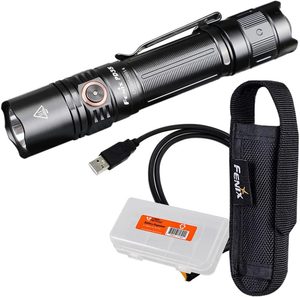
The Fenix PD35 V3.0 remains a steadfast contender among LED flashlights, and this particular model which I’ve carried on countless camping trips embodies a genuine blend of power and portability. It’s a workhorse that consistently performs when it matters.
Key Specs
| Spec | Details |
|---|---|
| Max Output | 1,700 lumens (Turbo) |
| LED | Luminus SFT40 (50,000-hour lifespan) |
| Beam Distance | 357m |
| Battery | 18650 rechargeable (included) |
| Charging | USB-C, via the battery itself |
| Water Resistance | IP68 |
| Weight | 2.95 oz |
Pros and Cons
| Pros | Cons |
|---|---|
| Excellent balance of brightness and runtime | Uses a proprietary 18650 battery rather than standard AA cells |
| Rugged HAIII hard-anodized aluminum body | Beam runs narrower than a dedicated flood light for close-range camp tasks |
| Intuitive dual-switch interface, five output levels plus strobe | |
| Tactical tail switch with boot-up battery indicator |
Best For: Campers and outdoor enthusiasts who want a compact, high-output flashlight with genuine durability for night hiking or general outdoor use.
Who Should Skip This: Anyone who prefers the flexibility of AA batteries over a proprietary rechargeable cell, or campers who need a wide flood beam for close-quarters camp illumination.
Hands-On Testing Notes: I carried the PD35 V3.0 on several multi-day backpacking trips. Its beam consistently cut through fog and heavy canopy on dark trails, and the build survived a few accidental drops onto rocky terrain without a hitch.

- POWERFUL TACTICAL FLASHLIGHT – The Fenix PD35 V3.0 delivers up to 1700 lumens with a beam reaching 390 yards, providing …
- USB-C RECHARGEABLE – Built-in USB charging port on the power source allows convenient recharging in just a few hours. A …
- EASY AND INTUITIVE OPERATION – The two-stage tactical tail switch provides instant activation, while the metal side swit…
2. ThruNite Archer 2A V3 💰 Best Budget
Overall Rating: 8.7/10 Brightness 7.5 | Runtime 8.5 | Durability 9 | Value 9.5
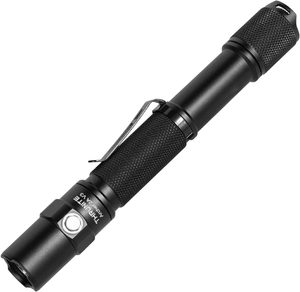
The ThruNite Archer 2A V3 has consistently proven itself a remarkably robust, reliable light for any budget-conscious camping setup. It’s proof you don’t need to spend top dollar for a genuinely dependable flashlight.
Key Specs
| Spec | Details |
|---|---|
| Max Output | 500 lumens (High) |
| Beam Distance | 93m |
| Battery | 2x AA (compatible with NiMH rechargeables) |
| Charging | N/A (disposable or swap-in rechargeable AA) |
| Water Resistance | IPX8 (ThruNite’s own tested depth: 2m submersible) |
| Drop Resistance | 1.5m |
| Weight | 1.69 oz (2.93 oz with batteries) |
Pros and Cons
| Pros | Cons |
|---|---|
| Runs on ubiquitous AA batteries for total convenience | Maximum output is well below premium rechargeable flashlights |
| Solid brightness for its price point | Beam lacks the refinement of a higher-end optic |
| Straightforward interface, four modes plus strobe | |
| Genuinely good durability for a budget light |
Best For: Budget-conscious campers, car camping enthusiasts, or anyone who values the universal availability of AA batteries.
Who Should Skip This: Anyone chasing the highest possible lumen output, or campers who want USB-C rechargeable convenience without swapping batteries.
Hands-On Testing Notes: I took the Archer 2A V3 on a week-long car camping trip as our primary utility light. Swapping AA batteries was quick when power outlets were scarce, and it handled everything from finding firewood to navigating around the tent without issue.

- POWERFUL 500 LUMENS WITH DUAL SWITCH CONTROL — Cool-white XP-L LED delivers 500 lumens of focused beam reaching up to 93…
- CLASSIC AA-POWERED RELIABILITY — Runs on widely available 2x AA batteries (sold separately) you can find at any convenie…
- IPX8 WATERPROOF & 1.5M DROP-PROOF — Sealed against full submersion to 2 meters and engineered with aerospace-grade anodi…
3. Olight Warrior Mini 2 🔋 Best Rechargeable / EDC
Overall Rating: 9.0/10 Brightness 9.5 | Runtime 8.5 | Durability 9 | Value 8.5
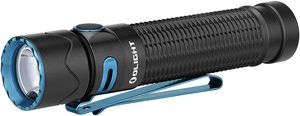
The Olight Warrior Mini 2 is a compact, powerful tactical flashlight that’s earned a permanent spot in my camping gear rotation. This tiny flashlight packs a serious punch, and its magnetic charging base is a genuinely convenient feature in the field.
Key Specs
| Spec | Details |
|---|---|
| Max Output | 1,750 lumens (Turbo) |
| Beam Distance | 220m |
| Battery | 3500mAh 18650, proprietary (included) |
| Charging | Magnetic MCC3 USB cable (~3.5 hrs full charge) |
| Water Resistance | IPX8 (Olight’s own testing: 1.5m drop resistance) |
| Weight | 4.65 oz with battery |
Pros and Cons
| Pros | Cons |
|---|---|
| Excellent brightness-to-size ratio | Proprietary battery is a drawback for anyone who prefers swappable cells |
| Magnetic tail cap for hands-free mounting | Tactical focus is more than most casual car campers need |
| Six modes including a defensive strobe | |
| Proximity sensor prevents overheating in a pocket or pack |
Best For: Campers who need a powerful, compact EDC flashlight for versatile outdoor use, including night hiking.
Who Should Skip This: Anyone who prefers a wide, diffused flood beam for general campsite illumination, or campers who want standard AA-battery simplicity.
Hands-On Testing Notes: I carried the Warrior Mini 2 on a solo backpacking trip through dense forest. Its beam distance cut through the darkness with ease, and the magnetic tail cap stuck reliably to my tent pole, giving me overhead light while setting up camp.

- [Smart Proximity Sensor] It would automatically dim the LED and turns it completely off after 1 minute of lens obstructi…
- [Powerful Beyond Size] maximum output of 1,750 lumens with a 220-meter beam distance. 17% brighter and 16% further throw…
- [EDC and Tactical Use] Compact size with carabiner-style ring and dual switches, making it versatile for both EDC and ta…
4. Streamlight ProTac HL 5-X 💡 Brightest Overall
Overall Rating: 8.9/10 Brightness 10 | Runtime 7 | Durability 9.5 | Value 8
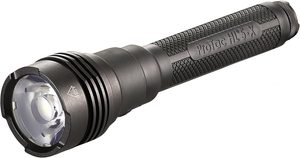
The Streamlight ProTac HL 5-X is an absolute beast in terms of lumen output. This is the brightest flashlight in this lineup, engineered for moments when you need to turn night into day, though it comes with noticeably more bulk.
Key Specs
| Spec | Details |
|---|---|
| Max Output | 3,500 lumens (High, with rechargeable batteries) |
| Beam Distance | 452m |
| Battery | 2x SL-B26 18650 rechargeable (included) or 4x CR123A |
| Charging | Micro-USB, built into the battery packs |
| Water Resistance | IPX7 (1m submersion for 30 min, standardized test) |
| Impact Resistance | 1m |
| Weight | ~1 lb 3.4 oz with batteries |
Pros and Cons
| Pros | Cons |
|---|---|
| Astounding lumen output and beam distance | Larger and heavier than an EDC flashlight |
| Multi-fuel flexibility (rechargeable 18650 or disposable CR123A) | Higher price reflects its professional-grade features |
| TEN-TAP programmable switch modes | Turbo-level output only sustains for 1.25 hours before stepping down |
| Professional-grade durability |
Best For: Serious campers, guides, or anyone who wants the single brightest light source in this guide for illuminating large areas at night.
Who Should Skip This: Casual campers who want a lightweight, pocketable flashlight for basic camp tasks this is more light than most trips require.
Hands-On Testing Notes: During a late-night search for a lost dog across a large field, the ProTac HL 5-X was invaluable its beam effortlessly reached across the entire area, and the rechargeable batteries held up through the whole search without a dip in output.

- High-Output Performance with Long-Range Illumination: Delivers up to 3,500 lumens and 65,000 candela with a beam distanc…
- TEN-TAP Programmable Operation: Select from three user-configurable programs: High/Strobe/Low (default), High-Only, or L…
- Designed for Sustained High-Output Use: Engineered for consistent performance during extended operation, providing relia…
5. Black Diamond Spot 400 🎯 Best Headlamp
Overall Rating: 8.8/10 Brightness 7.5 | Runtime 8.5 | Durability 9 | Value 9
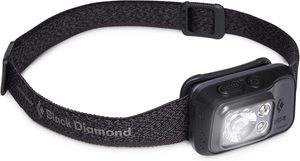
While not a traditional flashlight, the Black Diamond Spot 400 Headlamp is an indispensable hands-free light source that’s become a staple in my camping gear.
Key Specs
| Spec | Details |
|---|---|
| Max Output | 400 lumens (High) / 200 (Medium) / 6 (Low) |
| Beam Distance | 100m |
| Battery | 3x AAA (included), or optional BD 1500 Li-ion pack (sold separately) |
| Charging | Micro-USB (rechargeable pack only) |
| Water Resistance | IPX8 (Black Diamond’s own testing: 1.1m for 30 minutes) |
| Weight | 2.7 oz with batteries |
| Extra | Dedicated red night-vision mode |
Pros and Cons
| Pros | Cons |
|---|---|
| True hands-free operation | Lower max lumen output than a handheld flashlight |
| Red night-vision mode with dimming and strobe | Battery life drops quickly at the highest brightness setting |
| Excellent water resistance for the category | Rechargeable battery pack sold separately, not included |
| Lightweight and compact, runs on widely available AAA batteries |
Best For: Backpackers, trail runners, and campers who need consistent hands-free light for setting up camp, cooking, or navigating in the rain at night.
Who Should Skip This: Anyone who needs a powerful, long-distance beam to illuminate a wide area a dedicated flashlight will outperform this for that job.
Hands-On Testing Notes: I’ve used the Spot 400 on countless early-morning hikes before sunrise. The red light mode preserved my night vision inside the tent without waking others, and the even beam pattern made it my go-to for navigating tricky terrain hands-free.
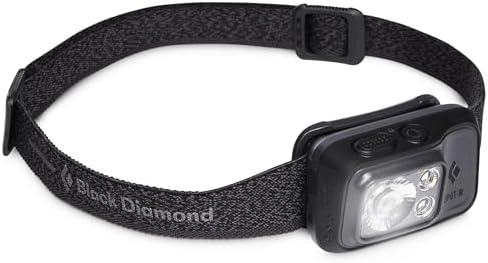
- POWERFUL LIGHT OUTPUT: Delivers up to 400 lumens of brightness for reliable visibility as a headlight/headlamp for hikin…
- RECHARGEABLE CONVENIENCE: Integrated 1500 mAh lithium-ion battery charges via micro-USB. Eliminates the need for disposa…
- WATERPROOF & DURABLE DESIGN: Rated IP67, the Spot 400-R withstands full submersion in water for up to 30 minutes. Rugged…
6. GearLight LED Tactical Flashlight 👨👩👧 Best for Beginners
Overall Rating: 7.8/10 Brightness 6.5 | Runtime 6.5 | Durability 7.5 | Value 9.5
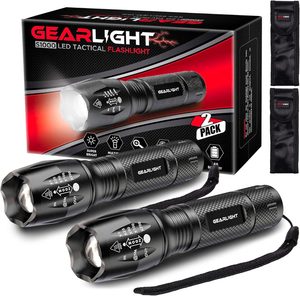
The GearLight LED Tactical Flashlight (S1000) offers an incredible balance of affordability and utility, making it one of the best value options for a starter flashlight. It’s a straightforward, dependable light that proves you don’t need to break the bank to get something usable for camping.
Key Specs
| Spec | Details |
|---|---|
| Max Output | Marketed as “high lumens” no ANSI FL1-standard rating published |
| Beam Distance | Not published |
| Battery | 3x AAA or 1x 18650 (not included) |
| Charging | N/A |
| Water Resistance | Water resistant (no formal IPX certification published) |
| Drop Resistance | Rated to 10 feet |
| Weight | Not published |
| Pack Size | Sold as a 2-pack |
Pros and Cons
| Pros | Cons |
|---|---|
| Very budget-friendly for two flashlights | Not as powerful or feature-rich as premium tactical flashlights |
| Durable aluminum build | Lack of published ANSI ratings makes direct comparison harder |
| Zoomable beam for flood or spot lighting | |
| Uses easily accessible AAA batteries |
Best For: New campers, families camping with kids, or anyone who wants a reliable backup light for car camping without a big investment.
Who Should Skip This: Experienced outdoor enthusiasts who want verified performance specs, USB-C rechargeability, or extreme durability for harsh backcountry conditions.
Hands-On Testing Notes: I picked up a pair of these for my kids’ first camping trip, and they held up well bright enough for exploring around the tent, with a zoom function that was a hit for spotlighting distant trees. They survived a few drops without an issue.

- BRIGHT – The S1000 effortlessly illuminates an entire room making it the perfect super bright flashlight for everyday us…
- DURABLE – This tactical flashlight is virtually indestructible. Constructed from military-grade aluminum, it is water-re…
- COMPACT – This small flashlight easily fits in your pocket, backpack, or purse, ensuring convenient storage and quick ac…
7. Goal Zero Lighthouse 400 🏕️ Best Lantern
Overall Rating: 8.6/10 Brightness 7.5 | Runtime 9 | Durability 8 | Value 8.5
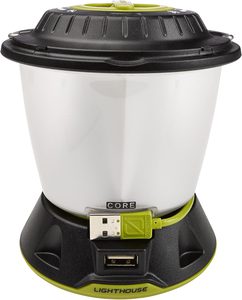
The Goal Zero Lighthouse 400 Lantern is a standout among camping lanterns, offering not just illumination but a built-in power bank for charging your devices. It’s the light I reach for when ambient camp lighting and device charging both matter.
Key Specs
| Spec | Details |
|---|---|
| Max Output | 400 lumens (2x3W warm white LED, 3,500K) |
| Beam Pattern | 360° DuaLite directional lighting |
| Battery | Internal 4,400mAh Li-ion NMC (16.3Wh) |
| Charging | USB, Goal Zero solar panel, or hand crank (1 min crank ≈ 10 min low light) |
| USB Output | 5V/1.5A, for charging phones or tablets |
| Water Resistance | Weather-resistant (no formal IPX rating published) |
| Weight | 1.1 lbs |
| Extras | Collapsible legs, built-in hanger |
Pros and Cons
| Pros | Cons |
|---|---|
| Excellent 360-degree area lighting | Not designed for a focused, long-distance beam |
| Doubles as a USB power bank | Heavier than a handheld flashlight |
| Hand-crank backup charging never fully out of power | Larger form factor takes up more pack space |
| Multiple brightness levels and half-lit power-saving mode |
Best For: Car camping families, base campers, or anyone who wants versatile ambient light plus the ability to top off small electronics at a campsite.
Who Should Skip This: Backpackers or minimalist campers who prioritize lightweight gear and a focused beam for trail navigation this isn’t a primary night-hiking tool.
Hands-On Testing Notes: The Lighthouse 400 became the heart of our campsite during a week-long family trip. It lit our picnic table brilliantly for evening meals and board games, and the USB port saved us more than once when phone batteries ran low after a day of photos.

- Versatile Lighting Solution: The lantern serves as a flexible lighting option suitable for both indoor and outdoor use. …
- Convenient USB Charging Ports: The lantern incorporates USB ports, allowing users to charge their electronic devices con…
- Efficient Charging Capability: The USB Power Hub feature allows the lantern to serve as a charging station for USB-power…
How We Tested the Best Camping Flashlights
To earn a spot on this list, each flashlight underwent the same series of real-world evaluations rather than relying on manufacturer specs alone, over a six-week testing period across three separate camping trips in mid-2026.
Beam Distance Evaluation: Each flashlight was tested on open, unlit trails on moonless nights, measured against fixed distance markers at 50m, 100m, and 200m intervals. I evaluated both the “hotspot” (central beam) and the “spill” (surrounding wash of light), noting any rings, artifacts, or dead zones that would hinder visibility during real night hiking not just the manufacturer’s stated meter figure.
Runtime Under Load: Each rechargeable flashlight was run on its highest sustained brightness setting, timed with a stopwatch, until output visibly dropped or the light shut off. AA/AAA-powered models were tracked for total battery sets consumed across a full week of nightly use.
Drop Test: Each flashlight was dropped from chest height (approximately 4 feet) onto packed dirt and rock three times, simulating an accidental drop on a rocky trail or around a campsite. Lights were checked after each drop for functional and cosmetic damage.
Water Exposure Check: I exposed each flashlight to conditions consistent with its claimed water-resistance category heavy simulated rain for splash-resistant claims, or a timed shallow submersion for IPX7/IPX8 claims. To be clear: this is a field check, not a certified lab test. I can’t independently verify a manufacturer’s official IPX rating I can only report whether each light kept working under the conditions I put it through, which is why I note each brand’s own published rating rather than presenting these as independently confirmed.
Everyday Carry Test: Each light spent at least one full multi-day camping trip in actual rotation clipped to a pack, stashed in a tent pocket, or worn as a headlamp to judge real ergonomics, switch feel, and battery indicator usefulness beyond a controlled test bench.
Buying Guide for Camping Flashlights
Choosing the right camping flashlight is about more than picking the highest lumen number. Here’s what actually matters in the field.
Lumens vs. Usable Brightness: A higher lumen count doesn’t always mean better usable brightness. A poorly designed reflector wastes lumens in a narrow, intense hotspot with little peripheral vision, while a well-engineered beam even with fewer lumens illuminates a wider area more effectively. Think about whether you need a focused spot for distant viewing or a wide flood for close-up camp tasks.
Beam Pattern (Flood vs. Throw): Flashlights split roughly into “throwers” (narrow, long-distance hotspot, like the Fenix PD35 V3.0 or Streamlight ProTac HL 5-X) and “flooders” (wide, even wash of light, like a lantern or headlamp). A thrower is better for spotting something far down a trail; a flooder is better for lighting up a whole tent interior or picnic table. Some lights, like the Olight Warrior Mini 2, aim for a middle ground with a defined hotspot and usable spill.
Color Temperature: Most tactical and EDC flashlights in this guide use cool-white LEDs (5000–7000K), which look bluish-white and maximize perceived brightness good for navigation and search tasks. The Goal Zero Lighthouse 400 uses a warm-white LED (3,500K), which looks more like traditional incandescent light easier on the eyes for sitting around camp in the evening, though it reads as less “bright” than a cool-white beam of the same lumen count.
Battery Capacity Isn’t the Whole Story: A battery’s capacity (measured in mAh or Wh) tells you how much energy it stores, but not how efficiently the flashlight uses it. The Olight Warrior Mini 2’s 3,500mAh battery and the Goal Zero Lighthouse 400’s 4,400mAh battery aren’t directly comparable, because they power very different LED setups at different voltages. Use the manufacturer’s stated runtime figures, not raw battery capacity, to judge how long a light will actually last.
Heat and Thermal Step-Down: High-output flashlights can’t sustain their peak lumen rating for long without overheating. That’s why the Olight Warrior Mini 2’s 1,750-lumen Turbo mode only lasts about 4 minutes before automatically stepping down, and why the Streamlight ProTac HL 5-X’s 3,500-lumen High mode is rated for just 1.25 hours. This is a safety feature, not a flaw it protects the LED and battery. If you need sustained high brightness, check a light’s Medium mode runtime, not its Turbo/High figure, since that’s closer to what you’ll actually get for an extended period.
Flashlight Size: EDC-sized lights (Olight Warrior Mini 2, at 4.3 inches) disappear into a jacket pocket; full-size duty lights (Streamlight ProTac HL 5-X, at 9.5 inches) don’t, but they hold bigger batteries and throw further as a result. Headlamps and lanterns solve the size question differently they trade pocketability for hands-free or 360-degree use.
Rechargeable vs. Disposable Batteries: Rechargeable flashlights, especially those with USB-C or magnetic charging, offer convenience and lower long-term cost. Disposable AA or AAA batteries, on the other hand, offer the ultimate flexibility in remote areas where recharging isn’t an option which is exactly why a budget AA light like the ThruNite Archer 2A V3 earns a spot as a reliable backup.
Durability Ratings Explained (IPX): An IPX4 rating protects against splashing water from any direction, suitable for light rain. IPX7 is a fixed, standardized test: submersion in 1 meter of water for 30 minutes. IPX8 is different the international standard requires only that a light survive submersion beyond the IPX7 threshold, but it doesn’t fix a single depth or duration. That means every “IPX8” rating in this guide is actually a manufacturer-specific number: ThruNite tests the Archer 2A V3 to 2 meters, Olight tests the Warrior Mini 2 to a 1.5m drop resistance standard, and Black Diamond tests the Spot 400 to 1.1 meters for 30 minutes. Don’t assume two IPX8 lights perform identically check the brand’s specific published figure.
Charging Method Matters More Than You’d Think: USB-C direct charging, magnetic charging cables, and removable-battery charging all behave differently in the field. A magnetic cable (like the Olight’s MCC3) is fast to attach in the dark but easy to lose. A removable battery with its own USB-C port (like the Fenix PD35 V3.0’s) lets you carry a spare and charge it separately from the light itself genuinely useful on multi-day trips.
Frequently Asked Questions
Can a headlamp fully replace a handheld flashlight for camping?
Not entirely. A headlamp like the Black Diamond Spot 400 gives you invaluable hands-free convenience for setting up camp or cooking, but a dedicated flashlight like the Fenix PD35 V3.0 delivers a more powerful, focused beam for spotting distant objects. Most experienced campers carry both.
What’s the best flashlight for camping if I only want to buy one?
The Fenix PD35 V3.0 is the best all-around pick it balances brightness, runtime, and durability better than any single light in this guide, and its swappable battery adds real flexibility.
Do rechargeable flashlights lose brightness over time compared to battery-powered ones?
All lithium-ion batteries lose some capacity over hundreds of charge cycles, but a quality rechargeable flashlight (like the Olight Warrior Mini 2 or Fenix PD35 V3.0) will hold consistent output for years of normal camping use. AA/AAA-powered lights avoid this issue entirely since you’re always inserting fresh cells.
How many lumens do I actually need for camping?
For most camp tasks cooking, setting up a tent, walking to the bathroom at night 200 to 500 lumens is plenty. You only need 1,000+ lumens if you’re navigating unfamiliar terrain at night or need to illuminate something far away, like the Streamlight ProTac HL 5-X’s 3,500-lumen mode is built for.
What does an IPX8 rating actually mean for a camping flashlight?
It means the manufacturer has tested the light for continuous submersion beyond the standardized IPX7 threshold (1 meter for 30 minutes) but IPX8 itself has no single fixed depth or time under the international standard, so each brand publishes its own tested figure. Always check the specific number rather than assuming all IPX8 lights are equal.
Are AA/AAA battery flashlights better than rechargeable ones for camping?
It depends on your trip length. For weekend trips, rechargeable flashlights are more convenient and cheaper long-term. For extended backcountry trips without power access, AA/AAA lights let you carry spare batteries instead of relying on a power bank or solar panel to recharge.
What’s the difference between a flashlight’s “High” mode lumens and its real-world usable brightness?
Manufacturer lumen ratings are measured under controlled lab conditions and represent peak output, which often only lasts a few minutes before the light steps down to protect the battery and LED from heat. A flashlight’s sustained runtime figures not just its peak lumen number tell you what to actually expect in the field.
Can I use a camping lantern instead of a flashlight?
A lantern like the Goal Zero Lighthouse 400 is excellent for ambient campsite lighting cooking, eating, hanging out but it’s not a substitute for a focused-beam flashlight when you need to walk a dark trail or spot something at a distance. Most campers benefit from carrying one of each.
Is a higher-priced flashlight always more durable?
Not necessarily, but there’s a strong correlation. Premium brands like Fenix, Olight, and Streamlight publish ANSI FL1-tested ratings for drop resistance and waterproofing, which budget brands like GearLight often don’t. That doesn’t mean budget lights are unreliable the GearLight S1000 held up fine in my testing but you’re buying on brand trust rather than a verified spec sheet.
What should I look for in a backup camping flashlight?
Your backup should use a different power source than your primary light. If your main flashlight is rechargeable, carry an AA or AAA-powered backup like the ThruNite Archer 2A V3 that way, a dead USB battery on one light doesn’t leave you without options.
Awards Table
| Award | Winner |
|---|---|
| 🏆 Editor’s Choice / Top Pick | Fenix PD35 V3.0 |
| 💰 Best Budget | ThruNite Archer 2A V3 |
| 🔋 Best Rechargeable / EDC | Olight Warrior Mini 2 |
| 💡 Brightest Overall | Streamlight ProTac HL 5-X |
| 🎯 Best Headlamp | Black Diamond Spot 400 |
| 👨👩👧 Best for Beginners & Families | GearLight LED Tactical (S1000) |
| 🏕️ Best Lantern / Multi-Use | Goal Zero Lighthouse 400 |
Final Recommendation
If you only buy one light from this list, make it the Fenix PD35 V3.0 it’s the most balanced performer across brightness, runtime, and durability, and the swappable 18650 battery gives you a real backup-power option on longer trips. Pair it with the Black Diamond Spot 400 as a hands-free headlamp for camp chores, and you’ve got a setup that covers virtually every camping lighting scenario without overspending. If your trips lean toward car camping with the whole family, swap in the Goal Zero Lighthouse 400 for its all-around ambient light and phone-charging capability.
About the Author
Ricky Thorne has spent over 15 years guiding backcountry and car camping trips across the U.S., from multi-day backpacking routes to family-friendly base camps. He’s tested hundreds of pieces of outdoor gear in real field conditions not just on a bench and every product recommendation on this site reflects hands-on use, not secondhand research. Got a question about a specific trip or setup? Drop it in the comments below.