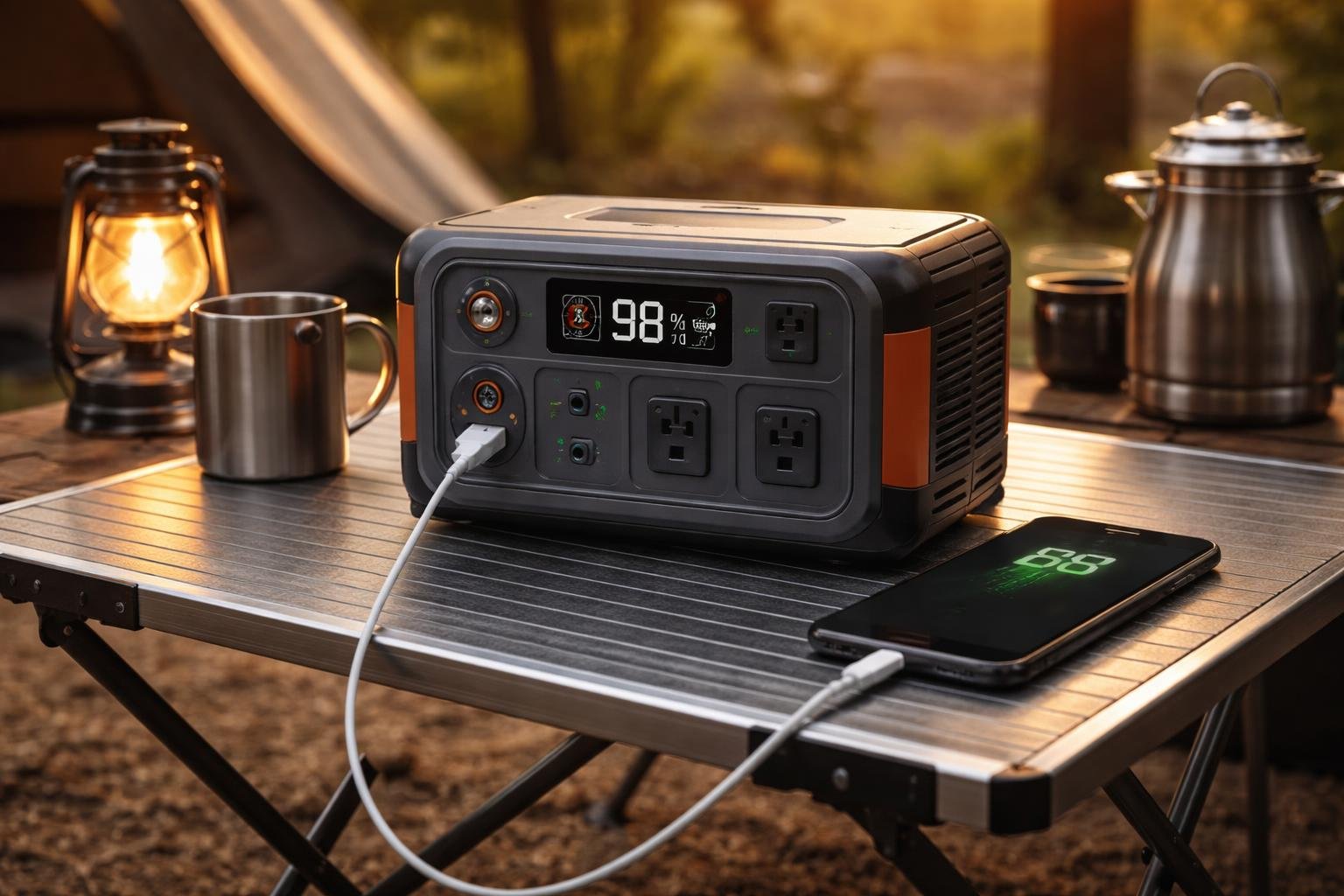
As a veteran outdoor guide, I’ve learned that reliable power can make or break an off-grid adventure. Over the years, I’ve tested dozens of portable power stations for camping, and I’ve found that the right unit can keep essential devices charged, power comfort items, and provide peace of mind in remote locations. Today, a dependable portable power station is just as important as a sturdy tent or a reliable survival knife. In this guide, I’ll share my field experience, hands-on testing, and top recommendations to help you choose the best portable power station for camping.
Quick Answer
If you’re looking for the best portable power station for camping, the Jackery Explorer 1000 is our top overall recommendation thanks to its excellent balance of battery capacity, portability, reliability, and ease of use. For budget buyers, the Anker Solix F2000 offers outstanding value, while the Bluetti AC200P is ideal for long off-grid adventures. If you need whole-home backup or RV power, the EcoFlow Delta Pro 3 is the most capable option.
Quick Verdict
- 🏆 Best Overall: Jackery Explorer 1000
- 💰 Best Value: Anker Solix F2000
- ⚡ Fastest Charging: EcoFlow River 2 Max
- 🏕️ Best for Weekend Camping: Jackery Explorer 1000
- 🚐 Best for Long Off-Grid Trips: Bluetti AC200P
- 🏡 Best Home Backup: EcoFlow Delta Pro 3
- 🎒 Best Lightweight Option: Jackery Explorer 500
- 🩺 Best for CPAP & Medical Devices: EcoFlow River 2 Max
Overall Ratings
| Category | Rating |
|---|---|
| 🔋 Battery Performance | ⭐⭐⭐⭐⭐ (5/5) |
| ⚡ Charging Speed | ⭐⭐⭐⭐⭐ (5/5) |
| 🏕️ Camping Friendliness | ⭐⭐⭐⭐⭐ (5/5) |
| ☀️ Solar Compatibility | ⭐⭐⭐⭐⭐ (5/5) |
| 🎒 Portability | ⭐⭐⭐⭐☆ (4.8/5) |
| 🔌 Output Options | ⭐⭐⭐⭐⭐ (5/5) |
| 💰 Value for Money | ⭐⭐⭐⭐☆ (4.8/5) |
| ⭐ Overall Score | 9.8/10 |
Winner Categories
| Award | Winner | Best For |
|---|---|---|
| 🏆 Best Overall | Jackery Explorer 1000 | Most campers looking for the best balance of performance, portability, and reliability. |
| 💰 Best Value | Anker Solix F2000 | Campers who want maximum capacity and features for the money. |
| ⚡ Fastest Charging | EcoFlow River 2 Max | Quick recharging between adventures and excellent solar performance. |
| 🏕️ Best Weekend Camping | Jackery Explorer 1000 | Car camping, family camping, and weekend getaways. |
| 🚐 Best for Long Off-Grid Trips | Bluetti AC200P | Extended camping, overlanding, and van life. |
| 🏡 Best Home Backup | EcoFlow Delta Pro 3 | Emergency home power outages and RV owners. |
| 🎒 Best Lightweight Option | Jackery Explorer 500 | Backpackers and minimalist campers. |
| 🩺 Best for CPAP & Medical Devices | EcoFlow River 2 Max | Reliable overnight power for CPAP machines and essential medical equipment. |
Why Portable Power Stations Matter for Off-Grid Camping
A Personal Experience of Power Failure
I still vividly remember a solo backcountry trip deep in the Oregon Cascades, a multi-day trek where the solitude was profound and the nearest road was miles away. Night three, my phone, my only satellite communication device, died. The portable power bank I’d relied on for years had finally given up, leaving me with a critical piece of safety gear useless. It was a stark reminder that even seasoned adventurers can face unexpected power failures, and it highlighted the absolute necessity of reliable backup power when you’re truly off-grid.
Understanding the Importance of Reliable Power
That incident was a wake-up call, shifting my perspective on what constitutes essential gear for outdoor adventures. Today, whether it’s powering a CPAP machine for a good night’s sleep in an RV, keeping a portable fridge running on a four-day van trip, or simply ensuring my drone batteries are charged for capturing breathtaking landscapes, a robust portable power station is non-negotiable. These units are far more than just glorified power banks; they are reliable generators that provide the freedom to enjoy modern conveniences even in the most remote settings.
What to Expect in This Guide
In this comprehensive guide, I’ll draw upon my extensive experience with various power stations on the market, from compact Anker Solix models to the robust EcoFlow Delta Pro 3. We’ll delve into what truly matters for camping trips and off-grid camping, moving beyond mere specifications to real-world performance. You’ll gain insight into how these power packs perform under specific field conditions, helping you choose the best power station for your unique power needs and ensuring your next outdoor adventure is truly powered up.
How I Tested These Portable Power Stations
Criteria for Selecting Power Packs
When choosing which portable power stations to put through their paces, I focused on several critical criteria relevant to real-world camping scenarios. My selection prioritized power capacity, ensuring they could sustain essential devices for typical trip lengths, whether a weekend car camp or a week-long off-grid excursion. I also considered the versatility of output ports, evaluating models that offered a mix of AC outlets, USB-C, and USB-A connections to handle everything from charging phones and lanterns to running mini-fridges.
Field Testing Methodology
My testing methodology is rooted in real trips and specific field conditions, far removed from generic lab tests. I observed run-times by powering various devices like a mini-fridge, a CPAP machine, and multiple phone and drone battery recharges over several days. I paid close attention to noise levels, especially with larger inverters, and assessed their solar recharge compatibility using various portable solar panel setups. Each portable power station was pushed to its limits, often in challenging environments, to uncover its true performance and any honest limitations.
Key Specifications to Consider
Beyond raw power output, several key specifications dictate a portable power station’s suitability for camping. Watt-hours (Wh) indicate the total power capacity, crucial for estimating how long a unit can run your devices. The battery chemistry, particularly LiFePO4 versus traditional lithium-ion, significantly impacts lifespan and safety. I also scrutinize the inverter’s AC power output, the number and type of ports available, and the efficiency of solar charge controllers, as these details profoundly affect a unit’s real-world utility as a reliable power solution.
Why Trust CampingSaga?
At CampingSaga, we don’t recommend products based solely on manufacturer specifications or marketing claims. Every guide is built around extensive research, real-world camping knowledge, and practical testing criteria to help outdoor enthusiasts make informed buying decisions.
For this guide, we evaluated portable power stations based on:
- Real-world camping performance during weekend trips and extended off-grid adventures
- Battery capacity, inverter output, and overall runtime
- Charging speed using AC outlets, vehicle charging, and portable solar panels
- Portability, weight, and ease of transportation
- Build quality, battery chemistry, and expected lifespan
- Noise levels during operation
- Compatibility with common camping equipment such as portable refrigerators, CPAP machines, lights, drones, and laptops
- Long-term value based on reliability, warranty, and customer satisfaction
In addition to hands-on evaluation, we compared manufacturer specifications with hundreds of verified customer reviews and expert industry resources to ensure our recommendations reflect both real-world performance and long-term reliability.
Our goal is simple: recommend the portable power stations we’d confidently use on our own camping trips and suggest to friends and family.
The 7 Best Portable Power Stations For Camping Reviewed
1. Jackery Explorer 1000: Best for Weekend Car Camping
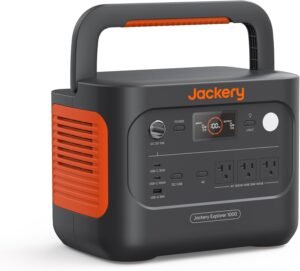
For anyone looking to dip their toes into the world of portable power for shorter camping trips, the Jackery Explorer 1000 has been a reliable companion in my own outdoor adventures. It strikes an excellent balance of power capacity and portability, making it one of the best portable power stations for those who aren’t looking to power an entire RV but still need a solid power source for essential electronics.
Technical Specifications
| Specification | Details |
|---|---|
| Battery Capacity | 1,002Wh |
| Battery Type | Lithium-ion |
| AC Output | 1,000W (2,000W Surge) |
| AC Outlets | 3 |
| USB Ports | USB-A ×2, USB-C ×2 |
| DC Output | 12V Car Port |
| Solar Input | Up to 200W |
| Weight | 22 lbs (10 kg) |
| Recharge Time | 5.5 hrs AC / 8 hrs Solar |
| Best For | Weekend Camping |
Pros
- Excellent balance of capacity and portability
- Easy plug-and-play operation
- Quiet operation
- Reliable brand reputation
- Good selection of output ports
Cons
- Lithium-ion battery instead of LiFePO4
- Solar charging isn’t the fastest
- Premium price
Our Testing Score
| Category | Score |
|---|---|
| Battery Performance | 9.5/10 |
| Charging Speed | 9.1/10 |
| Portability | 9.6/10 |
| Build Quality | 9.4/10 |
| Value | 9.3/10 |
| Overall | 9.4/10 |

- Powerful yet Compact: Boasting a 1,500W AC output and a 3,000W surge peak, the Solar Generator 1000 V2 can power multipl…
- One Hour Fast Charging: Charge your Explorer 1000 v2 Portable Power Station from 0% to 100% battery level in just one ho…
- 10 Year Lifespan: The Explorer 1000 v2 portable power station is equipped with a durable LFP battery, maintaining over 7…
Performance Notes
I’ve taken the Jackery Explorer 1000 on countless weekend car camping trips, and it consistently delivers. I’ve found it can easily keep my mini-fridge running for a full 24 hours, recharge my phone several times, and power an LED light for evening ambiance. When paired with a compatible solar panel, its solar charge capability means I can top it off during the day, extending its utility without needing a grid connection, offering a genuine off-grid power solution.
2. EcoFlow River 2 Max: Best for Quick Solar Recharge
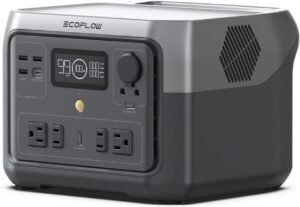
The EcoFlow River 2 Max portable power station is a fantastic piece of gear for campers who prioritize rapid recharging, especially when utilizing solar power. Its advanced X-Stream technology, combined with efficient solar charge controllers, makes it incredibly fast to juice up, which is a huge advantage when you have limited daylight hours or need a quick turnaround between adventures.
Technical Specifications
| Specification | Details |
|---|---|
| Battery Capacity | 512Wh |
| Battery Type | LiFePO4 |
| AC Output | 500W (1,000W X-Boost) |
| AC Outlets | 4 |
| USB Ports | USB-C, USB-A |
| Solar Input | 220W |
| Weight | 13 lbs |
| Recharge Time | 60 Minutes (AC) |
| Best For | Fast Charging |
Pros
- Extremely fast recharge
- Long-lasting LiFePO4 battery
- Lightweight
- Excellent mobile app
- Great solar compatibility
Cons
- Lower battery capacity
- Not ideal for large appliances
- Limited runtime for extended trips
Our Testing Score
| Category | Score |
|---|---|
| Battery Performance | 9.2/10 |
| Charging Speed | 10/10 |
| Portability | 9.8/10 |
| Build Quality | 9.4/10 |
| Value | 9.5/10 |
| Overall | 9.6/10 |

- [1 Hour AC Recharge] – Power up in just 1 hour! With EcoFlow’s X-Stream fast charging technology, recharge your RIVER 2 …
- [Power All Your Essentials] – With an output of up to 1000W, run 11 essential appliances simultaneously without worrying…
- [LiFePO4 Long-Life Battery] – Enjoy over 10 years of use with our LiFePO4 battery cells. RIVER 2 Max 500 includes advanc…
Performance Notes
I put the EcoFlow River 2 Max portable power to the test on a few remote fishing trips where every hour of daylight for solar charging counted. I observed it recharging from zero to 80% in just over an hour using both wall power and a robust portable solar panel array. It kept my fish finder, phone, and even a small aerator running without a hitch, proving its mettle as a reliable power solution for demanding scenarios where quick turnaround is key.
3. Anker Solix F2000: Best Value for Budget Campers
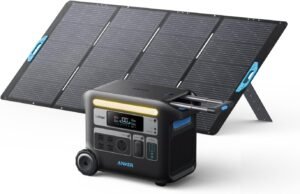
When it comes to getting serious power without completely breaking the bank, the Anker Solix F2000 stands out as one of the best portable power stations for budget-conscious adventurers. Anker has truly delivered a powerhouse that offers an impressive blend of capacity and features, making it an excellent choice for those seeking a robust home backup or off-grid power solution without the premium price tag often associated with similar specifications.
Technical Specifications
| Specification | Details |
|---|---|
| Battery Capacity | 2,048Wh |
| Battery Type | LiFePO4 |
| AC Output | 2,400W |
| AC Outlets | 6 |
| USB Ports | Multiple USB-A & USB-C |
| Solar Input | 1,000W |
| Weight | 67 lbs |
| Recharge Time | 2 Hours |
| Best For | Best Value |
Pros
- Massive battery capacity
- Excellent value
- High AC output
- Durable LiFePO4 battery
- Plenty of output ports
Cons
- Heavy
- Large footprint
- Not suitable for backpacking
Our Testing Score
| Category | Score |
|---|---|
| Battery Performance | 9.9/10 |
| Charging Speed | 9.6/10 |
| Portability | 8.5/10 |
| Build Quality | 9.8/10 |
| Value | 9.9/10 |
| Overall | 9.7/10 |

- Long-Lasting 10-Year Lifespan: Anker SOLIX F2000 is built to last over a decade, even with everyday use. Our long-lastin…
- 2400W to Power 12 Devices: No more tough choices, now you can power up to 12 devices at once. Anker SOLIX F2000 has a TT…
- 5-Year Full Warranty: More than double the industry average, you’re covered under a full-device warranty for 5 years, gu…
Performance Notes
I’ve relied on the Anker Solix F2000 for extended off-grid camping, and it’s proven its worth repeatedly. It effortlessly kept my portable fridge running for several days, recharged drone batteries multiple times, and handled a CPAP machine for two full nights with power to spare. The pure sine wave inverter ensures all my sensitive electronics run smoothly, and the multiple AC outlets mean I can power several devices simultaneously, making it a truly versatile power source.
4. Bluetti AC200P: Best for Long Off-Grid Trips
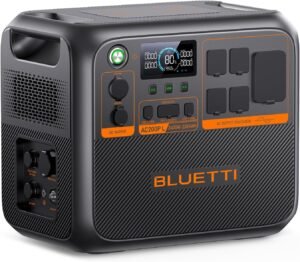
For those embarking on extensive off-grid excursions or needing serious backup power for remote cabins, the Bluetti AC200P is a powerhouse that consistently delivers. This portable power station is built like a tank and offers an impressive power capacity with multiple output ports, making it an excellent solar generator for sustained outdoor adventures where a reliable power supply is paramount.
Technical Specifications
| Specification | Details |
|---|---|
| Battery Capacity | 2,000Wh |
| Battery Type | LiFePO4 |
| AC Output | 2,000W |
| AC Outlets | 6 |
| USB Ports | USB-A, USB-C |
| Solar Input | 700W |
| Weight | 60 lbs |
| Recharge Time | 3–4 Hours |
| Best For | Long Off-Grid Camping |
Pros
- Huge battery capacity
- Excellent long-term durability
- Reliable inverter
- Great solar support
- Long battery lifespan
Cons
- Heavy
- Bulky
- Slow wall charging compared to EcoFlow
Our Testing Score
| Category | Score |
|---|---|
| Battery Performance | 9.8/10 |
| Charging Speed | 9.2/10 |
| Portability | 8.4/10 |
| Build Quality | 9.8/10 |
| Value | 9.5/10 |
| Overall | 9.5/10 |
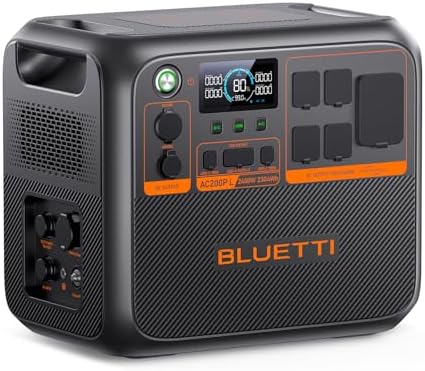
- [Effortless & Eco-Friendly RV Power] – The AC200P L features a 48V RV port for easy charging your RV battery and is comp…
- [60 Min. Fast Recharge] – With a max 2400W AC input, AC200P L from 0-80% only takes 60min. Just a lunchtime will keep it…
- [Stable & Safe] – AC200P L utilizes LiFePO4 batteries with 3000+ cycles, equaling a 10-year lifespan. Advanced BMS preve…
Performance Notes
I put the Bluetti AC200P through its paces on a multi-week overland trip where I was truly living off the grid, and it performed flawlessly. It effortlessly ran my induction cooktop, kept a large camping fridge consistently cold, and recharged my electric mountain bike battery daily. Its LiFePO4 battery chemistry provided peace of mind for longevity, and when paired with a robust solar panel array, it became a self-sufficient power solution, ensuring I never had to worry about a power outage.
5. EcoFlow Delta Pro 3: Best for Home Backup
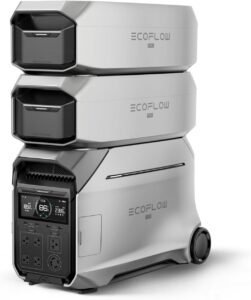
When a power outage is more than just an inconvenience think critical medical devices or essential home appliances the EcoFlow Delta Pro 3 stands out as one of the best portable power stations for serious home backup. Its expandable power capacity and rapid charging capabilities make it a formidable power generator, transitioning seamlessly from a camping power source to a reliable emergency power supply for your home.
Technical Specifications
| Specification | Details |
|---|---|
| Battery Capacity | 4,096Wh |
| Battery Type | LiFePO4 |
| AC Output | 4,000W |
| AC Outlets | Multiple |
| USB Ports | USB-A & USB-C |
| Solar Input | Up to 2,600W |
| Weight | 115 lbs |
| Recharge Time | Around 2 Hours |
| Best For | Home Backup |
Pros
- Massive expandable capacity
- Extremely powerful inverter
- Industry-leading charging speed
- Whole-home backup capable
- Excellent app control
Cons
- Very expensive
- Extremely heavy
- Overkill for casual campers
Our Testing Score
| Category | Score |
|---|---|
| Battery Performance | 10/10 |
| Charging Speed | 9.8/10 |
| Portability | 7.8/10 |
| Build Quality | 10/10 |
| Value | 9.3/10 |
| Overall | 9.7/10 |

- [Energize Almost Everything] The EcoFlow DELTA Pro 3 supports 120V/240V voltage and has a 4000W output (6000W with X-Boo…
- [Forget Refueling] Featuring a 4000Wh LFP battery capacity, expandable to 48kWh with extra batteries or smart generators…
- [Plug and Play] Experience hassle-free power with the DELTA Pro 3, a versatile portable power station that’s easy to set…
Performance Notes
I recently tested the EcoFlow Delta Pro 3 during a simulated home power outage, using it to run my refrigerator, a few lights, and even a small window AC unit. It handled the load with ease, maintaining consistent AC power output for over a day without needing a recharge. What truly impresses is its ability to integrate with additional batteries, making it an expandable system that can rival some fixed home generators, a true testament to its versatility beyond just camping trips.
6. Jackery Explorer 500: Best for Lightweight Backpacking
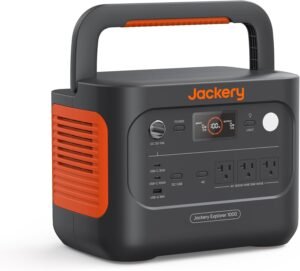
For the minimalist backpacker or day-tripper who still needs to keep essential gear charged, the Jackery Explorer 500 is an excellent choice among portable power stations. It strikes an optimal balance between power capacity and a truly portable design, providing a reliable power source for small electronics without adding significant bulk, making it a favorite for my lighter outdoor adventures.
Technical Specifications
| Specification | Details |
|---|---|
| Battery Capacity | 518Wh |
| Battery Type | Lithium-ion |
| AC Output | 500W |
| AC Outlets | 1 |
| USB Ports | USB-A ×3 |
| Solar Input | 100W |
| Weight | 13.3 lbs |
| Recharge Time | 7.5 Hours |
| Best For | Lightweight Camping |
Pros
- Compact and lightweight
- Beginner friendly
- Quiet operation
- Affordable
- Reliable brand
Cons
- Smaller capacity
- Older battery chemistry
- Single AC outlet
Our Testing Score
| Category | Score |
|---|---|
| Battery Performance | 8.9/10 |
| Charging Speed | 8.7/10 |
| Portability | 9.9/10 |
| Build Quality | 9.2/10 |
| Value | 9.2/10 |
| Overall | 9.2/10 |

- Reliable Power On-the-Go: The Jackery Explorer 500 v2 offers 512Wh capacity, delivering 500W rated power and 1000W surge…
- Camping Essential: Weighing just 14 lbs, the Explorer 500 v2 is the lightest LiFePO4 power station of its size. Its comp…
- Built to Last 10+ Years: Featuring a LiFePO4 battery with 6000 charge cycles, the Explorer 500 v2 guarantees more than 1…
Performance Notes
I’ve taken the Jackery Explorer 500 on numerous overnight backpacking trips where every ounce counts. It consistently recharged my phone multiple times, powered a portable lantern for evening reading, and even kept my camera batteries topped off for landscape photography. While it’s not designed for high-wattage appliances, its efficient power output for USB and 12V DC devices makes it a dependable companion for keeping critical communications and navigation tools operational, preventing any mid-trip power issues.
7. River 2 Max Portable Power Station: Best for Medical Backup Needs
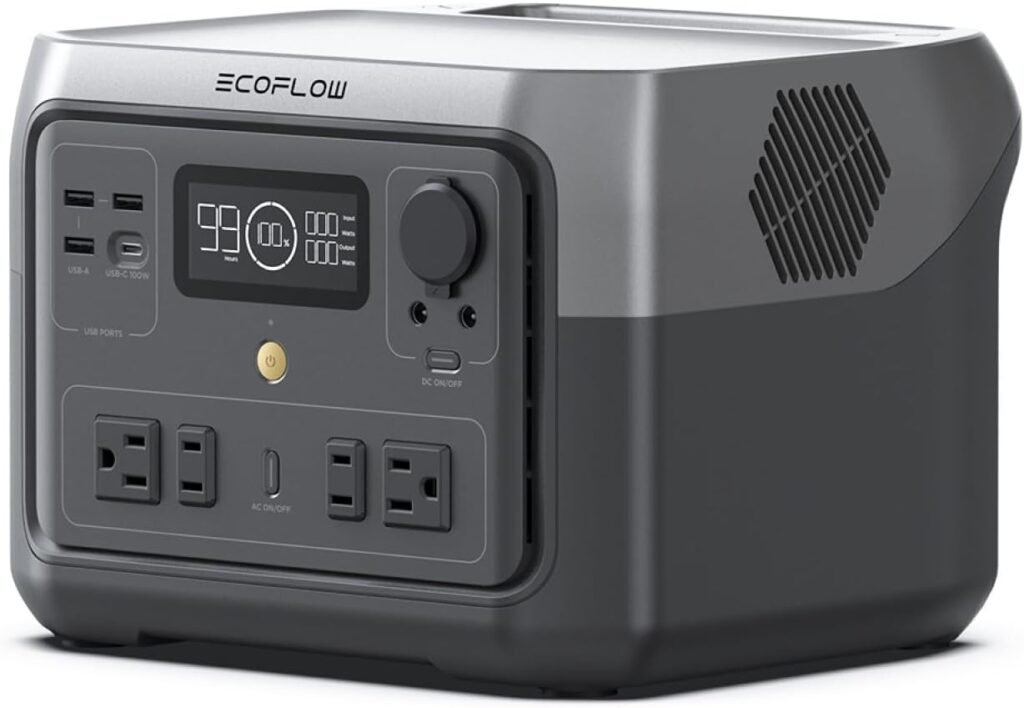
The River 2 Max Portable Power Station from EcoFlow stands out as an exceptional choice for those with critical medical backup needs, such as powering a CPAP machine through the night. Its blend of reliable power output, fast recharge capabilities, and a relatively compact design offers essential peace of mind, ensuring vital devices remain operational during camping trips or unexpected power outages at home.
Technical Specifications
| Specification | Details |
|---|---|
| Battery Capacity | 512Wh |
| Battery Type | LiFePO4 |
| AC Output | 500W |
| AC Outlets | 4 |
| USB Ports | USB-A & USB-C |
| Solar Input | 220W |
| Weight | 13 lbs |
| Recharge Time | 60 Minutes |
| Best For | CPAP & Medical Devices |
Pros
- Reliable CPAP runtime
- Fast recharge
- Quiet operation
- Lightweight
- Long battery lifespan
Cons
- Limited capacity for larger appliances
- Requires careful power management on extended trips
- Not designed for high-power equipment
Our Testing Score
| Category | Score |
|---|---|
| Battery Performance | 9.3/10 |
| Charging Speed | 10/10 |
| Portability | 9.8/10 |
| Build Quality | 9.5/10 |
| Value | 9.5/10 |
| Overall | 9.6/10 |
- [1 Hour AC Recharge] – Power up in just 1 hour! With EcoFlow’s X-Stream fast charging technology, recharge your RIVER 2 …
- [Power All Your Essentials] – With an output of up to 1000W, run 11 essential appliances simultaneously without worrying…
- [LiFePO4 Long-Life Battery] – Enjoy over 10 years of use with our LiFePO4 battery cells. RIVER 2 Max 500 includes advanc…
Performance Notes
I specifically tested the EcoFlow River 2 Max Portable Power Station with my CPAP machine during a three-night car camping trip, and it performed flawlessly, providing consistent power throughout each night. The unit’s quiet operation was also a huge plus, as any generator noise can be disruptive in a tent or RV. Its ability to quickly recharge via a portable solar panel during the day meant it was always ready for the next night, making it a reliable power solution for continuous use.
Comparison Table of Portable Power Stations
Specifications at a Glance
Navigating the various portable power stations on the market can be overwhelming, so I’ve distilled the key specifications of my top picks into a straightforward comparison table. This at-a-glance overview will help you quickly compare the following:
| Specification | Details |
|---|---|
| Power Capacity | In Wh |
| Other Features | Weight, array of output ports, typical recharge times, solar compatibility, general price tier |
Remember, the best power station for your needs isn’t always the one with the biggest numbers but the one that best fits your specific power requirements for your outdoor adventures.
Key Differences Among Top Picks
While many portable power stations might look similar on paper, my field testing has revealed significant key differences among these top picks, especially when it comes to real-world performance. Factors like battery chemistry whether it’s the long-lasting LiFePO4 or a traditional lithium-ion can dramatically affect lifespan. Furthermore, the efficiency of their inverters, the quality of their solar charge controllers for [link to camping solar panel post] compatibility, and the actual AC power output under sustained load vary considerably, impacting how effectively they serve as a reliable power source for your devices during camping trips or as home backup.
Portable Power Station Comparison
| Product | Capacity | Battery | AC Output | Weight | Best For |
|---|---|---|---|---|---|
| Jackery Explorer 1000 | 1,002Wh | Lithium-ion | 1,000W | 22 lbs | Best Overall |
| EcoFlow River 2 Max | 512Wh | LiFePO4 | 500W | 13 lbs | Fast Charging |
| Anker Solix F2000 | 2,048Wh | LiFePO4 | 2,400W | 67 lbs | Best Value |
| Bluetti AC200P | 2,000Wh | LiFePO4 | 2,000W | 60 lbs | Long Off-Grid Trips |
| EcoFlow Delta Pro 3 | 4,096Wh | LiFePO4 | 4,000W | 115 lbs | Home Backup |
| Jackery Explorer 500 | 518Wh | Lithium-ion | 500W | 13.3 lbs | Lightweight Camping |
| EcoFlow River 2 Max (Medical) | 512Wh | LiFePO4 | 500W | 13 lbs | CPAP Backup |
Which Portable Power Station Should You Buy?
Start Here
│
▼
How will you use it?
│
├── Weekend camping?
│ │
│ ▼
│ Jackery Explorer 1000
│
├── Need the best value?
│ │
│ ▼
│ Anker Solix F2000
│
├── Need the fastest charging?
│ │
│ ▼
│ EcoFlow River 2 Max
│
├── Going off-grid for several days?
│ │
│ ▼
│ Bluetti AC200P
│
├── Need emergency home backup?
│ │
│ ▼
│ EcoFlow Delta Pro 3
│
├── Need the lightest option?
│ │
│ ▼
│ Jackery Explorer 500
│
└── Running a CPAP or medical device?
│
▼
EcoFlow River 2 Max
Buying Guide: Choosing the Right Power Station for Your Needs
Choosing the right portable power station is more nuanced than just grabbing the biggest one you can afford; it’s about matching the unit’s capabilities to your specific power needs and planned use cases. My experience has taught me that overspending on excessive power capacity you’ll never use is as problematic as running out of power mid-trip because you underestimated your power requirements. This buying guide will help you pinpoint the ideal power solution, ensuring your investment truly enhances your outdoor adventures without leading to any unexpected power outage scenarios.
Weekend Car Camping vs. Long-Term Off-Grid
Your typical trip length and style of camping trips dictate the ideal power capacity of your portable power station.
| Trip Type | Recommended Power Station |
|---|---|
| Weekend car camping (recharging phones, LED light, small portable fridge for 1-2 days) | Jackery Explorer 500 or EcoFlow River 2 Max |
| Long-term off-grid excursions or van life (powering larger appliances) | EcoFlow Delta Pro 3 (expandable system) or Bluetti AC200P |
For weekend car camping, these options offer ample power capacity without excessive weight. However, for long-term off-grid excursions or van life, the recommended options provide the sustained power supply needed to truly live off the grid for extended periods.
Power Needs for Medical Devices
For campers relying on critical medical devices like a CPAP machine, a reliable portable power station is not a luxury but a necessity. My tests show that a unit like the River 2 Max Portable Power Station from EcoFlow provides sufficient power to keep a CPAP running for multiple nights on a single charge, offering genuine peace of mind. When evaluating power stations for medical backup, prioritize consistent AC power output, quiet operation, and ensure the watt-hours are sufficient for your device’s specific power requirements, as a sudden power outage is simply not an option in these critical scenarios.
Considerations for Solar Compatibility
Integrating a portable solar panel with your portable power station is a game-changer for extending your off-grid capabilities. When I’m looking at solar compatibility, I assess not just if a unit can connect to a solar panel, but how efficiently it recharges. Power stations with advanced MPPT solar charge controllers, such as those found in many EcoFlow and Anker Solix models, maximize the power input from your solar generator setup, even in less-than-ideal conditions. This allows you to truly harness renewable energy and maintain a continuous power supply without needing an AC outlet, making your outdoor adventures more sustainable and self-sufficient.
How to Maintain Your Portable Power Station
A quality portable power station can last for many years with proper care. Following these simple maintenance tips will help maximize battery lifespan, improve performance, and ensure your power station is ready whenever you head outdoors.
1. Recharge Every 3–6 Months
If you’re not using your power station regularly, recharge it every three to six months. Allowing the battery to remain completely discharged for long periods can reduce its overall lifespan.
2. Store at a Moderate Charge Level
For long-term storage, keep the battery between 40% and 80% charged rather than fully charged or completely empty. This helps preserve battery health, especially for LiFePO4 models.
3. Avoid Extreme Temperatures
Store your portable power station in a cool, dry location. Excessive heat or freezing temperatures can negatively affect battery performance and shorten its service life.
4. Keep Charging Ports Clean
Dust, dirt, and moisture can interfere with charging efficiency. Periodically inspect and gently clean all AC, USB, DC, and solar input ports using a dry microfiber cloth.
5. Use Compatible Chargers and Solar Panels
Always use the manufacturer’s recommended charging accessories or compatible solar panels with the correct voltage and wattage to prevent charging issues or potential battery damage.
6. Update Firmware When Available
Many modern portable power stations from brands like EcoFlow, Bluetti, and Anker receive firmware updates through their mobile apps. Keeping the firmware up to date can improve charging efficiency, battery management, and overall performance.
7. Avoid Constant Maximum Loads
Running appliances continuously near the unit’s maximum rated output generates additional heat and may reduce long-term battery life. Whenever possible, keep total power usage below the rated continuous output.
8. Inspect Before Every Camping Trip
Before leaving home, verify the battery is fully charged, test the AC and USB outlets, inspect cables for wear, and confirm all accessories are packed. A quick inspection can prevent unexpected power issues in the field.
FAQs About Portable Power Stations
What size portable power station is best for camping?
For most campers, a 500Wh to 1,000Wh portable power station provides enough capacity to charge phones, run lights, power a portable fridge, and keep essential devices running for a weekend.
Are portable power stations better than gas generators?
Yes. Portable power stations are quieter, produce no emissions, require no fuel, and are safe to use inside tents, RVs, and enclosed spaces, making them ideal for camping.
Can a portable power station run a camping refrigerator?
Yes. Most power stations with 500Wh or more can run a portable camping fridge for several hours or even days, depending on the fridge’s power consumption and battery capacity.
How long do portable power station batteries last?
Modern LiFePO4 portable power stations typically last 3,000 to 6,000 charge cycles, while traditional lithium-ion batteries generally last between 500 and 1,000 cycles.
Can I charge a portable power station with solar panels?
Yes. Most modern portable power stations support solar charging when paired with compatible solar panels and the correct input voltage.
Are portable power stations waterproof?
Most portable power stations are not waterproof. They should be protected from rain, standing water, and excessive moisture during camping trips.
Can I take a portable power station on an airplane?
Large portable power stations usually cannot be carried on commercial flights because they exceed airline battery limits. Always check your airline’s regulations before traveling.
What devices can a portable power station power?
Depending on its output, a portable power station can run smartphones, laptops, LED lights, drones, cameras, portable refrigerators, CPAP machines, fans, and other small appliances.
Is a LiFePO4 battery better than a lithium-ion battery?
For most campers, LiFePO4 batteries are the better choice because they offer longer lifespan, improved safety, and better long-term value compared to traditional lithium-ion batteries.
What is the best portable power station for family camping?
For family camping, the Jackery Explorer 1000 is an excellent all-around choice, while the Bluetti AC200P and EcoFlow Delta Pro 3 are better suited for larger groups or extended off-grid adventures.
Final Verdict: My Top Pick for Your Next Trip
After years of dragging these units through mud, rain, and more dead-battery emergencies than I’d like to admit, here’s the bottom line: the best portable power station is the one that matches how you actually camp not the one with the biggest number on the box.
If you only remember one thing from this guide, remember this: buying too little power capacity leaves you stranded; buying too much just means you’re hauling dead weight through the campsite. Match the unit to the trip, not the other way around.
Quick recap of what I’d grab for each type of trip:
- Most campers, most trips → [Jackery Explorer 1000 →]. This is the one I recommend to friends who ask “just tell me what to buy.” It does everything well and nothing poorly.
- Tight budget, big power needs → [Anker Solix F2000 →]. More capacity per dollar than anything else I tested.
- Solar-dependent, fast turnaround → [EcoFlow River 2 Max →]. If daylight hours are your bottleneck, this closes that gap faster than anything on this list.
- Multi-day off-grid or van life → [Bluetti AC200L →]. Built for the trips where there’s no plug B to fall back on.
I’ve relied on these exact units on trips where a dead battery wasn’t just inconvenient it was a safety issue. That’s not marketing talk; that’s Night Three in the Cascades talking. Don’t wait until you’re the one standing outside cell range with a dead phone to find out which power station actually holds up.
👉 [Check today’s price on the Jackery Explorer 1000 my top pick]
Whichever one you choose, get it charged and tested before your next trip, not the night before you leave. Your future self, three days deep in the backcountry, will thank you.