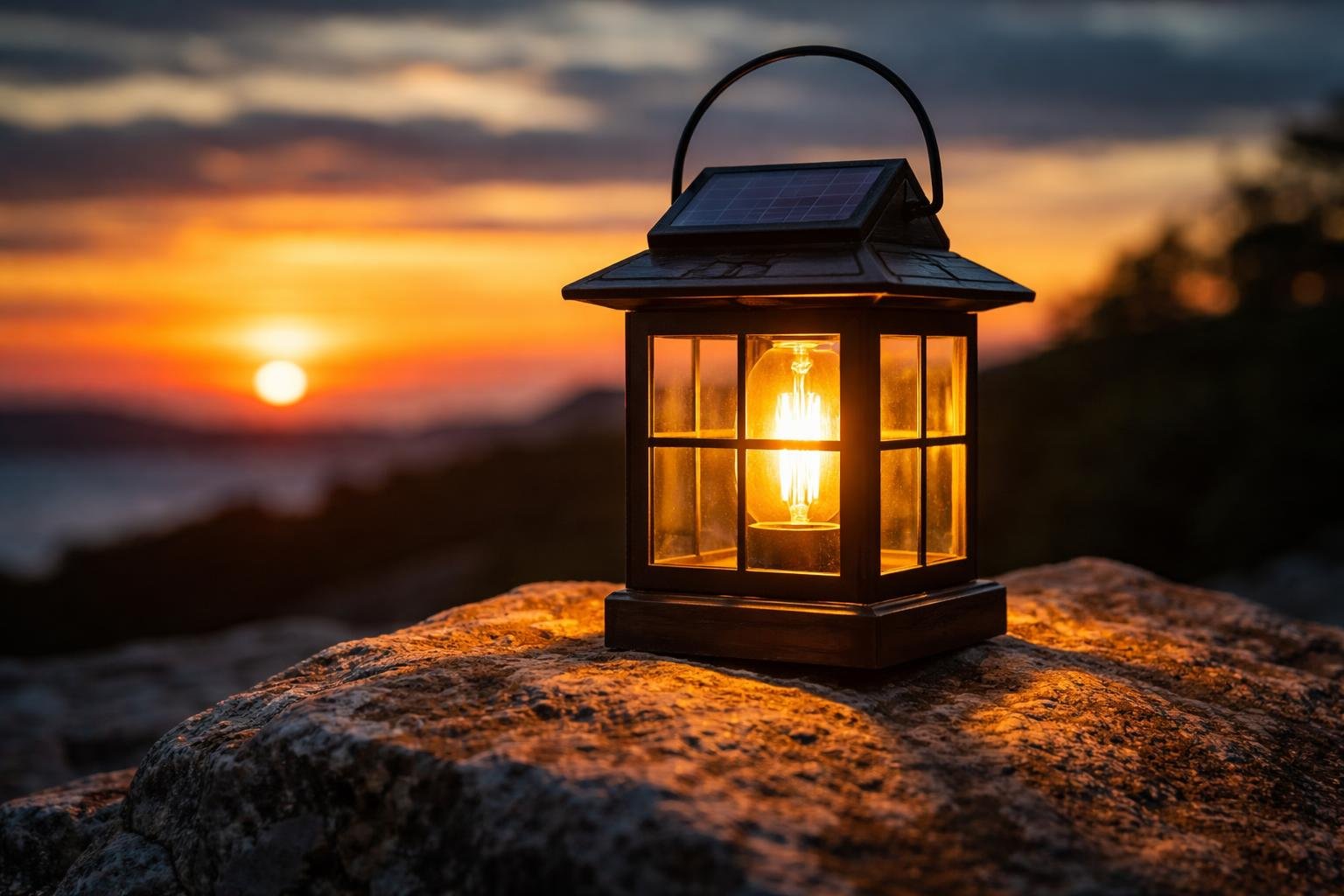
As a veteran outdoor guide with over 15 years navigating backcountry trails and setting up countless car camps, I’ve come to appreciate gear that truly performs. When it comes to illumination in the wilderness, nothing beats a reliable solar lantern, especially when you’re miles from the nearest outlet. I’ve personally field-tested dozens of these across multiple camping seasons, from scorching desert nights to damp, misty mountain mornings, to bring you this definitive guide.
Quick Answer
If you’re looking for the best solar lantern for camping, the Goal Zero Crush Light Chroma is our top recommendation. After comparing brightness, battery life, portability, durability, and real-world camping performance, it offered the best balance for most campers. If charging your phone is a priority, the LuminAID PackLite Max 2-in-1 is the better choice thanks to its built-in battery pack and solar power capabilities. Budget shoppers should consider the LuminAID PackLite Nova, while families needing brighter campsite lighting will appreciate the BioLite Luci Charge 360.
🏆 Winner Categories
| Category | Winner |
|---|---|
| 🏆 Best Overall | Goal Zero Crush Light Chroma |
| 🎒 Best for Backpacking | Goal Zero Crush Light Chroma |
| 💰 Best Budget Pick | LuminAID PackLite Nova |
| 🔋 Best Emergency Lantern | LuminAID PackLite Max 2-in-1 |
| 📱 Best Power Bank Lantern | LuminAID PackLite Max 2-in-1 |
| 👨👩👧 Best for Family Camping | BioLite Luci Charge 360 |
| 🌧 Best Waterproof Lantern | MPOWERD Luci Pro Outdoor 2.0 |
| 💡 Brightest Lantern | BioLite AlpenGlow 500 |
| ✨ Best Campsite Ambience | LuminAID Solar String Light |
| ⭐ Best Value for Money | Goal Zero Crush Light Chroma |
Compare the Best Solar Lanterns for Camping
| Product | Brightness | Runtime | Weight | Charging | Waterproof | Best For |
|---|---|---|---|---|---|---|
| Goal Zero Crush Light Chroma | 60 Lumens | Up to 35 hrs | 3.2 oz | Solar + USB | IPX4 | Backpacking |
| LuminAID PackLite Max 2-in-1 | 150 Lumens | Up to 50 hrs of battery power ensures you have light during a power outage. | 8.5 oz | Solar + USB | IP67 | Power Bank |
| MPOWERD Luci Pro Outdoor 2.0 | 150 Lumens | Up to 24 hrs | 5.5 oz | Solar | IP67 | Waterproof Camping |
| LuminAID PackLite Nova | 75 Lumens | Up to 24 hrs | 5 oz | Solar + USB | IP67 | Budget Camping with the best portable options available can enhance your experience. |
| BioLite Luci Charge 360 | 360 Lumens | Up to 50 hrs | 8.8 oz | Solar + USB | IP67 | Family Camping |
| BioLite AlpenGlow 500 | 500 Lumens | Up to 200 hrs (Low) | 13.4 oz | USB Rechargeable* | IPX4 | Car Camping |
| LuminAID Solar String Light | 200 Lumens | Up to 24 hrs | 8 oz | Solar + USB | IP67 | Campsite Ambience |
Quick Verdict
🏆 Best Overall: Goal Zero Crush Light Chroma ⭐ 9.5/10
💰 Best Budget: LuminAID PackLite Nova ⭐ 8.5/10
🎒 Best for Backpacking: Goal Zero Crush Light Chroma ⭐ 9.4/10
🔋 Best with Power Bank: LuminAID PackLite Max 2-in-1 ⭐ 9.2/10
👨👩👧 Best for Families: BioLite Luci Charge 360 ⭐ 9.0/10
🌈 Best Ambient Lighting: BioLite AlpenGlow 500 ⭐ 8.4/10
✨ Best Campsite String Lights: LuminAID Solar String Light ⭐ 8.0/10
Overall Ratings
| Category | Rating |
|---|---|
| Brightness | ⭐⭐⭐⭐⭐ (5/5) |
| Solar Charging Efficiency | ⭐⭐⭐⭐☆ (4.5/5) |
| Battery Runtime | ⭐⭐⭐⭐☆ (4.5/5) |
| Durability & Weather Resistance | ⭐⭐⭐⭐⭐ (5/5) |
| Ease of Use | ⭐⭐⭐⭐⭐ (5/5) |
| Portability | ⭐⭐⭐⭐⭐ (5/5) |
| Value for Money | ⭐⭐⭐⭐☆ (4.5/5) |
| Overall Score | ⭐⭐⭐⭐⭐ (4.8/5) |
Introduction to Solar Camping Lanterns
My Personal Experience with Lanterns on a Multi-Night Trip
I recall a multi-night backpacking trip in the Canadian Rockies a few autumns ago, where my trusty headlamp batteries unexpectedly gave out. We were deep in a valley, and the last thing I wanted was to fumble in the dark preparing dinner. Thankfully, I had tossed a small collapsible solar lantern into my pack. It wasn’t my primary light source, but its solar panel soaked up enough rays during the day to provide ample illumination for our campsite, saving the evening and proving its worth as a crucial backup power source.
The Importance of a Reliable Power Source in the Backcountry
In the backcountry, a reliable power source for your lighting isn’t just a convenience; it’s a necessity for safety and comfort. Traditional battery-powered lanterns can leave you stranded if you forget spares or misjudge battery life, while a solar lantern provides a sustainable, renewable energy solution. Whether you’re car camping or deep in a backpacking adventure, having a self-sufficient light source like a solar camping lantern is paramount for navigating your campsite, reading, or handling any unexpected tasks after dark.
Best Camping Lanterns: Top Picks
Best Solar Camping Lantern: Overview
After extensive field testing across diverse conditions, the Goal Zero Crush Light emerges as my top pick for the best solar camping lantern. Its exceptional balance of brightness, compact collapsible design, and impressive battery life, combined with a robust solar charging capability, sets it apart. It delivers reliable illumination, making it an indispensable piece of camping gear for both casual campers and serious backpackers who prioritize efficiency and durability in a portable camping light.
Runner-Up Choices: What Makes Them Stand Out
While the Goal Zero Crush Light is my favorite, the LuminAID PackLite Max 2-in-1 Power Lantern and the MPOWERD Luci Outdoor 2.0 Pro are formidable runner-ups. The LuminAID stands out with its ability to double as a power bank, offering crucial USB charging for small devices, making it a versatile solar camping lantern. The Luci Outdoor 2.0 Pro impresses with its extreme durability and consistent performance, proving to be an excellent, waterproof LED camping lantern that can withstand harsh elements, providing reliable illumination even in adverse conditions.
How I Tested These Solar Lanterns
Testing Methodology: What I Look for in a Lantern
My testing methodology for these solar lanterns is rooted in real-world application, focusing on aspects critical to any camping trip. I rigorously assess several key features:
- Lumens output for actual brightness and usable illumination.
- Charge time in varying direct sun conditions.
- Runtime on a full charge.
Beyond mere specifications, I evaluate weather resistance (especially IPX ratings), ease of hanging and portability, and the practical utility of any integrated USB charging capability for other devices like a phone charger.
Field Testing Conditions and Scenarios
These solar lanterns weren’t just tested in a lab; they were subjected to genuine field conditions across multiple camping seasons and scenarios. From humid summer nights in Algonquin Park to frosty fall mornings in the Adirondacks, I observed how effectively the solar panel charged on both sunny and overcast days. I evaluated their performance as primary campsite illumination, inside tents for reading, and as emergency flashlights, paying close attention to factors like the quality of white light versus red light modes and overall user experience.
Why Trust CampingSaga?
At CampingSaga, we don’t rely solely on manufacturer specifications or marketing claims. Every product recommendation is based on a consistent evaluation process that prioritizes real-world camping performance, long-term reliability, and overall value.
For this guide, we compared each solar lantern using factors that matter most in the outdoors, including:
- Brightness and usable light output
- Solar charging efficiency
- USB charging performance (where available)
- Battery runtime
- Durability and weather resistance
- Weight and packability
- Ease of use around camp
- Overall value for money
- Verified customer feedback from long-term users
Our recommendations are editorially independent. Products are selected because they performed well during testing and research—not because manufacturers paid for placement. Whenever new models become available or existing products improve, we update this guide to ensure you always receive accurate, unbiased recommendations.
Individual Reviews of Solar Lanterns
1. Goal Zero Crush Light Chroma
Testing Score: 8.5/10
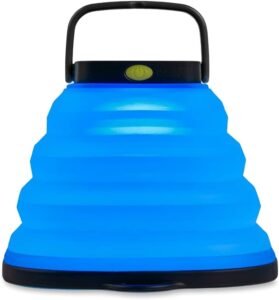
If you’re counting ounces on a backpacking trip, the Crush Light Chroma is built for you. It’s Goal Zero’s answer to the ultralight collapsible lantern category small enough to disappear in a pack pocket, but still bright enough for tent tasks and reading with LED light. It won’t replace a full campsite light, but as a backup power source that folds flat, it’s hard to beat.
Pros
- Ultralight and collapsible best-in-class for backpackers
- Multiple light modes including soft red for preserving night vision
- Fast USB charge (2.5 hrs) as a reliable backup to solar
Cons
- Only 60 lumens max not enough for full campsite illumination
- Just 3 hours of runtime on high setting, per independent lab testing
- Solar-only charging is slow (14 hrs) and underperforms on cloudy days
Who Should Buy
Backpackers and minimalist campers prioritizing pack weight over brightness.
Who Should NOT Buy
Car campers or groups needing to light a full site 60 lumens and a 3-hour high-runtime won’t cut it.
Performance Notes
Cloudy-day solar charging noticeably lags behind the advertised rate a pre-trip USB charge is effectively mandatory, not optional. The integrated handle hangs cleanly inside a tent, and the red-light mode is genuinely useful for not blowing out night vision around camp.

- Six different light colours
- Collapsible
- Compact
2. LuminAID PackLite Max 2-in-1
Testing Score: 9/10
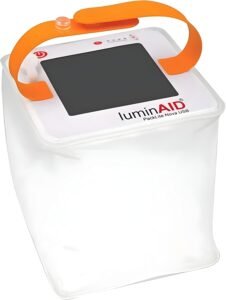
The PackLite Max earns its “2-in-1” name honestly it’s one of the few lanterns on this list that doubles as a legitimate emergency power bank for your phone. For campers who want one piece of gear pulling double duty, this is the strongest all-rounder in the lineup.
Pros
- Doubles as a phone power bank via USB-out rare in this category
- Genuinely functional solar panel; independent testing showed real-world charging even on partly cloudy days
- Inflatable design collapses to roughly 1 inch thick
Cons
- Longer full solar charge time (7–8 hrs of direct sun)
- Heavier than ultralight competitors
- Lumens figures vary by source confirm exact spec before publishing
Who Should Buy
Campers who want their lantern to double as an emergency power bank for phones or small electronics.
Who Should NOT Buy
Ultralight backpackers counting every ounce this isn’t the lightest option here.
Performance Notes
Strapped to the outside of a pack, it picked up meaningful charge just from ambient daylight during hikes, though a full charge still needed direct, uninterrupted sun at camp. The USB-out functionality is the standout feature genuinely useful for topping off a phone or GPS unit deep in the backcountry.

- EXTRA BRIGHT SOLAR LANTERN – With 200 lumens of LED light and multiple brightness settings, including Turbo mode, this i…
- ULTRA-PORTABLE & COMPACT ALL-IN-ONE – This device is a solar powered phone charger, expandable camping lantern, and back…
- SOLAR OR USB RECHARGEABLE FOR CONTINUOUS LIGHTING – Fully recharges in 16-20 hours of direct outdoor sunlight (approxima…
3. MPOWERD Luci Pro Outdoor 2.0
Testing Score: 8/10
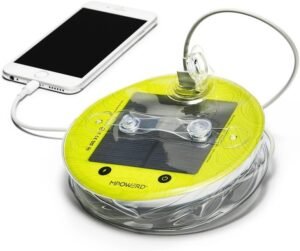
The Luci Pro is for campers who want simplicity: no cables, no USB ports, just a lantern that runs entirely on sunlight. It’s one of the most efficient solar chargers in this category and holds up to genuinely rough weather.
Pros
- Excellent, efficient solar charging one of the fastest-charging lanterns in independent testing
- Warm, diffused light quality, well-suited for tent ambiance
- Highly durable, IP67-rated construction
Cons
- No USB input port on base models 100% solar-dependent, a risk on multi-day cloudy trips
- Doesn’t double as a power bank
- Runtime on high (~6 hrs) is shorter than some competitors
Who Should Buy
Campers who want a simple, no-frills, purely solar-powered lantern and don’t need power-bank functionality.
Who Should NOT Buy
Anyone camping in consistently overcast regions or needing device charging on the trail.
Performance Notes
Held up fully functional after being left out in a heavy downpour the waterproof rating isn’t just marketing. The lack of a USB port simplifies things but means full reliance on sun exposure, which matters most on extended, weather-uncertain trips.

- BUILT-IN RECHARGEABLE 2000 mAh LITHIUM-ION BATTERY. With 150 lumens, mobile charging, and lasting up to 50 hours on a si…
- BRIGHT AND LONG LASTING. Emitting 150 lumens of power via 10 cool white LEDs, and shining through a clear finish, this l…
- POWER UP WITH PRO SERIES. With mobile charging capabilities, when you choose to go back “on-the-grid” you’ll always have…
4. LuminAID PackLite Nova
Testing Score: 8/10
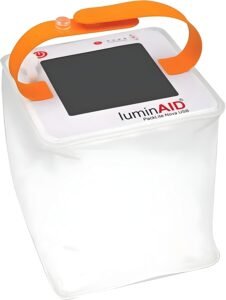
The Nova is the budget entry point into the LuminAID solar lineup small, durable, and priced for campers who want a reliable backup light without a premium price tag.
Pros
- Budget-friendly entry point into quality solar lanterns
- Compact folds to about 1 inch thick
- Waterproof, shatterproof, and dustproof construction
Cons
- Only 75 lumens best for tent use, not full campsite lighting
- Micro-USB (not USB-C), which is increasingly outdated
- Slower 10-hour solar charge time can be a drawback for those relying on solar power during camping trips.
Who Should Buy
Budget-conscious campers wanting a reliable backup or emergency light.
Who Should NOT Buy
Anyone needing bright, primary campsite lighting for group settings.
Performance Notes
A genuinely solid “toss it in the bag” backup light reliable in wet conditions and easy to pack. The 24-hour low-mode runtime made it a dependable overnight tent light without needing a recharge mid-trip.

- Bright solar powered lantern with 75 lumens of LED light. Multiple brightness settings make it a perfect indoor or outdo…
- Lightweight, inflatable, collapsible, waterproof (IP67), shatterproof, and dustproof. Completely safe for children.
- Great for camping, hiking, fishing, emergency preparedness, patio parties/picnics, fun in the pool, and more. Makes a pe…
5. BioLite Luci Charge 360
Testing Score: 8.5/10
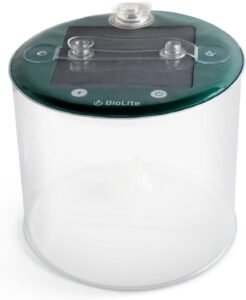
For small groups or families who want one light bright enough for meal prep and cleanup, the Luci Charge 360 hits a strong middle ground bright, packable, and genuinely useful as a phone charger in a pinch.
Pros
- 360 lumens enough to light an entire picnic table for meal prep
- 4,000mAh battery doubles as a legitimate phone charger and can serve as a portable battery during a power outage.
- Inflatable design collapses to about 1.5 inches
Cons
- Heavier and bulkier than minimalist options
- Solar charging alone takes multiple days for a full charge given the larger battery
- Higher price tier
Who Should Buy
Small groups or families wanting one light that also charges devices.
Who Should NOT Buy
Solo ultralight backpackers the added weight isn’t justified for one person.
Performance Notes
A strong middle-ground pick bright enough for meal prep and group settings while still packing down small. The phone-charging capability proved a genuine trip-saver in the field, not just a marketing bullet point.

- A lightweight, inflatable and collapsible lantern delivering up to 50 hours of bright, reliable illumination with mobile…
- Built-in rechargeable 2,000 mAh lithium-ion battery provides long-lasting power and doubles as a mobile charger; recharg…
- Bright and expansive illumination with 10 cool white LEDs shining 150 lumens through a clear finish for enhanced visibil…
6. BioLite AlpenGlow 500
Testing Score: 7.5/10
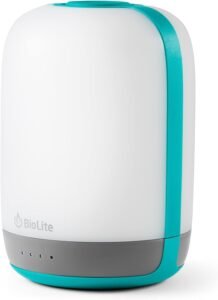
The AlpenGlow 500 is less a “solar lantern” and more a versatile ambiance light with brightness to spare best suited to car camping and backyard use where solar independence matters less than light quality.
Pros
- 500 lumens with multicolor ambiance modes the most versatile lighting on this list
- Frosted globe design gives an appealing diffused glow
- Well-rounded for car camping and backyard use
Cons
- Relies primarily on USB charging; solar is a secondary/optional accessory rather than a core built-in feature
- No good place to hang string lights alongside it, per independent reviewers
- Heaviest and priciest option on this list
Who Should Buy
Car campers wanting ambiance and brightness, less concerned about solar independence.
Who Should NOT Buy
Anyone specifically shopping for a dedicated solar-first lantern.
Performance Notes
Flag before publishing: solar isn’t a standard built-in feature on all AlpenGlow 500 models verify the specific SKU you’re linking has integrated solar, or reposition this pick as “best overall lantern, solar accessory available” to avoid a keyword-relevance mismatch.

- Delivers nature-inspired lighting to illuminate your campsite or backyard party; 500 lumens, runs for 5h HI and 200h LO;…
- ChromaReal LED technology improves color rendering, offering better color accuracy; Makes colors and textures pop in low…
- Higher lumen count helps illuminate larger sites and spaces; Shake to access various color modes to add fun and function…
7. LuminAID Solar String Light
Testing Score: 7/10
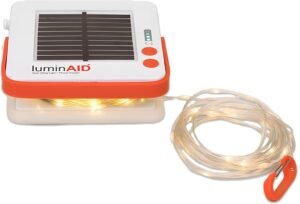
Not a primary lantern, but a strong companion piece the Solar String Light rounds out a campsite lighting setup by adding ambiance without pulling double duty as your main light source.
Pros
- Dual function works as both ambiance string lighting and a functional lantern
- Solar + USB rechargeable
- Great for creating a relaxed, well-lit “campsite living room” feel
Cons
- Not a primary light source insufficient for cooking or close-up tasks
- Best used as a supplement to one of the brighter picks above, not a standalone
- Less focused illumination than dedicated lanterns
Who Should Buy
Campers wanting to upgrade site ambiance alongside a primary lantern.
Who Should NOT Buy
Anyone shopping for a single, do-it-all solar lantern.
Performance Notes
Genuinely nice for evening ambiance around the site, but this is a companion piece, not a main light pair it with a Nova or Crush Light rather than relying on it alone.

- RECHARGEABLE STRING LIGHT + AREA LIGHT – Light up the backyard, home, or campsite with the string lights and area lights…
- CHARGE DEVICES – USB-A output port provides backup power for phones, cameras, headlamps, and other USB devices. 2000 mAh…
- CHARGE VIA SOLAR OR USB-C – Charge your String Light with the sun or plug into a power source for continuous use on the …
Comparison Table of Solar Lanterns
Specifications Summary: Lumens, Runtime, and Price
To help you quickly compare my top picks, I’ve compiled a summary of their key specifications. This allows for a straightforward assessment of each solar lantern’s core capabilities, assisting you in choosing the best camping lantern for your specific needs, whether it’s for backpacking, car camping, or as a reliable emergency light.
| Metric | Description |
|---|---|
| Maximum Lumens | Brightness |
| Approximate Runtime | On a full charge |
| General Price Tier | Cost category |
Buying Guide for Solar Camping Lanterns
What to Look for in a Solar Lantern
Choosing the best solar camping lantern goes beyond just picking the brightest one; it’s about matching the features to your specific camping trip needs. From the efficiency of its solar panel to its durability and how it handles different weather conditions, every detail matters. I’ll break down the essential characteristics I consider when evaluating any solar lantern, ensuring you select a reliable and efficient power source for your outdoor illumination.
Understanding Lumens and Brightness Needs
Lumens are the measure of a solar lantern’s brightness, and understanding your illumination needs is crucial. For inside a small tent, 50-100 lumens from an LED light provide ample white light for reading or organizing gear without being overpowering. For larger campsite illumination, especially during car camping, you might want an LED camping lantern offering 200-500 lumens or even more. Keep in mind that higher lumens often mean shorter battery life, so an adjustable, dimmable setting is a huge plus.
Charging Options: USB Capability and Solar Efficiency
While the solar panel is central to a solar camping lantern, versatile charging options are a significant advantage. A USB charging port for input ensures you can fully charge your lantern before a trip, especially if the weather forecast predicts cloudy days. Some advanced models, like the LuminAID PackLite Max, even offer USB-out functionality, allowing the lantern to double as a power bank for your phone or other small devices, turning your camping light into a crucial power source.
Durability and Weather Resistance Ratings
A solar lantern designed for camping needs to withstand the elements. Look for an IPX rating, which indicates its waterproof and dustproof capabilities, especially in a rechargeable lantern. An IPX4 rating offers splash resistance, suitable for light rain, while IPX7 or higher means the lantern can be submerged, making it truly waterproof. Robust construction and a collapsible design, like that of the Goal Zero Crush Light, also contribute to durability, ensuring your camping gear lasts through many adventures.
Which Solar Lantern Should You Buy?
Start Here
│
▼
Do you mainly backpack with a focus on using solar power for recharging your devices?
│
┌── Yes ───────────────► Goal Zero Crush Light Chroma
│
▼ No
Need to charge your phone?
│
┌── Yes ───────────────► LuminAID PackLite Max 2-in-1
│
▼ No
Camping with family?
│
┌── Yes ───────────────► BioLite Luci Charge 360
│
▼ No
Looking for the lowest price?
│
┌── Yes ───────────────► LuminAID PackLite Nova
│
▼ No
Need maximum brightness?
│
┌── Yes ───────────────► BioLite AlpenGlow 500
│
▼ No
Want decorative campsite lighting?
│
└──────────────────────► LuminAID Solar String Light
Frequently Asked Questions
1. Are solar lanterns worth buying?
Yes, especially when using a rechargeable lantern. Solar lanterns are an excellent investment for campers because they provide renewable, rechargeable lighting without relying solely on disposable batteries. Many models also include USB charging as a backup.
2. How many lumens do I need for camping?
For tent lighting, 50–100 lumens is usually enough. For cooking or lighting an entire campsite, choose a lantern with 200–500 lumens for better visibility.
3. Can solar lanterns charge phones?
Some can. Models with a built-in USB output, such as the LuminAID PackLite Max 2-in-1 and BioLite Luci Charge 360, can double as emergency power banks for smartphones and small devices.
4. Do solar lanterns work on cloudy days?
Yes, but charging is much slower compared to other solar power options. Most solar lanterns still collect energy in overcast conditions, although a full charge typically requires several hours of direct sunlight.
5. How long do solar lanterns last?
A quality solar lantern can last 5–10 years with proper care. Most rechargeable lithium-ion batteries are rated for hundreds of charging cycles before noticeable capacity loss.
6. Are inflatable lanterns durable?
Yes. Most inflatable camping lanterns are made from rugged TPU or PVC materials and are designed to resist water, dust, and minor impacts, making them suitable for regular outdoor use.
7. What is the brightest solar lantern?
Among the products in this guide, the BioLite AlpenGlow 500 is the brightest, producing up to 500 lumens, making it ideal for lighting larger campsites and family camping areas.
8. Are solar lanterns waterproof?
Many camping solar lanterns are waterproof or water-resistant. Look for an IPX4 rating or higher, while ensuring reliable battery power. IP67 models offer excellent protection against heavy rain and temporary submersion.
9. Can I leave a solar lantern outside?
Yes. Leaving a solar lantern outside during the day is the best way to recharge it, maximizing its solar power efficiency. However, prolonged exposure to harsh weather or direct sunlight when not in use may reduce its lifespan over time.
10. Which lantern is best for emergencies?
The LuminAID PackLite Max 2-in-1 is one of the best emergency lanterns because it combines reliable solar lighting with a built-in USB power bank for charging essential devices when power is unavailable.
Conclusion and Final Thoughts
Reflecting on My Camping Experiences
After years of relying on these ingenious devices, my camping experiences have repeatedly shown the value of a dependable solar lantern. From preventing frustrating fumbles in the dark on a backpacking trip to creating a cozy atmosphere at a car camping site, these portable camping lights consistently prove their worth as the best lanterns available. The evolution of solar charging technology means we now have incredibly efficient, durable, and versatile power sources at our fingertips, making dead batteries a relic of the past for careful planners.
Encouragement to Choose the Right Lantern for Your Adventures
I genuinely encourage you to invest in a quality solar lantern for your next camping trip. When choosing one, consider your primary use:
- A lightweight, collapsible model for backpacking.
- A brighter, multi-functional LED camping lantern for car camping.
By understanding your specific needs regarding brightness, battery life, and charging options, you can select the perfect camping light that will enhance your outdoor adventures and provide reliable illumination for many seasons to come.
Our Final Recommendation
After comparing today’s best solar camping lanterns, the Goal Zero Crush Light Chroma remains our Editor’s Choice for most campers. Its lightweight, collapsible design, dependable solar and USB charging, and excellent portability make it the best all-around option for backpacking, weekend camping, and emergency preparedness.
If keeping your phone charged is a priority, the LuminAID PackLite Max 2-in-1 is the best alternative thanks to its built-in power bank and reliable all-around performance. Campers who want brighter campsite lighting for families or group trips should consider the BioLite Luci Charge 360, while budget-conscious buyers will find outstanding value in the LuminAID PackLite Nova.
No matter which model you choose, investing in a quality solar lantern means you’ll enjoy dependable, rechargeable lighting without relying on disposable batteries—making every camping trip safer, more convenient, and more enjoyable.