
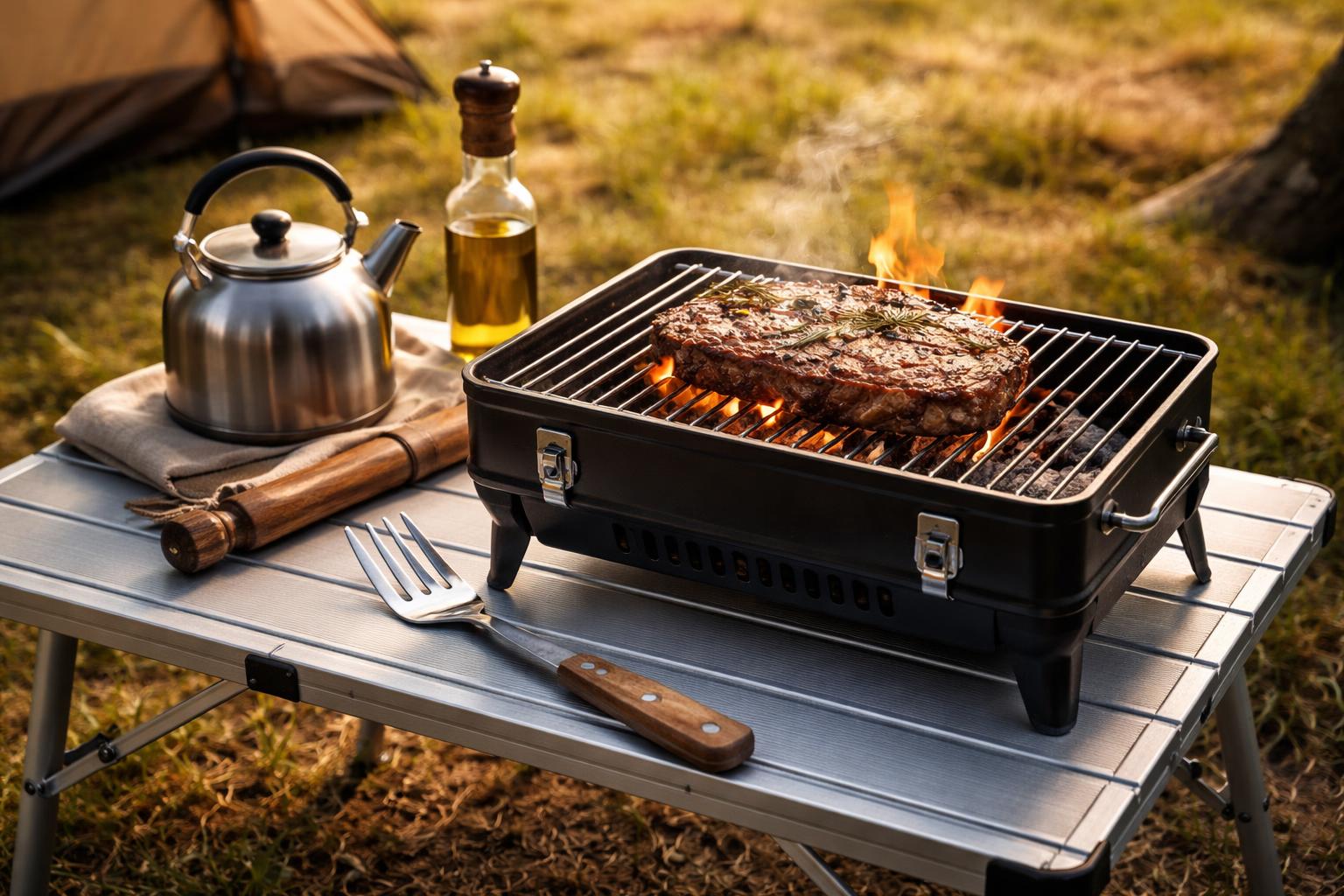
As a camping guide with over 15 years in the outdoors, I’ve cooked on more portable grills than I can count, from three-season car camping trips to backcountry basecamps and Sunday tailgate parties in a parking lot. If you’re looking for a camping grill that actually holds up to real use, this guide will help you find the best portable grill for how you camp, not just what looks good in a product photo. I tested camping grills across every fuel type, gas grill, charcoal, and pellet, so you don’t have to guess.
Quick Verdict: The Best Portable Grill for Every Camper
If you only read one section, start here. After testing these portable grills across different camping, tailgating, and outdoor cooking scenarios, I found that each model has a clear strength depending on how and where you camp.
🏆 Best Overall: Weber Q1200
The Weber Q1200 is my top choice for most campers. It’s compact, dependable, and easy to transport, while its porcelain-enameled cast iron grates retain heat well and deliver excellent searing performance. If you want a portable gas grill that’s simple to use and consistently performs well, this is the model I’d recommend first.
👨👩👧👦 Best for Families & Groups: Weber Traveler
With 320 square inches of cooking space, an integrated wheeled cart, and a convenient one-person setup, the Weber Traveler is an excellent choice for family camping trips and larger groups. It provides plenty of room to cook multiple foods at once while remaining relatively easy to move around a campsite.
💰 Best Budget Tabletop Grill: Cuisinart 14-Inch Portable Charcoal Grill (CCG190RB)
If keeping costs low is your priority, the Cuisinart 14-Inch offers impressive value in a compact package. It typically sells for under $40 and can drop closer to $20 during sales, while its charcoal design delivers the traditional smoky flavor many campers want from an outdoor grill.
🔥 Best Charcoal Grill: Weber Go-Anywhere Charcoal Grill
The Weber Go-Anywhere is my top charcoal choice for campers who want authentic charcoal flavor without bringing along a bulky grill. Its compact design, durable construction, and practical transport features make it particularly appealing for car campers and tailgaters who prefer charcoal over propane.
🏕️ Best Fire Pit & Grill Combo: Snow Peak Takibi Fire & Grill
The Snow Peak Takibi Fire & Grill takes a different approach by combining a portable fire pit with a functional grilling setup. Its stainless-steel construction and modular design make it a premium choice for campers who want one versatile centerpiece for both cooking and relaxing around a campfire. The tradeoff is its higher price and heavier weight.
🥩 Best Pellet Grill: Traeger Tailgater
For campers who prioritize smoking and low-and-slow cooking, the Traeger Tailgater is the standout option. Its pellet-fueled design provides a different cooking experience from traditional propane and charcoal grills, making it especially well suited for smoked ribs, chicken, and other barbecue-style meals at car campsites or RV-friendly locations.
How I Rank These Portable Camping Grills
Every grill on this list went through the same evaluation, scored across five weighted categories so the ranking isn’t just a gut feeling:
- Heat performance (30%): how fast it reaches temperature, how evenly it holds heat, and how it handles wind
- Portability (25%): actual carry weight, folded dimensions, and how easy to carry it is when transporting your grill from the car to the campsite
- Ease of use and cleanup (20%): ignition reliability, how easy to clean the grill grate is, and ash or grease disposal
- Durability and build quality (15%): materials, hinges, latches, and how the grill is designed to hold up over repeated trips
- Value (10%): price relative to what you get in cooking area and build quality
I test each grill across at least three separate outings, in mixed weather, so a single lucky calm-weather cook doesn’t inflate a score. These aren’t grills like the Cuisinart that only get a quick backyard test and a photo, every model here made an actual camping trip.
Comparison Table: All 7 Portable Camping Grills
| Grill | Fuel Type | Cooking Area | BTU | Weight | Price Range | My Rating | Best For |
|---|---|---|---|---|---|---|---|
| Weber Q1200 | Propane (gas grill) | 189 sq in | 8,500 | ~30 lbs | $279 | 4.7/5 | Best overall, solo to 2-person |
| Weber Traveler | Propane | 320 sq in | 13,000 | ~65 lbs (cart included) | $400–$550 | 4.6/5 | Families, easiest setup |
| Coleman RoadTrip 285 | Propane | 285 sq in | 20,000 | ~54 lbs | $250–$425 | 4.5/5 | Groups, tailgate parties |
| Weber Go-Anywhere Charcoal Grill | Charcoal | 160 sq in | ~6,500 (charcoal equivalent) | ~12 lbs | $70–$100 | 4.4/5 | Charcoal purists, compact grill |
| Cuisinart 14-Inch Portable Charcoal Grill | Charcoal | 150 sq in | N/A (charcoal briquettes) | 2 lbs | $20–$40 | 4.0/5 | Budget campers, best tabletop pick |
| Snow Peak Takibi Fire & Grill | Wood/Charcoal | Variable, fire pit style | N/A | ~30 lbs | $400–$450 | 4.6/5 | Premium fire pit and grill combo |
| Traeger Tailgater | Wood pellet | 300 sq in | N/A (electric ignition) | ~62 lbs | $350–$400 | 4.3/5 | Smoking, low-and-slow cooking |
How These Compare to Other Grills on the Market
It’s easy to get lost among the sheer number of portable grills on the market right now, so it’s worth explaining what got left off this list. I ruled out several other grills on the market that looked good in photos but didn’t hold up once I actually used them outdoors. A few were style-over-substance, a trendy style portable grill with thin metal that dented on the first trip. Others were a larger portable model marketed as packable that, in practice, weighed as much as a full grill and took two people to load.
The largest grill here by cooking area, the Weber Traveler, still packs into its own wheeled cart in under two minutes. The heaviest single-unit option, the Traeger Tailgater, still folds its legs flat for a truck bed. If a grill packs down poorly, rattles apart in a trunk, or needs tools to disassemble, it didn’t make the final seven, no matter how good the portable package looked in an online listing.
The 7 Portable Camping Grills, Reviewed
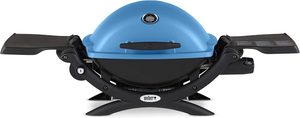
Weber Q1200 Liquid Propane Portable Gas Grill, Blue: Best Overall Portable Gas Grill
Key Specs
| Spec | Detail |
|---|---|
| Product | Weber Q1200 Liquid Propane Portable Gas Grill, Blue |
| Fuel | Propane (16.4 oz disposable LP cylinder; optional adapter hose available for a 20-lb tank) |
| Cooking area | 189 sq in |
| Burner output | 8,500 BTU, single burner |
| Grates | Porcelain-enameled cast iron |
| Construction | Lightweight cast-aluminum body |
| Ignition | Electronic push-button |
| Extras | Built-in lid thermometer, folding side tables, built-in catch pan |
The Weber Q1200 Liquid Propane Portable Gas Grill, Blue is the portable gas grill I’ve packed on more trips than any other on this list. One burner sounds limiting until you actually cook on it: the cast iron grates hold heat evenly enough that I can sear a couple of steaks and then drop straight to indirect heat for vegetables without swapping equipment. The electronic ignition has never failed to light on the first try for me, including at elevation and in a stiff breeze off a lake. The compact grill body also means it doubles easily as a backyard grill when it’s not on a camping trip.
Pros
- Lights on the first push, every time, in wind or cold
- Cast iron grates hold heat and produce real sear marks
- Compact grill surface fits in a trunk without eating your whole cargo space
- Built-in thermometer means you’re not guessing at temperature
Cons
- 189 sq in is tight once you’re cooking for four or more
- Runs on small propane canisters, so you’ll want to pack a spare
Best For: Solo campers, couples, or anyone who wants one dependable grill for most trips.
Who Should Skip This: Families of four or more who need a larger cooking area in one pass.

- The Blue Weber Q1200 Travel Grill features porcelain-enameled, cast-iron cooking grates; Grates offer superior heat rete…
- 8,500 BTU Burner: Provides robust level of heat output, making outdoor grill highly versatile; Suitable for high-heat se…
- Electronic Push Button Ignition System: Designed for convenience and reliability, the advanced ignition system included …
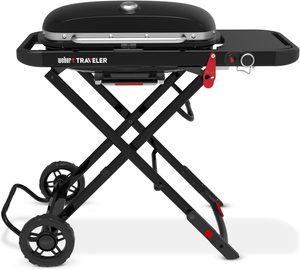
Weber Traveler: Best Portable Grill for Families
Key Specs
| Spec | Detail |
|---|---|
| Fuel | Propane (16.4 oz canister) |
| Cooking area | 320 sq in |
| Burner output | 13,000 BTU |
| Grates | Porcelain-enameled |
| Setup | One-person, roughly 15 minutes |
| Extras | Built-in wheeled cart, side table |
The Traveler is built around one idea: portability shouldn’t mean giving up a large cooking area. Assembly is genuinely a one-person job. You pop the handle, step on the leg, lift, and lock, and the whole thing rolls on its own wheels. Once you’re cooking, the 320 square inches of grill surface is enough to handle burgers, corn, and a couple of chicken thighs at the same time without playing grill Tetris. Among portable options, this is about as close to a full-size grill experience as you’ll get without transporting your grill on a hitch.
Pros
- Largest cooking area of any grill on this list at 320 sq in
- Genuinely easy one-person setup and breakdown
- Built-in cart makes it easy to roll from car to campsite
Cons
- Heaviest grill here when you include the cart, less ideal for backcountry or minimalist trips
- Higher price point than most portable grill options
Best For: Car camping families and anyone who regularly cooks for a group.
Who Should Skip This: Backpackers or anyone prioritizing a lightweight, minimalist setup.
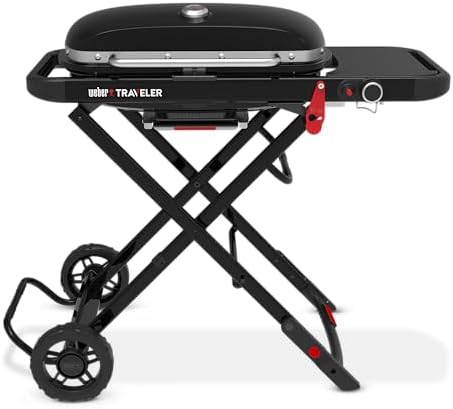
- 40″ wide fits in most SUVs for camping, picnics, outdoor events, and tailgates.
- Easy to raise and lower with 1 hand, simply press the lever.
- Lid locks automatically when folded down, keeping it secure for easy transport.
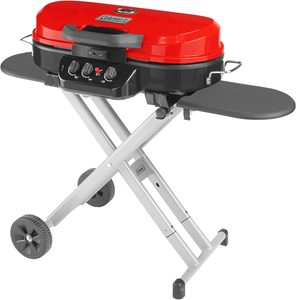
Coleman RoadTrip 285: Best Portable Propane Grill for Groups and Tailgate Parties
Key Specs
| Spec | Detail |
|---|---|
| Fuel | Propane (16.4 oz canister, adapter hose available for a larger 20-pound propane tank) |
| Cooking area | 285 sq in |
| Burner output | 20,000 BTU across 3 burners |
| Grates | Interchangeable |
| Ignition | Instastart push-button |
| Extras | Built-in thermometer, two side tables |
Three independently adjustable burners is what sets the RoadTrip 285 apart from a traditional propane grill. I can run one burner low for something delicate and crank another to full heat for a sear, all on the same grill. The stand-up design with wheels means no bending over a tabletop grill, which matters more than people expect after a long day of setting up camp. If you’re hosting a bigger tailgate party, an adapter hose lets you run this off a full 20-pound propane tank instead of burning through small canisters.
Pros
- Three burners give real independent temperature control
- Instastart ignition and easy to clean grate make it low-maintenance
- Highest total BTU output of any grill here, good in cold weather
Cons
- Bulkier than smaller portable grill options, takes more trunk space
- Stand-up design means it’s not as compact for backcountry use
Best For: Family camping trips, tailgate parties, and anyone who wants full-size grill performance in a portable shell.
Who Should Skip This: Minimalist or ultralight campers who need something that packs down small.

- Grilling Power: Offers up to 20,000 total BTUs
- 3 Adjustable Burners: Improved burner technology for more precise temperature control
- Large Grilling Area: A spacious 285 sq. in. cooks a variety of foods at once
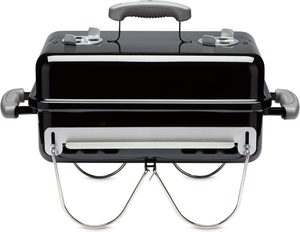
Weber Go-Anywhere Charcoal Grill: Best Charcoal Grill for Camping
Key Specs
| Spec | Detail |
|---|---|
| Fuel | Charcoal (briquettes or lump charcoal) |
| Cooking area | 160 sq in |
| Grates | 2-piece cooking grate |
| Vents | 2 lid dampers, 2 side vents |
| Legs | Pivot to lock lid for transport |
| Weight | ~12 lbs |
This is the grill for people who believe charcoal flavor is worth the extra effort over a gas grill. The rectangular grill body is genuinely efficient for packing, and everything you need, tools, a compact chimney starter, drip trays, fits inside the grill itself when it’s closed and latched. The 2-piece grate lets you add more charcoal briquettes mid-cook or shift coals to one side for indirect heat, which is a small feature that makes a real difference for anything beyond straight-up burgers. It’s easily portable in a way that some larger charcoal models simply aren’t.
Pros
- Real charcoal flavor in a genuinely compact grill, easy to carry package
- Everything nests inside for storage, no loose parts rattling around
- Pivoting legs lock the lid shut for transport, one of the better latch designs I’ve tested
Cons
- Charcoal means more setup and cooldown time than propane
- Smaller cooking area limits you to 2 to 4 people at once
Best For: Charcoal purists who want a compact grill for car camping or tailgating.
Who Should Skip This: Anyone who wants to be eating within 10 minutes of arriving at camp.

- Compact, lightweight charcoal grill for grilling on the go
- Efficient rectangular design is easy to carry, pack, and store
- Spacious grilling area perfect for cooking for 2-4 people
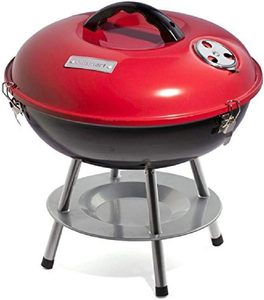
Cuisinart 14-Inch Portable Charcoal Grill: Best Tabletop Grill on a Budget
Key Specs
| Spec | Detail |
|---|---|
| Fuel | Charcoal |
| Cooking area | 150 sq in, chrome-plated grate |
| Weight | 2 lbs |
| Dimensions | 14 x 14 x 15 in |
| Extras | Dual venting system, 3 lid locks, enamel-coated firebox |
At 2 pounds, this is the lightest grill on this list by a wide margin, and it usually runs under $40 retail with frequent sales dropping it closer to $20. This cuisinart portable charcoal grill is what I’ve packed for last-minute picnics and quick overnight trips where I didn’t want to deal with a full setup. The dual venting system gives you more temperature control than the price tag suggests, and the three lid locks mean it travels without popping open in the trunk. If you’re testing whether portable grilling is even worth it before investing in something larger, this smaller grill is the cheapest real answer.
Pros
- Lightest and cheapest grill on this list by a large margin
- Dual vents give real temperature control for the price
- Three lid locks keep it secure during transport
Cons
- Small 150 sq in cooking area limits you to 2 people at most
- Lighter-gauge materials mean it won’t last as many seasons as the Weber options
Best For: Budget-conscious campers, first-time buyers, or anyone who wants a backup grill.
Who Should Skip This: Anyone cooking for more than two people regularly.

- SPACIOUS COOKING: This small charcoal grill features a 196 sq. in. chrome-plated grate resists rust and makes cleaning q…
- DUAL VENTS: Adjustable vents offer precise temperature management for low-and-slow or high-heat grilling.
- PORTABLE & LIGHT: Weighing only 4 lbs., this mini grill is perfect for camping, tailgating, and small outdoor spaces.
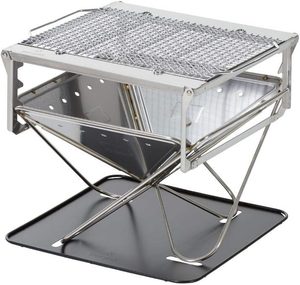
Snow Peak Takibi Fire & Grill: Best Fire Pit and Grill Combo
Key Specs
| Spec | Detail |
|---|---|
| Fuel | Wood or charcoal |
| Construction | Stainless steel, 5-piece modular set |
| Includes | Grill net, grill bridge, pack-and-carry fireplace, baseplate, carrying case |
| Weight | Approximately 30 lbs |
| Setup | 4-section assembly |
The Takibi is different from everything else on this list because it’s not just a grill, it’s a fire pit that converts into a grill. The stainless steel build feels like it’s made to be handed down rather than replaced. It packs into a canvas bag with over-the-shoulder straps that help distribute the weight, and setup only requires assembling four sections before you’re cooking over an open flame. This is one of the few camping grills that doubles as the evening’s entertainment once dinner is done.
Pros
- Doubles as a fire pit and a grill, genuinely useful for evening ambiance plus cooking
- Stainless steel construction built for decades of use, not just a few seasons
- Leftover coals dump easily into an existing fire ring for cleanup
Cons
- Heaviest and most expensive option on this list
- Multi-piece design takes more thought to pack than a single-unit grill
Best For: Campers who want a fire pit and grill combo they’ll use for years, and who don’t mind the extra weight.
Who Should Skip This: Anyone on a budget or prioritizing lightweight, minimal gear.

- VERSATILE – The Takibi Fire and Grill is an easy-to-use, lightweight, foldable, and packable fireplace and grill. Perfec…
- DURABLE – Stainless Steel built for a lifetime of use. Packable, portable, and modular. Fireplace and bridge are made of…
- INCLUDED – five-piece set includes Grill Net, Grill Bridge, Pack, Carry Fireplace, Baseplate, and Carrying Case. Quick s…
Traeger Tailgater: Best Pellet Grill Option for Smoking
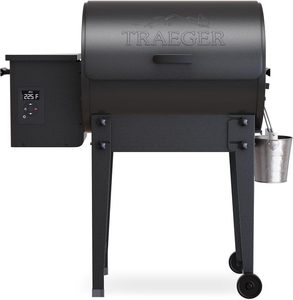
Key Specs
| Spec | Detail |
|---|---|
| Fuel | Wood pellets, electric ignition |
| Cooking area | 300 sq in |
| Legs | Foldable |
| Weight | ~62 lbs |
| Capacity | About a dozen half-pound burgers, or a rack or two of ribs |
The Tailgater is the only pellet grill option on this list, and it earns its spot because nothing else here can produce a genuinely smoked rack of ribs or a batch of smoked chicken thighs at a campsite. It trims down the size of Traeger’s full-size pellet grills while keeping the fold-up legs that make it possible to load into a trunk or truck bed. Because it runs on electric ignition, it’s not an indoor grill and it’s not fully off-grid either, you’ll want access to a power source, which makes it a better fit for car camping or RV sites than truly remote camping.
Pros
- Only grill here capable of real low-and-slow smoking
- 300 sq in of cooking space, enough for a full family meal or party-sized batch
- Foldable legs make it genuinely truck-bed portable
Cons
- Requires electricity, which limits where you can realistically use it
- Heaviest single-unit grill on this list after the Traveler with its cart
Best For: Car campers and RV travelers who want smoked food, not just grilled.
Who Should Skip This: Anyone without reliable power access at their campsite, or backcountry campers.

- Ultimate Wood-Fired Flavor, No Gas or Charcoal – The Traeger Tailgater 20 is a portable wood pellet grill that delivers …
- Precision Temperature Control from 180-450°F – Equipped with a Digital Arc Controller, this pellet smoker offers precise…
- Portable Design – Whether tailgating, camping, or at a picnic, the Tailgater’s foldable legs make it easy to transport. …
Cast Iron Grill Grates vs. Standard Grates: Does It Matter?
Not every cooking surface on this list is built the same. A cast iron grill grate, like the one on the Weber Q1200, holds heat longer and produces a deeper sear than a lighter chrome-plated grill top. That difference matters most when you want two separate zones running at a different temperature at the same time, hot enough on one side for a sear, cooler on the other for something delicate like fish or vegetables.
If you’re new to best camping cookouts and trying to decide whether grate material is worth caring about, the honest answer is: yes for searing steaks or burgers, less so for basic hot dogs or reheating. It’s also worth noting that none of these are an electric grill in the household sense. Unlike an indoor electric grill that plugs into a wall outlet, every model on this list runs on propane, charcoal, or wood pellets, which is exactly what makes them genuinely portable in the first place.
The Tested Camping Grills: How I Test Portable Grills in the Field
I didn’t test these in a backyard and call it a day. Every one of these tested camping grills went to an actual campsite, tailgate, or backcountry basecamp, and I ran each one through the same core checklist across at least three separate outings.
Wind and weather. Camping weather is rarely calm and 75 degrees. I specifically tested each grill in breezy conditions and a couple of light rain sessions, watching whether propane flames struggled to stay lit and whether charcoal grills lost significant heat when the wind picked up. The Weber Q1200’s electronic ignition held up the best in wind, while the Cuisinart’s smaller firebox lost heat fastest in a stiff breeze.
Cook time and consistency. I timed how long each grill took to reach a temperature suitable for searing, then tracked how evenly that heat held across a full cook, from simple burgers to thicker cuts like a bone-in chicken thigh.
Setup and breakdown. I timed assembly and teardown for each grill on its first use and again on a repeat trip, since a grill that’s fast to set up once you know it but confusing the first time isn’t actually convenient in the field.
Cleanup. After each cook, I evaluated how easy the grill grate was to clean, whether a removable grill plate or ash tray made disposal simple, and whether any parts required extra scrubbing tools I wouldn’t normally pack.
This isn’t a lab test. It’s the same kind of evaluation any experienced camper does instinctively after a few seasons of grilling we tested ourselves, just written down and made consistent across all seven grills so the comparison is fair.
Grill Safety: What You Need to Know Before You Cook
This is the section I don’t skip, even though it’s not the fun part.
Never operate a grill inside a tent, screen room, vehicle, camper, or any enclosed or partially enclosed space. None of these are indoor grills, and that applies to propane, charcoal, and wood pellet models equally. Combustion produces carbon monoxide, a colorless and odorless gas that builds up in enclosed spaces and can cause unconsciousness or death without any warning smell or symptom. A screen room’s mesh walls do not provide enough ventilation to disperse carbon monoxide safely. Carbon monoxide poisoning is one of the leading causes of camping-related fatalities every year, and it’s entirely preventable.
A few other basics worth repeating:
- Always set up your grill on stable, level, non-flammable ground, away from tents, dry brush, and overhanging branches
- Keep a small fire extinguisher or a bucket of water nearby, especially with charcoal or wood
- Let charcoal briquettes and wood ash cool completely, ideally overnight, before disposing of them, and never dump hot ash directly into a trash bag or onto dry ground
- Check propane tank and hose connections for leaks before every trip using a simple soap-and-water test on the fittings
- Never leave a lit grill unattended, particularly around kids or pets at a campsite
None of this should scare you off cooking outdoors. It just needs to be part of the routine, the same way you’d check your tent stakes or your headlamp batteries.
Understanding BTU: What It Actually Means for Your Cooking
BTU stands for British Thermal Unit, and on a grill it measures how much heat the burner can produce per hour. Here’s the part most buying guides skip: a higher BTU number does not automatically mean a better grill, or that a grill is designed to cook better food.
What actually matters is BTU relative to cooking area. A grill with 8,500 BTU across 189 square inches, like the Q1200, is putting real, concentrated heat onto a compact grill surface. A grill with 20,000 BTU across 285 square inches, like the Coleman RoadTrip 285, is spreading more total heat across a larger cooking area, which is why it can run three independently controlled burners without any one zone running cold.
In practice, BTU output matters most in two situations: cold weather, where you need enough raw heat output to fight the temperature drop, and searing, where you want a burner that can spike to high heat fast. For general burger-and-vegetable car camping in mild weather, a lower BTU single-burner grill like the Q1200 or the Weber Go-Anywhere charcoal grill will cook just as well as something rated twice as high.
Cooking Area: How Much Space You Actually Need
Cooking area gets listed on every spec sheet, but translating square inches into “how many people can I actually feed” takes some real-world context.
- 150 to 190 sq in: Comfortable for 1 to 2 people. This covers the Cuisinart 14-Inch and the Weber Q1200. You can fit a couple of burgers or steaks with room for vegetables on the side, but you’ll be cooking in batches for anyone beyond a couple.
- 160 to 200 sq in (charcoal): The Weber Go-Anywhere Charcoal Grill sits here, comfortable for 2 to 4 people depending on what you’re cooking.
- 280 to 320 sq in: This is the family and small-group range, covering the Coleman RoadTrip 285 and Weber Traveler. This large cooking area lets you realistically cook a full meal, protein plus sides, in a single pass for 4 to 6 people.
- 300 sq in and up with smoking capability: The Traeger Tailgater’s 300 sq in works well for a group meal, but its real advantage is cooking low and slow for hours, which matters more than raw square footage when you’re doing ribs or a whole chicken.
A simple rule of thumb: budget roughly 40 to 50 square inches of grill space per person if you’re cooking multiple items per plate, closer to 60 to 70 if you want everything ready at the same time without batching.
Portable Grill vs. Camping Stove: Which Do You Actually Need?
This question comes up constantly, so it’s worth addressing directly. A portable grill and a camping stove solve different problems, and a lot of campers end up wanting both eventually.
A camping stove is built for boiling, simmering, and pan cooking, think coffee, oatmeal, pasta, or a skillet dinner. It’s usually lighter, faster to set up, and better suited to backcountry or backpacking trips where weight is the deciding factor.
A portable grill is built specifically for direct-heat cooking, searing, and that actual grilled flavor and char you can’t replicate in a pan. None of the grills on this list are backpacking-weight gear. They’re built for car camping, tailgating, or RV trips where you’re not carrying everything on your back.
If you’re choosing one piece of gear for backcountry trips where every ounce counts, a camping stove wins. If you’re car camping, tailgating, or staying at a site you can drive to, a portable grill adds a kind of meal you simply can’t get from a stove, and several campers I know eventually carry both: a lightweight stove for quick meals and coffee, and a grill like the Weber Q1200 for the nights they want a real cooked dinner.
Best Portable Grill by Use Case
- Best for solo or two-person trips: Weber Q1200
- Best for a family of four or more: Weber Traveler
- Best for tailgating and parking-lot cookouts: Coleman RoadTrip 285
- Best charcoal grill for portability: Weber Go-Anywhere Charcoal Grill
- Best for first-time buyers on a tight budget: Cuisinart 14-Inch Portable Charcoal Grill
- Best for campers who want a fire pit too: Snow Peak Takibi Fire & Grill
- Best for RV or car camping with smoked food: Traeger Tailgater
Charcoal Grills vs. Propane vs. Pellet: Which Fuel Wins for Camping?
| Fuel Type | Key Characteristics |
|---|---|
| Propane (gas grill) | Fast startup, precise temperature control, easiest for beginners, runs on small canisters or a larger propane tank |
| Charcoal | Authentic smoky flavor from classic charcoal briquettes or lump coal, longer heat-up and cooldown, more cleanup |
| Wood Pellet | Best for smoking and low-and-slow cooking, needs an electric connection, not a traditional propane grill setup |
| Wood (Takibi-style) | Doubles as ambiance and cooking, heaviest and slowest to prep |
Beyond fuel type, weigh portability against your actual trip style. A lightweight design matters most for backcountry access points where you’re hauling gear a distance from the car. For standard car camping, a slightly heavier grill with wheels, a cart, or a secure latch system is worth the tradeoff for the extra cooking capacity. Budget matters too: a mid-range grill with a durable cast iron grate and a reliable thermometer will usually outlast a cheaper option by several seasons, which matters if you camp more than a couple times a year, and many grills at this price point also double comfortably as a backyard grill for weekends at home.
Final Awards
| Award | Winner |
|---|---|
| Best Overall | Weber Q1200 |
| Best for Families | Weber Traveler |
| Best for Groups and Tailgate Parties | Coleman RoadTrip 285 |
| Best Charcoal Grill | Weber Go-Anywhere Charcoal Grill |
| Best Tabletop Grill on a Budget | Cuisinart 14-Inch Portable Charcoal Grill |
| Best Fire Pit and Grill Combo | Snow Peak Takibi Fire & Grill |
| Best Pellet Grill Option | Traeger Tailgater |
Frequently Asked Questions
What is the best portable grill for camping overall?
The Weber Q1200 is my top overall pick. It combines reliable electronic ignition, cast iron grates that hold heat evenly, and a compact size that fits most car camping setups without taking up excessive trunk space.
How do I choose a portable grill for my camping style?
Start with fuel type. Propane suits beginners and anyone who wants fast, controllable heat. Charcoal suits people who prioritize flavor over convenience. Then match cooking area to your group size, and weight and folded dimensions to how you’re actually transporting it, whether that’s a car trunk, an RV bay, or a backpack.
Can I use a charcoal grill for tailgating?
Yes. The Weber Go-Anywhere Charcoal Grill is specifically designed for portability and delivers real charcoal flavor at a tailgate party. Propane grills like the Coleman RoadTrip 285 offer faster setup, but a charcoal grill gives you that classic charcoal taste many tailgaters prefer.
How many BTUs do I need for a portable camping grill?
For general car camping in mild weather, 6,500 to 8,500 BTU is enough for most cooking. If you camp in cold weather or want to sear thick cuts quickly, look toward 13,000 to 20,000 BTU options like the Weber Traveler or Coleman RoadTrip 285.
Is a portable grill safe to use inside a tent or screen room?
No. Never operate a propane, charcoal, or wood pellet grill inside a tent, screen room, vehicle, or any enclosed space. Combustion produces carbon monoxide, which can be fatal, and mesh screen walls don’t provide enough ventilation to disperse it safely. These are outdoor grills only, not indoor grills.
What’s the difference between a portable grill and a camping stove?
A camping stove is built for boiling and pan cooking and is generally lighter and faster to set up, making it better for backpacking. A portable grill is built for direct-heat searing and real grilled flavor, and works best for car camping, tailgating, or RV trips where weight isn’t the limiting factor.
Which portable grill is best for smoking meat at a campsite?
The Traeger Tailgater is the only grill on this list built for true low-and-slow smoking, with 300 square inches of cooking space and electric pellet ignition. It requires access to power, so it’s best suited to car camping or RV sites rather than remote backcountry trips.
Do I need to season a new grill grate before first use?
Yes, for cast iron and most charcoal grates. A light coat of high-heat cooking oil wiped onto the grate, followed by 10 to 15 minutes of heating, helps prevent rust and builds a natural non-stick surface over time.
How much does a good portable camping grill cost?
Prices on this list range from around $20 to $40 for the budget-friendly Cuisinart 14-Inch, up to $400 to $550 for premium options like the Weber Traveler or Snow Peak Takibi. A solid mid-range option like the Weber Q1200 typically runs around $279.
Are propane or charcoal grills better for camping?
Neither is universally better, it depends on priorities. Propane wins on convenience, faster startup, and easier temperature control, which matters most for weeknight or short trips. Charcoal wins on flavor and tends to be lighter and more packable, which matters more for weekend trips where you have time to manage the extra setup and cleanup with charcoal briquettes.
Final Verdict: The Best Portable Grill for Your Next Camp
After three full seasons of testing these seven grills across car camping trips, backcountry basecamps, and more than a few tailgate parties, the Weber Q1200 is the grill I keep reaching for first. It’s not the biggest or the most powerful, but it’s the one that never lets me down: it lights every time, it holds heat evenly, and it fits in the trunk without eating my whole cargo space.
If you’re cooking for a family, the Weber Traveler earns every dollar of its higher price tag with a cooking area that actually fits a real meal. If charcoal flavor matters more to you than convenience, the Weber Go-Anywhere is the one built to last. And if you just want something cheap to see whether portable grilling is even for you, the Cuisinart 14-Inch will get you cooking for less than the cost of a campsite fee.
There’s no single “best” grill here, only the best portable grill for how you actually camp. Match the grill to your trip style, not the other way around, and you’ll get years of good meals out of any of these seven.


2 thoughts on “Best Portable Camping Grills for 2026: 7 Tested and Ranked”