
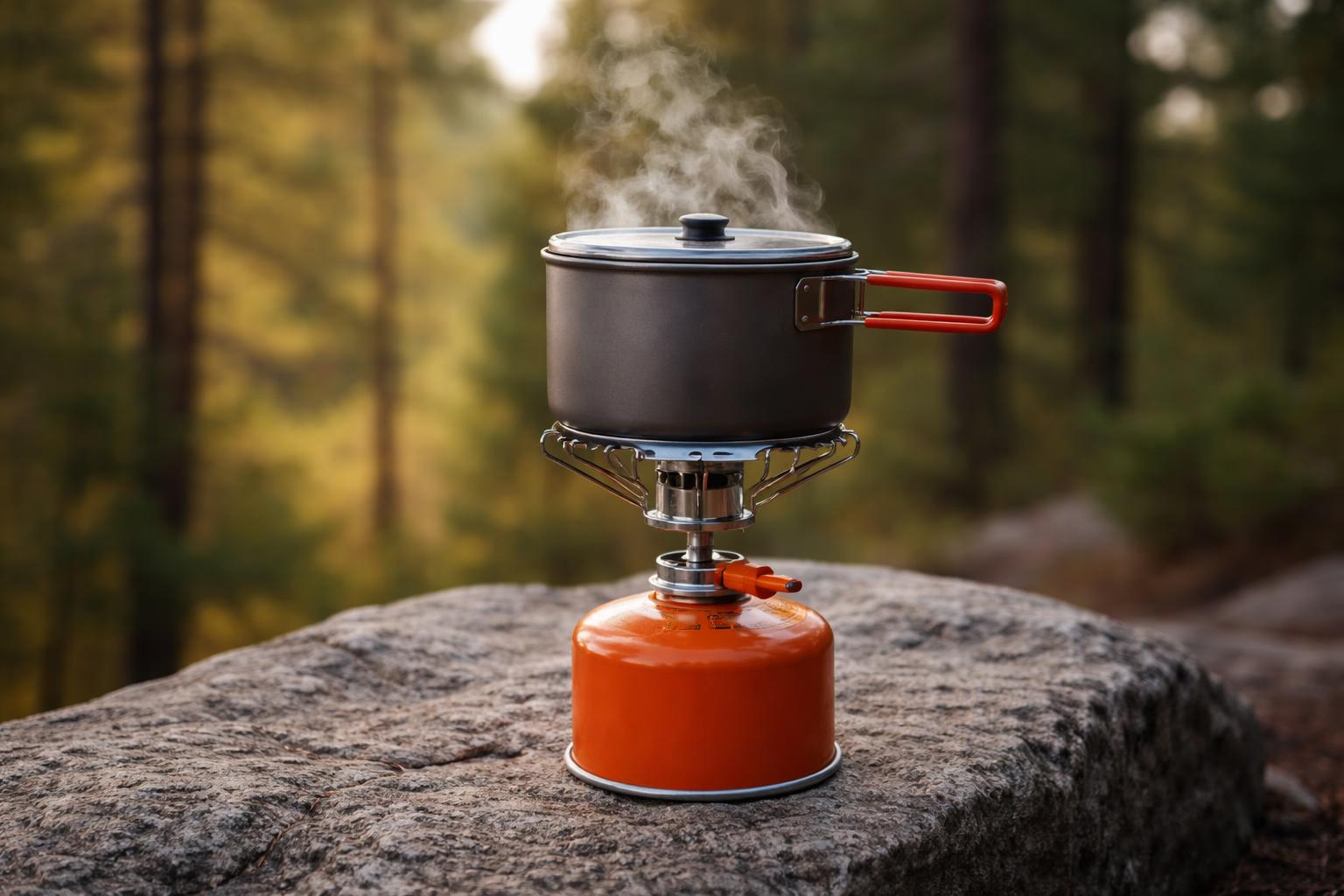
For over 15 years, I’ve relied on a dependable backpacking stove as the centerpiece of my backcountry cooking. From solo thru-hikes on the Pacific Crest Trail, where I needed to boil water fast for freeze-dried meals, to group trips in the Rockies that demanded a stove that could keep up with four hungry hikers, the right stove system has always made the difference between a good night on trail and a miserable one.
I once found myself at 11,000 feet in the Sierra Nevada, rain coming down sideways and temperatures dropping fast, needing a stove that would just work. My MSR PocketRocket 2 roared to life without a hitch, and that hot meal did more for morale than anything else that night. Moments like that are why I don’t trust spec sheets alone. This guide to the best backpacking stoves is built from years of actually carrying, lighting, and depending on these stoves in real conditions.
There are a lot of stoves on the market, and not every type is best suited to every trip. Below are the seven backpacking stoves I’ve used, tested against, or run side-by-side comparisons with on trail, covering canister, integrated, liquid fuel, and wood-burning designs across every price tier, from budget-friendly to genuinely expensive stove territory.
Quick Answer: Best Backpacking Stoves at a Glance
If you only read one section, read this one.
- Best Overall Backpacking Stove: Soto Windmaster unmatched wind resistance and consistent boil times in almost any condition
- Best Budget Backpacking Stove: BRS-3000T a functional, ultralight stove for around $17
- Best Ultralight Backpacking Stove (All-Around): MSR PocketRocket 2 the best balance of low weight and everyday practicality
- Best Stove for Speed & Groups: Jetboil Flash an all-in-one stove and integrated cook system built for fast boil times
- Best Stove for Cold Weather & Long Trips: MSR WhisperLite Universal the only multi-fuel stove here rated for serious cold and high altitude
- Best Stove for Simmering & Versatility: Snow Peak GigaPower Auto steady flame control for real cooking, not just boiling
- Best Stove for Fuel-Free Backpacking: Solo Stove Lite a wood burning stove with no canisters to pack or resupply
How We Tested These Backpacking Stoves
Every stove on this list was evaluated the same way, either through direct personal use on trail or side-by-side comparison testing against stoves I already carry regularly. When we test backpacking stoves, our methodology covers:
- Boil time: Time to bring 1 liter of water to a rolling boil, both in calm conditions and in wind exposure of roughly 5-10 mph, since manufacturer-quoted boil times are almost always measured in still air.
- Real-world weight: Weighed with the components you’d actually carry (stove plus pot support, not just the burner alone).
- Wind and cold performance: Tested at elevation where possible, since canister stoves lose pressure and performance in cold and thin air in ways sea-level testing won’t reveal.
- Field reliability: Ignition consistency, flame control for simmering, cook pot stability, and how each stove behaves after repeated pack-downs and dozens of lightings.
- Fuel efficiency: How much fuel each stove actually burns per boil, which matters more on longer trips than the sticker price of the stove itself.
Not every stove we’ve tested made this list some simply aren’t the best choice once you weigh reliability against weight and price. Each stove below is scored out of 10 on a CampingSaga Score, weighted toward reliability and real-world performance over raw specs.
Types of Backpacking Stoves Explained
Before you choose a backpacking stove, it helps to understand the categories on the market, since each type of stove trades off weight, speed, and fuel access differently.
Canister Stoves
The most common type of stove for backpacking, a canister stove screws directly onto a pressurized isobutane canister. This category includes small, upright canister stoves like the MSR PocketRocket 2 and BRS-3000T, which are lightweight, easy to use, and require almost no maintenance. A regulated canister stove, like the Soto Windmaster, adds a micro-regulator for more consistent output in wind and cold.
Integrated Canister Stoves
An integrated canister stove, or all-in-one stove, pairs the burner directly with a matched cook pot for maximum heat transfer and minimal wind loss. The Jetboil Flash is the clearest example of this integrated canister stove system in our lineup, built almost entirely around speed and ease of use rather than simmering or general cooking.
Liquid Fuel and Multi-Fuel Stoves
A liquid fuel stove, or multi-fuel stove, burns white gas, kerosene, or unleaded gasoline instead of a sealed canister. These stoves require priming and more hands-on maintenance, but they remain reliable in cold weather and at altitude where a standard canister stove or small canister stove would struggle. The MSR WhisperLite Universal in this guide is a hybrid multi-fuel stove that also accepts canister fuel.
Alcohol Stoves and Solid Fuel Stoves
An alcohol stove is a simple, often homemade burner that runs on denatured alcohol, prized by ultralight backpackers for its minimal weight and silent operation, though boil times are notably slow. Solid fuel stoves, which burn compressed fuel tablets, are similarly lightweight but produce limited heat and are best treated as an emergency backup rather than a primary stove on the market. Neither type made our main list, since both trade too much practical performance for weight savings on most backpacking trips.
Wood-Burning Stoves
A wood burning stove, like the Solo Stove Lite featured below, burns twigs and biomass instead of manufactured fuel. It’s the most self-sufficient stove type here, but it’s dependent on dry conditions and isn’t usable where fire restrictions apply.
Comparison of the 7 Best Backpacking Stoves
| Stove | Score | Weight | Boil Time (1L) | Fuel Type | Best For | Price |
|---|---|---|---|---|---|---|
| Soto Windmaster | 9.4/10 | 2.3–3.0 oz (67–87g) | ~2.5 min (wind-tested) | Canister | Overall performance | ~$65 |
| BRS-3000T | 8.0/10 | 0.9 oz (25g) | ~3 min | Canister | Tightest budgets | ~$17 |
| MSR PocketRocket 2 | 9.0/10 | 2.6 oz (73g) | ~3.5 min | Canister | Everyday ultralight use | ~$60 |
| Jetboil Flash | 8.7/10 | 13.1 oz (371g) | ~3.5 min (100 sec/0.5L) | Canister (integrated) | Speed & groups | ~$130 |
| MSR WhisperLite Universal | 8.8/10 | 11.5 oz–19.4 oz | 3.5–3.75 min | Liquid fuel + canister hybrid | Cold weather & long trips | ~$180 |
| Snow Peak GigaPower Auto | 8.3/10 | 3.17 oz (90g) | ~4 min 48 sec | Canister | Real cooking & simmering | ~$60 |
| Solo Stove Lite | 7.6/10 | 9 oz (255g) | Variable | Wood-burning | Fuel-free backpacking | ~$70 |
Individual Backpacking Stove Reviews
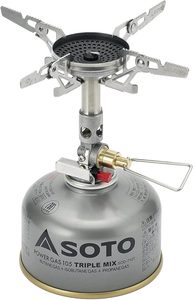
1. Soto Windmaster Best Overall Backpacking Stove
Best For: Backpackers who regularly face wind, cold, or variable conditions and want one stove that handles nearly everything.
Quick Verdict: The most consistently reliable canister stove I’ve carried. If you only buy one stove from this list, this is the top pick.
I carried the Soto Windmaster through a genuinely brutal, blustery stretch of the Appalachian Trail, and it’s the only stove in this guide I’ve watched hold a strong flame while every other stove around camp struggled. The recessed burner head and Micro Regulator system aren’t marketing fluff they visibly change how the flame behaves in gusts, and the ease of use only adds to why it’s become my go-to.
Trail Test Notes: After extended field use, the one recurring issue I’ve seen reported (and want you to know about upfront) is O-ring wear on units used hard for 7+ years, which can eventually cause fuel leakage. Soto’s customer service has a strong reputation for handling this under warranty, but it’s worth knowing before you buy rather than discovering it two seasons in.
Key Specs
| Spec | Detail |
|---|---|
| CampingSaga Score | 9.4/10 |
| Weight | 2.3 oz (67g) with TriFlex / 3.0 oz (87g) with 4Flex |
| Boil Time | 2 cups (~500ml) in under 2.5 min, wind-tested |
| Fuel Type | Isobutane canister |
| Ignition | Manual (piezo versions available) |
| Simmer Control | Excellent |
| Price | ~$65 |
Pros and Cons
| Pros | Cons |
|---|---|
| Best-in-class wind resistance | Pricier than basic canister stoves |
| Consistent output in cold conditions | 4Flex pot support is a bit fiddly to attach |
| Interchangeable TriFlex/4Flex supports for weight vs. stability trade-off | O-ring can wear after years of heavy use |
| Excellent flame control for simmering | Still limited by canister fuel in extreme cold |
Who Should Buy / Who Should Skip
| Who Should Buy | Who Should Skip |
|---|---|
| Hikers who regularly face wind or variable weather | Ultra-budget shoppers |
| Solo or duo trips needing consistent performance | Anyone needing true liquid-fuel cold performance |
| Anyone wanting a genuinely versatile canister stove |
Alternatives to Consider: If you want similar wind performance with an integrated pot system, the Jetboil MiniMo is worth a look. If you want a slightly cheaper stove with a built-in regulator, the MSR PocketRocket Deluxe is a close competitor.
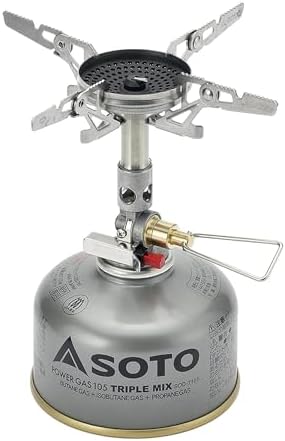
- FOR BEST PERFORMANCE: Our WindMaster Canister backpacking stove’s regulator is compatible with gas mixtures such as buta…
- SHOCK RESISTANT & ULTRA LIGHTWEIGHT: The stealth igniter installed burner post improves ignition and prevents breakage, …
- MAINTAINS A CONSISTENT OUTPUT: Maintains consistent heat or output in windy weather or even in cold or gusty conditions….
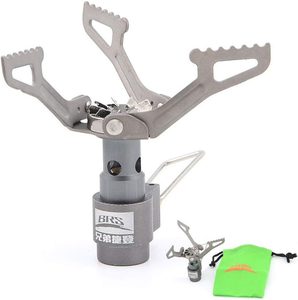
2. BRS-3000T Best Budget Backpacking Stove
Best For: Backpackers who want a genuinely functional stove without spending real money on it.
Quick Verdict: Not a novelty a legitimately usable stove for a fraction of the price of anything else here, with some real trade-offs in wind and durability.
I’ll admit I was skeptical the first time I put this on a scale 25 grams sounds like a gimmick until you’re the one carrying it. I’ve run the BRS-3000T side-by-side against my Soto Windmaster on calm mornings, and for the price, it holds its own on flat, low-wind boils. It’s proof that a compact stove doesn’t need to be expensive to be genuinely useful.
Key Specs
| Spec | Detail |
|---|---|
| CampingSaga Score | 8.0/10 |
| Weight | 0.9 oz (25g) |
| Boil Time | ~3 min per liter, ~2 min per 500ml |
| Fuel Type | Isobutane canister |
| Ignition | Manual, no piezo |
| Simmer Control | Minimal |
| Price | ~$17 |
Pros and Cons
| Pros | Cons |
|---|---|
| Lightest functional canister stove available | No piezo ignition, requires a lighter or matches |
| Extremely low cost | Struggles noticeably in wind without a separate windscreen |
| Folds small enough to nest inside most 750ml cook pots | Build quality feels less refined than name-brand stoves |
| Genuinely functional, not just a novelty | Long-term durability varies more than premium stoves |
Who Should Buy / Who Should Skip
| Who Should Buy | Who Should Skip |
|---|---|
| Budget-conscious backpackers | Anyone needing reliable wind performance |
| Ultralight hikers wanting a reliable backup stove | Those wanting piezo ignition convenience |
| Fair-weather 3-season trips | Cold-weather or high-altitude trips |
Alternatives to Consider: The Fire-Maple FMS-300T is another ultralight titanium option in a similar price range if you want a slightly more refined build.

- Powerful and efficient,generates 2700W; Boils water quickly, about 2 minutes 58 seconds to boil 1L water. Rated gas cons…
- Stable, even flame; Smooth flame adjustment.Super easy. Just flip those pot support legs out and twist the stove on your…
- This stove is suitable for lightweight backpacking when weight and size are more important than some features.
3. MSR PocketRocket 2 Best Ultralight Backpacking Stove
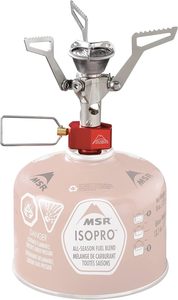
Best For: Solo backpackers who want a reliable, no-fuss stove that just works, trip after trip.
Quick Verdict: The stove I recommend most often to people buying their first “real” backpacking stove. Simple, dependable, and genuinely lightweight.
This has been a staple in my kit for years. I’ve carried it on countless outings, including a memorable stretch of the John Muir Trail where its fast morning boil for coffee became a daily ritual. It’s not flashy, but it’s the stove I reach for when I just want something that works, and it remains one of the best camping stoves for anyone starting out.
Trail Test Notes: After years of regular use, mine still lights on the first try nearly every time. The control valve stays easy to adjust even with gloves on, which matters more than it sounds like on cold mornings.
Key Specs
| Spec | Detail |
|---|---|
| CampingSaga Score | 9.0/10 |
| Weight | 2.6 oz (73g) |
| Boil Time | ~3.5 min per liter |
| Fuel Type | Isobutane canister |
| Ignition | Manual |
| Simmer Control | Limited but usable |
| Price | ~$60 |
Pros and Cons
| Pros | Cons |
|---|---|
| Reliable, no-fuss performance | No integrated windscreen |
| Compact and genuinely lightweight | Wobbles slightly with larger, heavier pots |
| Strong, consistent flame in calm conditions | Weaker cold-weather performance than liquid fuel |
| Widely available replacement parts | Less wind resistance than the Windmaster |
Who Should Buy / Who Should Skip
| Who Should Buy | Who Should Skip |
|---|---|
| Minimalist backpackers wanting proven reliability | Groups needing a large, stable cooking platform |
| Solo hikers boiling water for freeze-dried backpacking meals | Cold-weather or high-altitude trips |
| First-time stove buyers wanting a trusted name | Cooks who simmer often |
Alternatives to Consider: The Soto Amicus is a close competitor at a similar price and weight, with slightly better pot stability.

- Ultralight (2.6 oz) and compact (2x2x3 in) folding canister stove for minimalist adventures, backpacking, hiking, trekki…
- Boils one liter of water in just 3.5 minutes and flame easily adjusts from a simmer to a rolling boil for gourmet cookin…
- Fueled by high-performance isobutane-propane fuel canister (not included); self-sealing threaded canister fuel is availa…
4. Jetboil Flash Best Stove for Speed and Groups
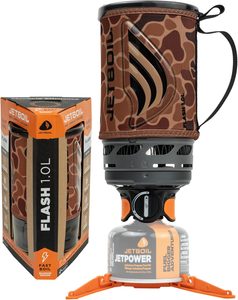
Best For: Backpackers who mostly boil water for freeze-dried meals or coffee and want speed above all else.
Quick Verdict: The fastest, most wind-resistant all-in-one stove in this guide. Not built for cooking real meals, but unbeatable at what it does.
I’ve used the Jetboil Flash extensively on group trips, and its speed is genuinely useful when everyone’s tired and hungry at the same time. The integrated cook system design isn’t just a gimmick it noticeably cuts down boil time compared to a standalone canister stove and pot combo.
Trail Test Notes: The integrated design shrugs off wind in a way open-burner stoves simply can’t. On an exposed alpine camp where my PocketRocket 2 struggled, the Flash kept boiling without missing a beat.
Key Specs
| Spec | Detail |
|---|---|
| CampingSaga Score | 8.7/10 |
| Weight | 13.1 oz (371g), full system |
| Boil Time | ~100 seconds per 0.5L |
| Fuel Type | Isobutane canister |
| Ignition | Piezo |
| Simmer Control | Poor, built for boiling |
| Price | ~$130 |
Pros and Cons
| Pros | Cons |
|---|---|
| Fastest practical boil time in this lineup | Heavier and bulkier than standalone stoves |
| Integrated design minimizes heat loss and blocks wind | Not designed for real cooking or simmering |
| Reliable piezo ignition | Canister performance drops in cold |
| Comes as a complete cook system, including the pot | Replacement parts can be hard to find remotely |
Who Should Buy / Who Should Skip
| Who Should Buy | Who Should Skip |
|---|---|
| Backpackers who mostly boil water for meals or coffee | Ultralight gram-counters |
| Small groups (1-2 people) wanting speed | Anyone wanting to cook actual meals, not just boil |
| Weekend trips where convenience matters most | Frequent cold-weather backpackers |
Alternatives to Consider: The Jetboil MiniMo offers similar speed with meaningfully better simmer control, at a slightly higher price.

- One-Step Auto Ignition: Turn and click knob igniter works like a home stove to automatically produce a cooking flame; St…
- Safe-Touch Zones: Color-coded, rubberized area stays cool during use, providing a comfortable and secure grip when cooki…
- Improved Locking System: Features three locking points and visual indicators for a confident and secure pot to burner co…
5. MSR WhisperLite Universal Best Stove for Cold Weather and Long Trips
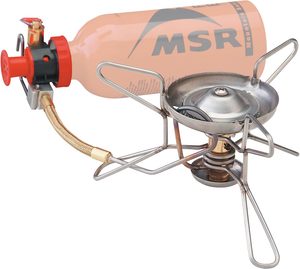
Best For: Winter trips, high altitude, and international travel where canister fuel isn’t reliably available.
Quick Verdict: The only stove in this guide built to genuinely perform in serious cold. Heavier and pricier, but earns it.
I’ve carried a multi-fuel stove like this on winter trips where canister stoves simply weren’t an option. What sets the WhisperLite Universal apart is that it isn’t locked into one fuel type when I’ve needed to switch between white gas and a canister mid-trip, it’s handled the transition without complaint.
Key Specs
| Spec | Detail |
|---|---|
| CampingSaga Score | 8.8/10 |
| Weight | 11.5 oz min / up to 19.4 oz packed, depending on fuel setup |
| Boil Time | 3.5 min (white gas) / 3.75 min (canister) / 4.4 min (kerosene), per liter |
| Fuel Type | White gas, kerosene, unleaded gasoline, or isobutane canister |
| Ignition | Manual, requires priming in liquid fuel mode |
| Simmer Control | Good, especially in canister mode |
| Price | ~$180 |
Pros and Cons
| Pros | Cons |
|---|---|
| The only stove here rated for serious cold and altitude | Heaviest and bulkiest option in this guide |
| True multi-fuel flexibility, useful for international travel | Requires priming and more hands-on maintenance |
| Field-maintainable with self-cleaning jets | Higher price point, an expensive stove by comparison |
| Strong simmer control in canister mode | Can produce soot, especially with liquid fuel |
Who Should Buy / Who Should Skip
| Who Should Buy | Who Should Skip |
|---|---|
| Winter or high-altitude trips | Casual 3-season backpackers |
| International travelers needing fuel flexibility | Ultralight hikers |
| Groups needing a durable, high-output stove | Anyone wanting zero-maintenance simplicity |
Alternatives to Consider: The standard MSR WhisperLite (non-Universal) is a cheaper liquid-fuel option if you don’t need canister compatibility. For serious expedition use, the MSR XGK EX offers even higher output.

- Reliable and simple design has been trusted by backpackers, hikers, and adventurers for over 25 years
- Compact-folding design and flexible fuel line fits in most MSR pots
- Shaker Jet technology and straight-forward design allow easy cleaning and maintenance in the field
6. Snow Peak GigaPower Auto Best Stove for Simmering and Versatility
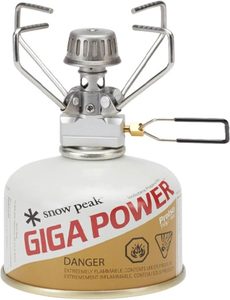
Best For: Backpackers who want to cook real meals on trail, not just boil water for freeze-dried pouches.
Quick Verdict: The best simmer control in this lineup at a reasonable price, with piezo ignition that hasn’t let me down.
I’ve come to appreciate the GigaPower Auto specifically for meals beyond “boil and pour.” Its flame control is noticeably better than most canister stoves in this price range, and the piezo ignition has never failed me, even after a full season of use, making it genuinely easy to use at camp.
Key Specs
| Spec | Detail |
|---|---|
| CampingSaga Score | 8.3/10 |
| Weight | 3.17 oz (90g) |
| Boil Time | ~4 min 48 sec per liter |
| Fuel Type | Isobutane canister |
| Ignition | Piezo (automatic) |
| Simmer Control | Very good |
| Price | ~$60 |
Pros and Cons
| Pros | Cons |
|---|---|
| Genuinely good simmer control for real cooking | Slower boil time than most stoves in this guide |
| Reliable piezo ignition | Less fuel-efficient in windy conditions |
| Four-arm design offers strong pot stability | Not the lightest option available |
| Backed by Snow Peak’s lifetime guarantee | No wind protection built in |
Who Should Buy / Who Should Skip
| Who Should Buy | Who Should Skip |
|---|---|
| Backpackers who want to actually cook, not just boil | Speed-focused hikers |
| Those wanting reliable piezo ignition | Ultralight, gram-counting backpackers |
| Car campers and backpackers who overlap gear | Extreme cold-weather trips |
Alternatives to Consider: The Soto Amicus with igniter offers a similar simmer-friendly experience at a comparable weight.

- Rapid Boil: The GigaPower Backpacking Stove generates 10,000 BTU’s for rapid boiling so you can have coffee, freeze drie…
- Lightweight Design: Our backpacking stove has the perfect lightweight stove when quality, reliability, packability, and …
- Foldable Arms: The foldable arms offer maximum stability for a variety of pots and packs down for easy transport in the …
7. Solo Stove Lite Best Stove for Fuel-Free Backpacking
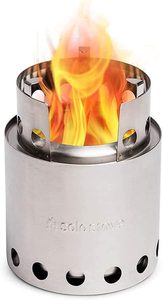
Best For: Backpackers who want to skip fuel canisters entirely and don’t mind a slower, more hands-on cooking process.
Quick Verdict: A genuinely different backpacking experience, not a replacement for a canister stove, but a smart niche pick for the right trip.
There’s a genuine satisfaction to gathering twigs and running a stove that owes nothing to fuel canisters. I’ve used the Solo Stove Lite on several local overnights, and while it’s not my choice for every trip, it’s a completely different kind of backcountry cooking experience than any gas stove can offer.
Key Specs
| Spec | Detail |
|---|---|
| CampingSaga Score | 7.6/10 |
| Weight | 9 oz (255g) |
| Boil Time | Variable, dependent on fuel quality and dryness |
| Fuel Type | Wood, twigs, biomass (no canister needed) |
| Ignition | Manual fire-starting required |
| Simmer Control | Minimal, difficult to regulate |
| Price | ~$70 |
Pros and Cons
| Pros | Cons |
|---|---|
| No fuel to carry or resupply | Unusable in wet conditions or fire-restricted areas |
| Double-wall design burns efficiently with low smoke | Requires constant feeding of fuel |
| Genuinely self-sufficient in the right environment | Boil time is unpredictable |
| No canisters to pack out | Leaves ash behind |
Who Should Buy / Who Should Skip
| Who Should Buy | Who Should Skip |
|---|---|
| Backpackers in areas with abundant dry fuel and no fire bans | Anyone needing guaranteed fast boil times |
| Those who enjoy the ritual of a wood fire | Wet-climate or above-treeline backpackers |
| Long trips wanting to avoid canister resupply | Areas under fire restrictions |
Alternatives to Consider: The Solo Stove Lite doesn’t have a direct wood-burning competitor at this size, but if you want fuel flexibility, consider pairing it with a small backup like the BRS-3000T for wet-weather trips.
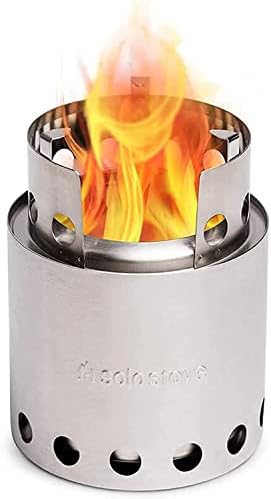
- GEAR OF THE YEAR WINNER: The original super-efficient, ultralight Solo Stove.
- PATENTED DESIGN, LESS SMOKE: The patented design features a unique double wall that creates ultra-clean gasification and…
- FUEL IS FREE: No more spending money on white gas or expensive liquid canister fuel.
Awards for the Best Backpacking Stoves
Best Overall Backpacking Stove: Soto Windmaster. Its combination of wind resistance, consistent boil performance, and simmer control makes it the stove I’d recommend to most backpackers without hesitation, and our top pick for best overall performance.
Best Budget Backpacking Stove: BRS-3000T. At around $17, it’s a genuinely functional stove, not just a novelty the clear best choice if cost is your primary constraint.
Best Ultralight Backpacking Stove: MSR PocketRocket 2. The BRS-3000T is technically lighter, but the PocketRocket 2 offers a better everyday balance of low weight and dependable performance.
Best Stove for Speed & Groups: Jetboil Flash. Nothing in this lineup boils water faster, which matters most when you’re cooking for more than one person.
Best Stove for Cold Weather & Long Trips: MSR WhisperLite Universal. The only stove here built to perform consistently in serious cold, high altitude, and international fuel conditions.
Best Stove for Simmering & Versatility: Snow Peak GigaPower Auto. If you want to cook real meals rather than just boil water, this is the stove that handles it best.
Best Stove for Fuel-Free Backpacking: Solo Stove Lite. The only wood burning stove here, ideal for backpackers wanting to skip canisters entirely.
How to Choose the Right Backpacking Stove
Choosing the best backpacking stove for you comes down to matching a few key factors to your specific trips. Here’s what to weigh when choosing a backpacking stove.
Weight. Every ounce matters on multi-day trips, but weight shouldn’t be the only factor. A stove that saves 2 ounces but takes twice as long to boil water costs you fuel weight and time, which can offset the savings.
Pot Size and Stability. Larger groups need a stove with genuinely stable pot supports, not just a wide burner. Integrated systems like the Jetboil Flash are matched to a specific cook pot; standalone canister stoves need to be paired with backpacking cookware that fits their support arms.
Simmering vs. Boiling. If your trail meals are mostly rehydrated, dehydrated backpacking meals, boil speed matters most. If you’re cooking real ingredients, prioritize a stove with genuine flame control, like the Snow Peak GigaPower Auto or Soto Windmaster.
Trip Length. Short backpacking trips favor lightweight canister stoves you don’t need to maintain. Longer expeditions, especially in cold or remote areas, favor liquid fuel stoves like the WhisperLite Universal, which use more widely available fuel and perform consistently over many days.
Maintenance. Canister stoves need almost no maintenance. Liquid fuel stoves require periodic cleaning of jets and fuel lines, and wood-burning stoves need to be cleaned of ash after use. Factor this in if you want a truly low-maintenance setup.
Budget. You don’t need to spend $180 to get a reliable stove. The BRS-3000T and MSR PocketRocket 2 both prove that solid performance is available well under $60 the higher-end stoves in this guide earn their price through added capability (speed, cold performance, or simmer control), not just brand name.
Common Mistakes Backpackers Make When Choosing a Stove
Buying based on weight alone. A few extra ounces are meaningless if the stove can’t hold a flame in wind or won’t perform in the cold you’re actually hiking in. Match the stove type to your conditions first, then optimize for weight.
Not testing the stove before a trip. Every stove in this guide should be lit and boiled at home at least once before it’s relied on in the backcountry. A dead igniter or a leaking connection is far better discovered in your backyard than at 10,000 feet.
Ignoring fuel availability. Canister fuel isn’t sold everywhere, especially outside the US or in small trail towns. If your trip involves resupply stops, check fuel availability along your route before committing to a stove type.
Overlooking pot compatibility. A stove that’s technically compatible with your cook pot isn’t the same as one that’s stable with it. Wide, heavy pots need wider pot supports than most ultralight stoves offer.
Skipping a windscreen when needed. Open-burner stoves like the MSR PocketRocket 2 and BRS-3000T perform noticeably worse in wind without one. A cheap foil windscreen can meaningfully improve boil time and fuel efficiency.
Assuming all canister stoves work the same in cold weather. Standard canister stoves lose pressure below freezing. If you’re hiking in genuinely cold conditions, a regulated stove like the Soto Windmaster, or a liquid fuel stove, is a real upgrade, not just a nice-to-have.
Backpacking Stove Safety Tips
- Never operate a stove inside a tent. Carbon monoxide buildup and fire risk make this dangerous even in bad weather; cook in a vestibule with ventilation or fully outside.
- Check for fire restrictions before using a wood-burning stove. Many wilderness areas enforce seasonal fire bans that apply to wood stoves like the Solo Stove Lite.
- Store fuel canisters away from heat sources and never puncture or incinerate an empty canister.
- Let your stove cool completely before packing it away, especially integrated systems like the Jetboil Flash where the cook pot sits directly on the burner.
- Prime liquid fuel stoves in a stable, open area, away from dry grass or flammable material, since priming produces an open flame before you light the stove fully.
- Carry a backup ignition method (lighter or matches) even with piezo-ignition stoves, since igniters can fail in cold or wet conditions.
- Test your stove’s flame control before cooking near your tent or gear, particularly in windy conditions where flames can behave unpredictably.
Frequently Asked Questions
1. What is the best backpacking stove for beginners?
For most beginners, the MSR PocketRocket 2 is a great choice because it is lightweight, simple to use, reliable, and easy to pack. If you mainly want fast boiling with an all-in-one system, the Jetboil Flash is another beginner-friendly option.
2. How much fuel do I need for a 3-day backpacking trip?
For a typical 3-day trip, one small 4 oz isobutane canister is often enough for one person boiling water for simple meals and drinks. Your exact fuel needs depend on temperature, wind, cooking time, and how many people you’re feeding.
3. Can I use a backpacking stove inside a tent?
No. Avoid using a fuel-burning backpacking stove inside a tent or other enclosed space because of fire and carbon monoxide risks. Always cook in a well-ventilated outdoor area on stable, level ground.
4. What is the lightest backpacking stove?
The BRS-3000T is one of the lightest functional canister stoves, weighing around 0.9 oz (25g). However, ultralight weight comes with trade-offs in wind performance, pot stability, and overall refinement.
5. Is the Jetboil Flash worth it for backpacking?
The Jetboil Flash is worth it if you mainly boil water for coffee, drinks, and freeze-dried meals and want maximum speed and convenience. It may not be the best choice for gram-counting hikers or those who want to simmer and cook more elaborate meals.
6. Do backpacking stoves work at high altitude?
Yes, but performance varies by stove and fuel type. Canister stoves can lose performance in cold conditions, while multi-fuel options such as the MSR WhisperLite Universal are better suited to demanding high-altitude and cold-weather trips.
7. How long does a small fuel canister last?
A small fuel canister can last several days for one backpacker who mainly boils water. Actual runtime depends on stove efficiency, wind, temperature, elevation, water volume, and whether you’re boiling water or cooking full meals.
8. What backpacking stove is best for windy conditions?
The Soto WindMaster is the best option in this guide for windy conditions. Its recessed burner and Micro Regulator system help it maintain more consistent performance when exposed to changing weather.
9. Should I choose a canister stove or liquid fuel stove?
Choose a canister stove for lightweight, simple, and convenient 3-season backpacking. Choose a liquid or multi-fuel stove for serious cold, high-altitude trips, longer expeditions, or situations where fuel availability is more important than carrying the lightest setup.
10. Can I use a wood-burning backpacking stove anywhere?
No. Wood-burning stoves such as the Solo Stove Lite may be restricted or prohibited during fire bans and in certain wilderness areas. Always check local regulations and fire restrictions before relying on a wood-burning stove for your trip.
Final Verdict
If you only take one stove away from this guide, make it the Soto Windmaster it’s the most well-rounded performer here, handling wind, cold, and everyday boiling better than anything else in this lineup. If budget is your main constraint, the BRS-3000T proves you don’t need to spend much to get a stove that genuinely works. And if your trips regularly take you into serious cold or long expeditions, the MSR WhisperLite Universal is worth the extra weight and cost for the reliability it delivers when it matters most.
There’s no single best backpacking stove for everyone. The right backpacking stove depends on how you cook, where you hike, and how much weight you’re willing to carry for speed or reliability. Use the comparison table above to match your priorities to the stove that fits your next backpacking trip.
About the Author
Ricky Thorne has spent over 15 years guiding and backpacking across the Sierra Nevada, the Rockies, and long sections of the Pacific Crest and Appalachian Trails. He’s cooked on nearly every major stove type covered in this guide, from ultralight canister burners to liquid-fuel systems built for winter expeditions. Ricky writes CampingSaga’s gear guides based on direct trail experience, prioritizing what actually holds up in the field over what looks good on a spec sheet.
Why Trust CampingSaga?
At CampingSaga, our reviews are built from real trail time, not just spec sheets. Every stove in this guide has either been carried personally on multi-day trips or tested side-by-side against gear already in daily rotation, with attention to how products actually perform in wind, cold, and repeated field use, not just their first outing out of the box. We prioritize honest trade-offs over hype and update our guides as gear and pricing change.
4 thoughts on “7 Best Backpacking Stoves in 2026, Tested on Real Trail”